A Moon assumed to be dry
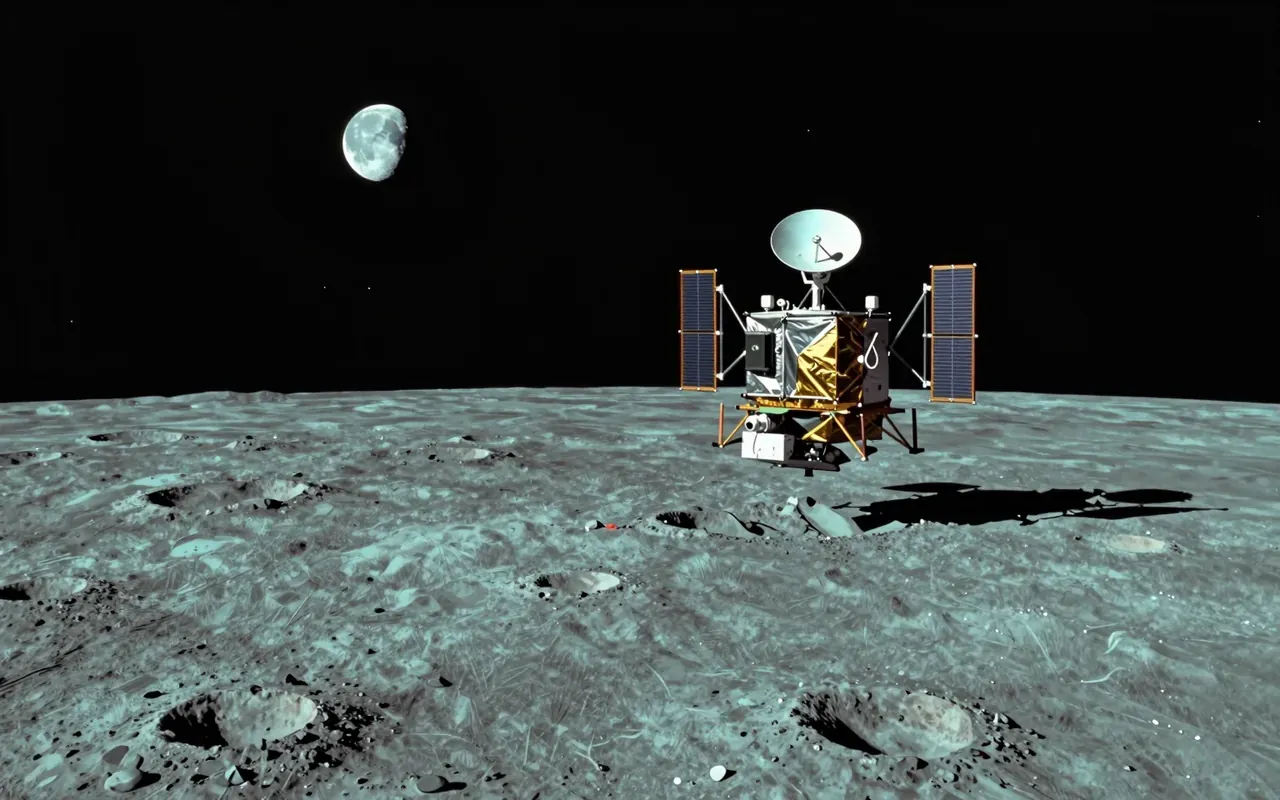
For more than a century, the working assumption among astronomers was that the Moon held no meaningful water at all. Wilhelm Beer and Johann Heinrich Madler had concluded in the 1830s, based on telescopic observation, that the lunar surface lacked both water and atmosphere, and that view was reinforced much later when the earliest analyses of samples returned by the Apollo missions appeared to show essentially dry, anhydrous rock, with only trace amounts eventually found bound up in volcanic glass beads. Against that backdrop, India’s Chandrayaan-1 orbiter, launched on 22 October 2008 as the country’s first lunar mission, carried an instrument called the Moon Mineralogy Mapper, supplied by NASA, specifically designed to map the mineral and chemical composition of the lunar surface in far greater spectral detail than earlier missions had managed.
An Indian orbiter with a NASA instrument
Before that instrument’s most significant results were announced, part of the same mission had already produced an early signal: India’s space agency reported that the mission’s Moon Impact Probe had detected evidence of water months before the Moon Mineralogy Mapper findings were made public. The mapper’s own data, announced in September 2009, showed absorption features in a specific range of infrared wavelengths, around 2.8 to 3.0 micrometres, indicating hydroxyl groups chemically bound within the lunar soil and, in some locations, water molecules themselves, spread across large areas of the surface rather than confined to any single region, and appearing most strongly at cooler high latitudes rather than the sunlit equatorial zones.
Hydroxyl spread across the whole surface
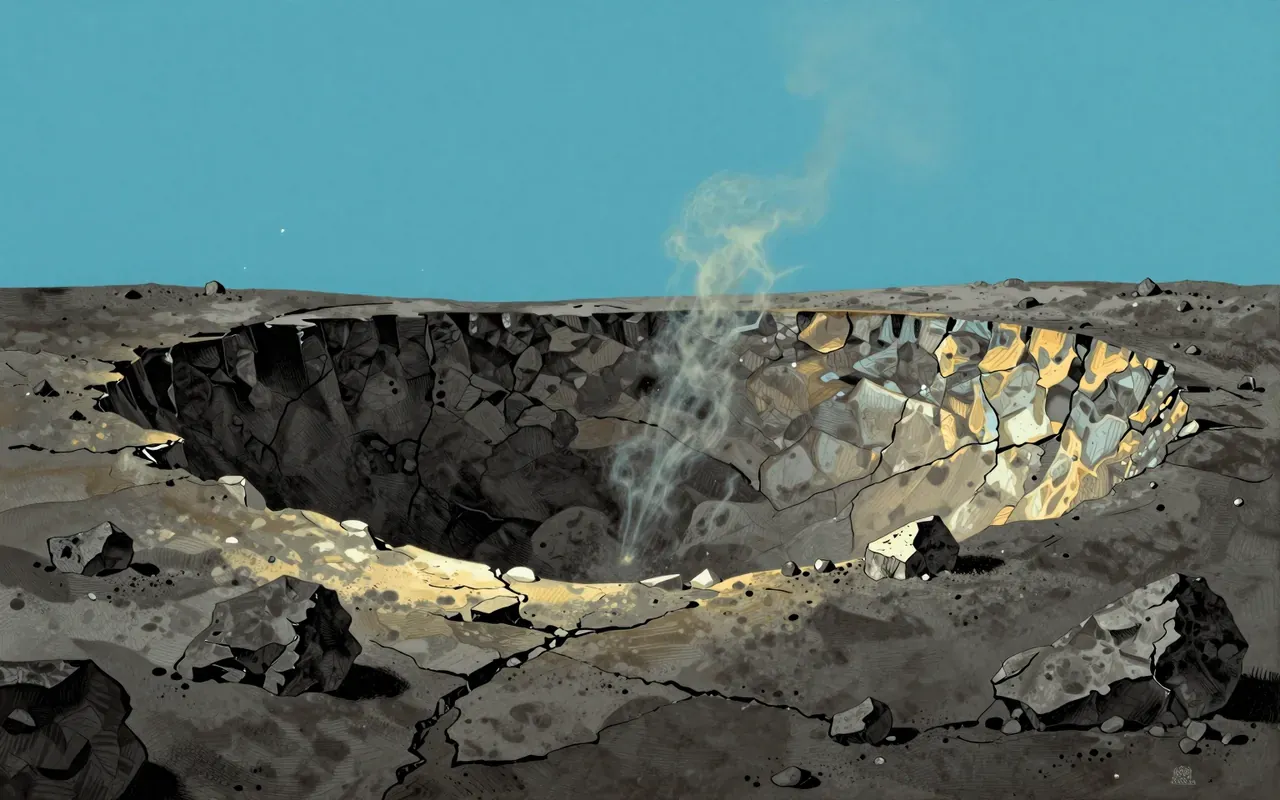
That widespread finding was reinforced rather than contradicted by a separate, more targeted experiment the same year. NASA’s LCROSS mission deliberately sent an impactor into Cabeus crater, a permanently shadowed region near the lunar south pole cold enough to trap volatile compounds indefinitely, and analysis of the debris thrown up by the impact found water making up roughly 5.6 percent of the ejected material’s mass. Earlier data from the Lunar Prospector mission had already hinted at something similar, suggesting one to three cubic kilometres of potential ice near the poles, and radar data gathered around the same period identified more than forty permanently shadowed craters near the north pole hypothesised to hold a combined total on the order of 600 million metric tonnes of water ice.
A deliberate crash confirms polar ice
What none of these results supports is a picture of thick, easily accessible ice sheets waiting to be mined. The LCROSS measurements specifically found the water present as small ice fragments dispersed within the surrounding regolith rather than as a pure, concentrated deposit, meaning any future extraction would involve processing a meaningful volume of soil rather than simply collecting solid ice. The broader hydroxyl signal detected across the wider lunar surface by the Moon Mineralogy Mapper is also chemically bound into the soil rather than sitting as free water, a distinction that matters considerably for how, or whether, it could realistically be extracted and used, and one that later missions specifically targeting lunar resource extraction have had to design around.
Water mixed in, not pooled up
The practical significance of these combined findings goes well beyond settling an old astronomical question. Water on the Moon, even in dispersed or chemically bound form, changes the economics of any sustained human presence there, since water can in principle be processed for drinking, split into oxygen for breathing, and converted into hydrogen and oxygen propellant for rockets, all without the extraordinary cost of transporting those materials from Earth. That is a large part of why the permanently shadowed polar craters, with their estimated hundreds of millions of tonnes of ice, have become a specific focus of current and planned lunar missions, which aim to characterise those deposits in far more detail than the 2009 findings alone could provide.
From curiosity to resource
This is well worth understanding for anyone following the renewed interest in lunar exploration, since the water resource claims driving much of that interest trace directly back to this cluster of 2009 results rather than to any single, later, more dramatic discovery. The story rewards attention to its nuances, particularly the difference between water spread thinly across the whole surface and water concentrated, however imperfectly, at the poles, since that distinction shapes what any future mission can realistically plan to use. Readers wanting a simple, triumphant water-on-the-Moon headline should adjust expectations toward a more accurate, more useful picture: water that is real, confirmed, and genuinely significant, but harder to extract than early coverage sometimes implied.