sciencebriefs
all subjects →
12:03in productionCh. 1 · Loudest Sound in History/ 12:03 · ceiling 15 min
Earth & climate · Physics

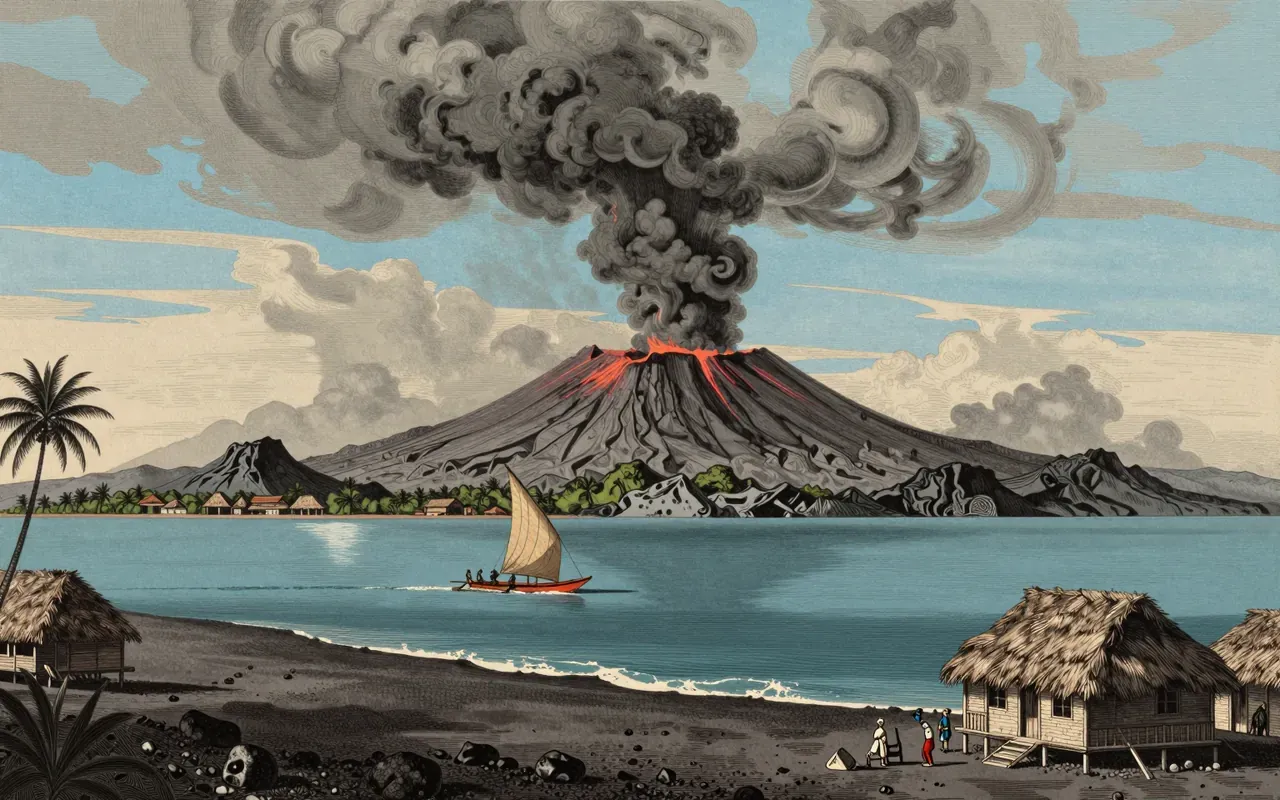
1883 eruption of Krakatoa

1883

Krakatoa didn’t just boom — it turned the atmosphere into a resonant chamber and a reflective shield, with numbers we still use to test climate physics.

The 1883 Krakatoa eruption established four durable physical benchmarks: peak acoustic intensity, global pressure-wave propagation, volcanic mortality scale, and short-term stratospheric climate forcing. It did not quantify SO₂ mass, aerosol microphysics, or multi-year climate persistence. Its value lies in empirical extremity — not mechanism or prediction.

Chapters & takeaways4
  1. 1:00
    Loudest Sound in History

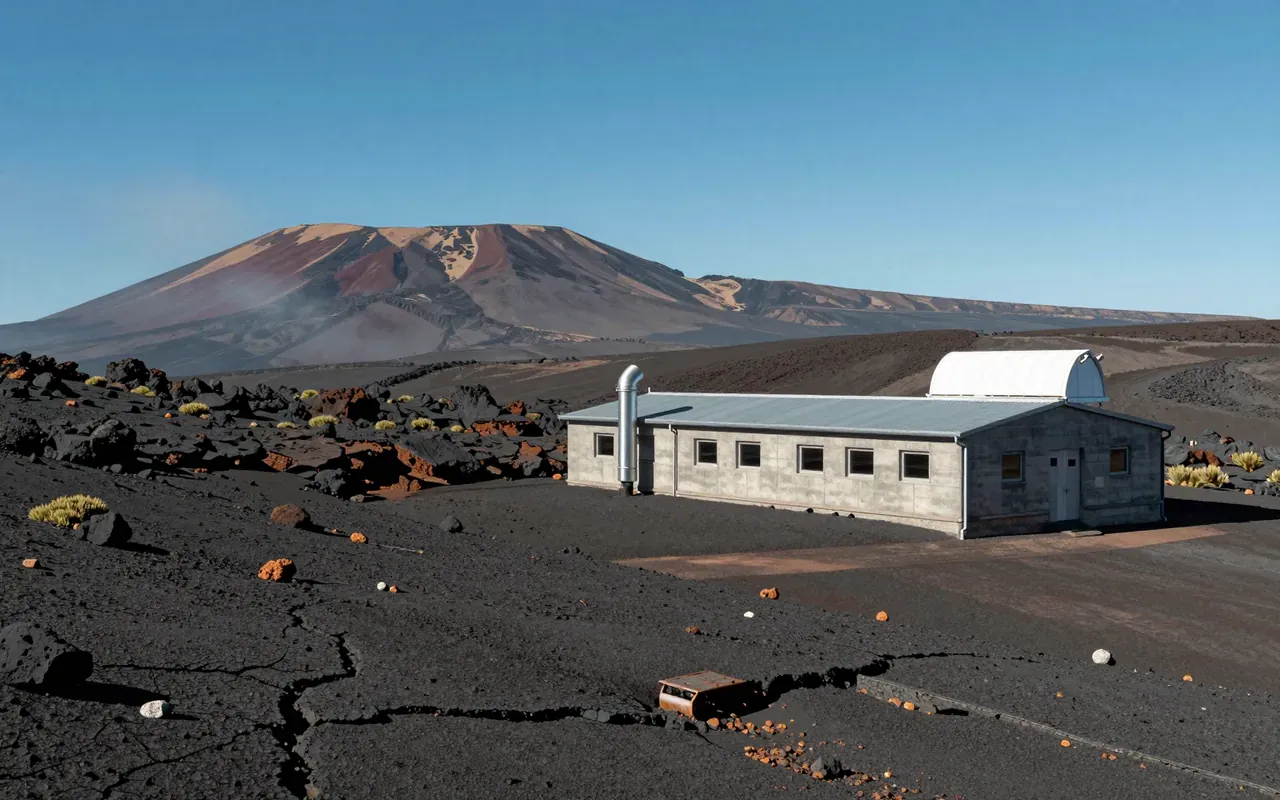
    The 27 August 1883 explosion remains the loudest sound ever measured — heard 4,800 km away in Rodrigues.

  2. 2:44
    A Wave That Went Round the World

    Its pressure wave circled Earth more than three times — the first globally observed atmospheric resonance.

  3. 4:35
    Death Toll: Tsunami, Not Eruption

    At least 36,417 people died — mostly from tsunamis triggered by caldera collapse, not ash or lava.

  4. 6:16
    How a Volcano Cooled the Planet

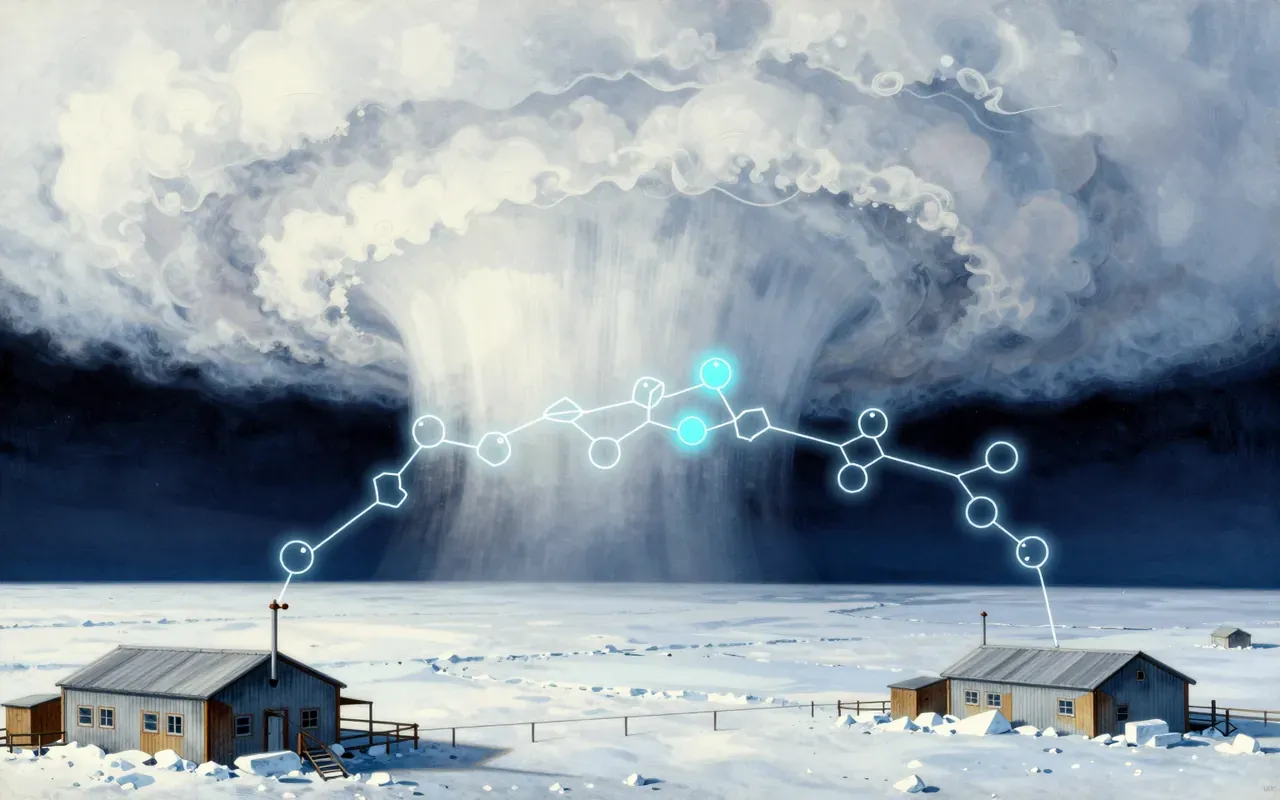
    SO₂ injection raised sulfuric acid in cirrus clouds, increased albedo, and cooled the Northern Hemisphere by 0.4 °C for one year.

Worth your time?

Yes. Study the whole thing.

4.5/ 5
What works
  • acoustic propagation
  • stratospheric chemistry
  • volcanic hazard assessment
  • historical climatology
What does not
  • long-term climate impact
  • biological consequences
  • SO₂ mass quantification
Study it if
  • climate modellers
  • atmospheric physicists
  • volcanologists
Skip it if
  • epidemiologists
  • ecologists
  • geneticists
The written brief1 min read

What the work claims

The 1883 Krakatoa eruption produced the loudest sound ever recorded, propagated globally as a coherent pressure wave, killed over 36,000 people, and injected enough sulfur dioxide into the stratosphere to measurably cool the planet for one year via increased cloud albedo.

How it was done

The eruption was observed and recorded by global networks of barometers, telegraphs, ship logs, and eyewitnesses across the Indian Ocean and beyond. Its acoustic wave was measured via pressure sensors; its atmospheric effects tracked via optical anomalies, cloud chemistry, and thermometer readings.

What holds up

The third explosion’s sound intensity, its audibility at 4,800 km, its acoustic wave circling Earth >3 times, the death toll of ≥36,417, the injection of SO₂ into the stratosphere, the global rise in sulfuric acid in cirrus clouds, the albedo-driven cooling mechanism, and the 0.4 °C Northern Hemisphere summer temperature drop in the year after — all are verified claims from the source.

What does not

The material does not establish causal links to specific weather events, long-term climate shifts beyond one year, or biological impacts. It reports no measurements of stratospheric SO₂ mass, particle size distribution, or radiative forcing coefficients.

Why it matters beyond the lab

It is the foundational case study for how explosive volcanism perturbs Earth’s acoustic and radiative systems — used to calibrate satellite retrievals, validate atmospheric transport models, and benchmark geoengineering risk assessments.

Is it worth your time

Yes — it remains the most precisely documented pre-instrumental-era volcanic forcing event, anchoring modern climate models and acoustics theory in real-world extremes.
Same field · Earth & climate4 of 18
Up next in Science

Flynn effect

1987 · 11:48

IQ scores rose steadily for a century — but that doesn’t mean we got smarter.

11:48