A refrigerant chemical with an atmospheric side effect
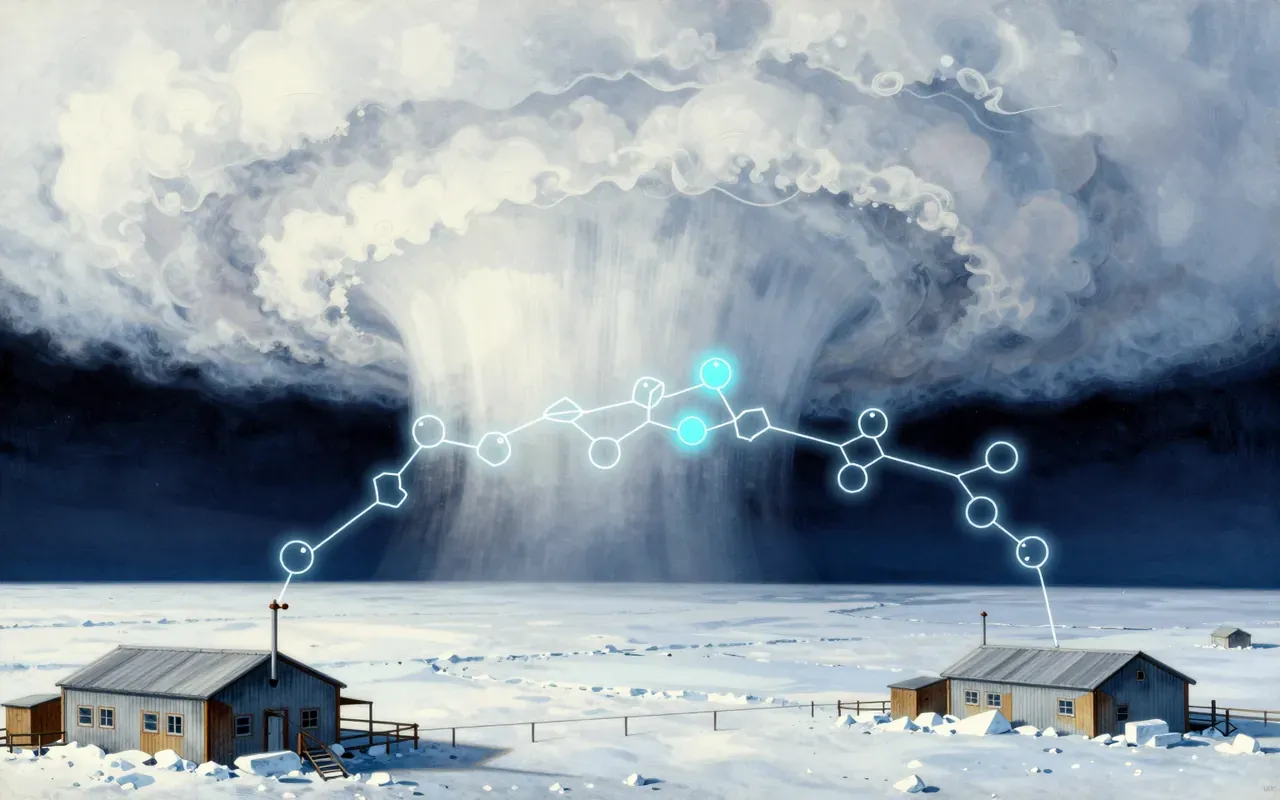
Chlorofluorocarbons were invented in the 1930s by Thomas Midgley Jr. as stable, useful compounds for refrigeration and aerosol propellants, valued precisely because they did not react readily under normal conditions. That same stability, though, is what let them persist long enough to drift up into the stratosphere, where ultraviolet light finally breaks them apart, releasing chlorine atoms. Once free in the stratosphere, that chlorine does not react with ozone once and disappear; it participates in a catalytic cycle, reacting with an ozone molecule to form chlorine monoxide and oxygen, and then reacting again with a free oxygen atom to regenerate the original chlorine radical. Because the chlorine atom is regenerated rather than consumed at each step, a single atom is able to react with roughly one hundred thousand ozone molecules before it is eventually removed from the cycle, over an atmospheric residence time that can reach a century.
One atom, a hundred thousand molecules
The Antarctic ozone hole moved this chemistry from theoretical concern to documented fact in 1985, when researchers from the British Antarctic Survey reported measurements showing ozone column reductions of up to seventy percent over Antarctica during the region’s spring. The severity there specifically owes to polar stratospheric clouds, which form only under the extreme cold of Antarctic winters and provide surfaces where chlorine reservoir compounds convert into far more reactive forms. When sunlight returns in spring, those reactive chlorine compounds drive rapid ozone destruction within the polar vortex, with the material noting that over half of the lower stratospheric ozone in that region is destroyed during the Antarctic spring specifically, a concentrated seasonal effect rather than a uniform year-round depletion.
A hole confirmed in 1985, not before
The consequences of increased ultraviolet exposure are laid out with specific figures rather than generic warnings. The material states that every one percent decrease in long-term stratospheric ozone is associated with roughly a two percent increase in basal and squamous cell skin cancer incidence, and that a ten percent increase in UVB radiation correlates with meaningfully higher melanoma rates in both men and women. Cataract risk is also tied to UVB exposure, with ozone depletion projected to cause hundreds of thousands of additional cataracts by 2050 based on studies of watermen with high sun exposure. Beyond human health, a 2011 study found evidence of sunburn-like epidermal damage in whales off California, and increased UVB has been linked to a measurable reduction in terrestrial plant productivity in areas with substantial ozone loss.
What thinner ozone actually costs
The policy response moved unusually fast once the science was confirmed. Frank Sherwood Rowland and Mario Molina had proposed in 1974 that CFCs could destroy stratospheric ozone, but it was the 1985 Antarctic discovery, combined with compelling NASA visualisations of the growing hole, that catalysed rapid negotiation. The Montreal Protocol was signed on 16 September 1987, roughly eighteen months after the ozone hole’s discovery, and entered into force in January 1989. Mostafa Kamal Tolba, then head of the UN Environment Programme, is credited as a driving figure behind the agreement, and even the CFC industry, including DuPont, moved from initial resistance to public support by 1986, acknowledging that continued large increases in CFC use would be unacceptable.
An eighteen-month sprint to a treaty
The protocol’s phase-out schedule was structured in stages, with developed nations required to freeze CFC production at 1986 levels and reach a complete phase-out by 1996, while developing nations followed a slower timeline reaching full phase-out by 2010. The treaty has since achieved universal ratification by every UN member state plus the European Union, described as the first treaty in UN history to do so, and has been extended through several amendments, including the 2016 Kigali Amendment, which brought hydrofluorocarbons, potent greenhouse gases used as CFC replacements, under a comparable phase-down schedule, explicitly turning the Montreal Protocol into a climate treaty as well as an ozone one.
Recovery that is real but not finished
The material is honest that recovery, while real, is not yet complete or free of setbacks. Ninety-eight percent of the ozone-depleting substances targeted by the protocol have been phased out, effective chlorine levels in the atmosphere have been declining since the mid-1990s, and a 2023 UN assessment projected the ozone layer will return to 1980 levels by around 2040 for most of the world, 2045 over the Arctic, and 2066 over Antarctica specifically. Yet a 2020 study identified unexpected CFC-11 emissions traced to northeastern China, estimated to delay recovery by roughly a decade, and the Antarctic ozone hole reached one of its largest recorded extents in September 2023, possibly influenced by the 2022 Tonga volcanic eruption. This closing honesty, treating a genuine environmental success story as still unfinished business, is exactly what makes the hour worthwhile.