What the work claims
The 2009 draft and 2010 Science publication claimed Neanderthals and anatomically modern humans interbred. It claimed gene flow left 1–4% Neanderthal DNA in non-African humans. It claimed the Neanderthal and human lineages diverged long before interbreeding — though the exact divergence time cited (370,000 years) is not tied to the 2009/2010 analysis in the sources.
How it was done
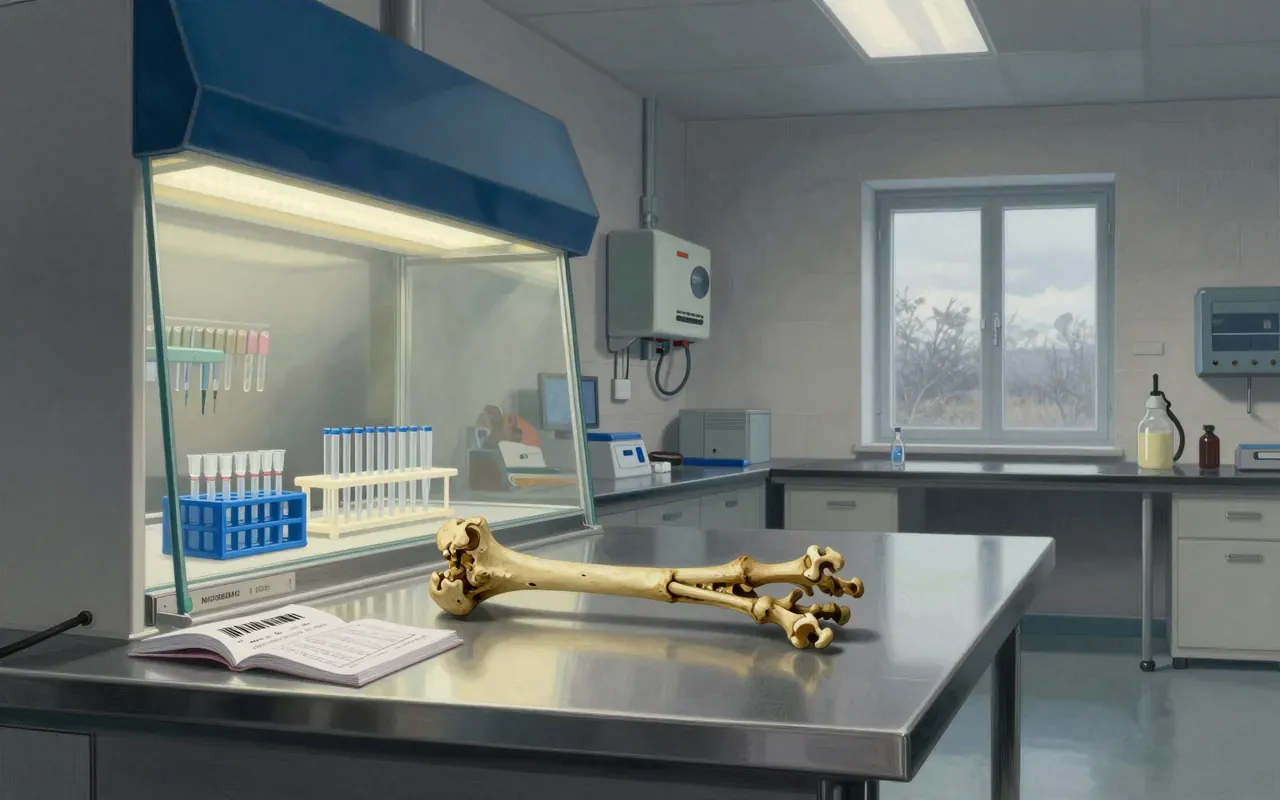
The team extracted DNA from femur bones of three 38,000-year-old female Neanderthals from Vindija Cave, Croatia, and other bones from Spain, Russia, and Germany. They sequenced four billion base pairs of Neanderthal DNA. Only about half a gram of bone was required. Contamination from bacteria and human handlers posed major challenges.
What holds up
The conclusion that Neanderthal DNA persists in non-African modern humans holds up. The evidence comes from direct comparison of the draft genome with modern human genomes. Admixture is dated to 50,000–60,000 years ago in the Middle East. The interbreeding occurred with Eurasian, not Sub-Saharan African, humans.
What does not
It does not show that Neanderthals contributed to Sub-Saharan African genomes. It does not prove language capability — only that FOXP2 mutations are shared. It does not date the split between Neanderthals and humans to 370,000 years in the 2009–2010 draft; that figure appears only in source 1, unattributed to the 2009/2010 work.
Why it matters beyond the lab
It ended the ‘Out of Africa without mixing’ model. It showed human ancestry is reticulate — not tree-like. It made archaic admixture a baseline assumption in medical genomics, anthropology, and evolutionary biology.
Is it worth your time
Yes. It redefined human origins by showing interbreeding was real — not speculative — and established the first high-coverage ancient hominin genome. The methods pioneered here underpin all subsequent ancient DNA work.