11:30in productionCh. 1 · Found on paper, not in space/ 11:30 · ceiling 15 min
Astronomy & space · Physics
Wow! signal
1977
A single 72-second blip — thirty times louder than noise, narrower than 10 kHz, never seen again — is not evidence of aliens. It is evidence of how easily curiosity outruns verification.
The Wow! signal is a well-documented instrumental anomaly — narrowband, intense, unrepeated — not a discovery of intelligence or a solved mystery. Its value lies in exposing the gap between detection and meaning.
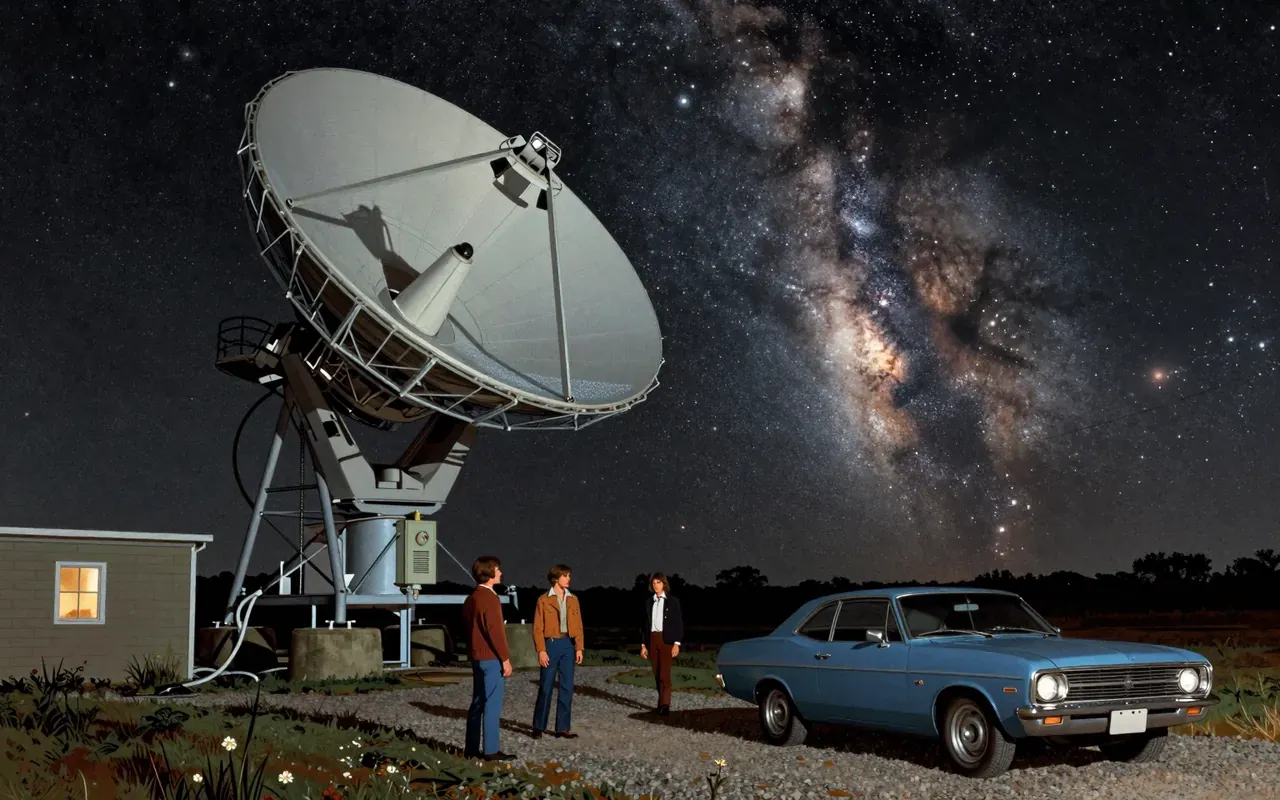
Jerry R. Ehman found it days after detection — not in real time — by scanning paper printouts from Ohio State’s Big Ear telescope.
2:12
72 seconds is a telescope limit, not a signal duration
The 72-second duration matches exactly how long Earth’s rotation kept any given patch of sky in view — not how long the signal 'lasted' in space.
3:55
Thirty sigma is real. But it’s local, not cosmic.
Thirty standard deviations above noise means extreme statistical rarity — but only relative to a baseline averaged over prior minutes, not absolute power.
4:57
Narrow and steady — not proof of design
Less than 10 kHz wide and unmodulated — consistent with artificial transmission, but also with many natural narrowband emitters we’ve yet to characterise.
6:24
A telescope that couldn’t look back
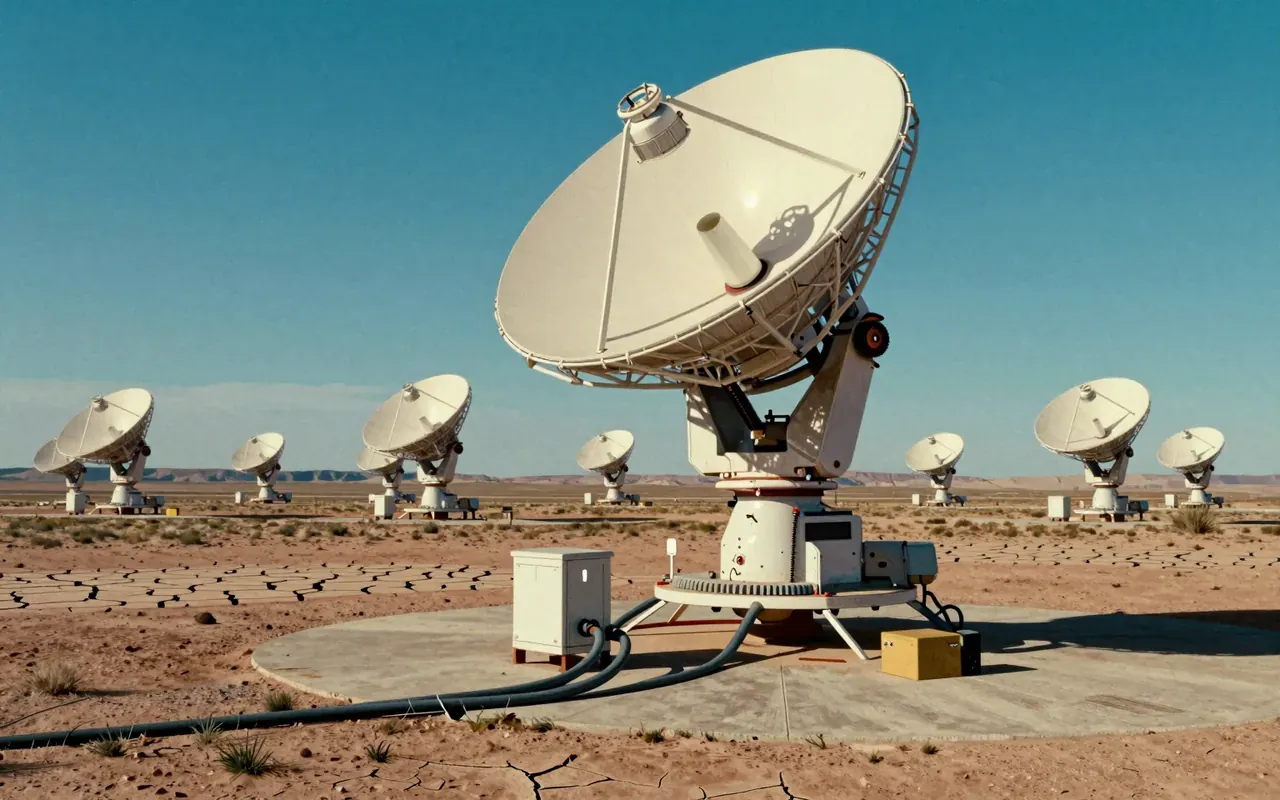
Big Ear had no steering — only altitude adjustment — so its sky coverage was passive, rigid, and non-revisit capable.
7:42
What the data actually says
Every measurable property — duration, intensity, bandwidth, modulation state — is constrained by instrument geometry and data format, not astrophysical inference.
Worth your time?
Yes. Study the whole thing.
3.5/ 5
What works
defines narrowband signal detection thresholds
illustrates limits of single-epoch observation
exemplifies proper response to irreproducible data
What does not
establish extraterrestrial origin
confirm repeatability
localise source coordinates
exclude terrestrial interference
Study it if
SETI practitioners
radio astronomers
philosophers of evidence
Skip it if
those seeking proof of aliens
those expecting resolution
The written brief1 min read
What the work claims
The work makes no claim. It reports an anomaly: a strong, narrowband, unmodulated radio signal, observed once, under known instrumental constraints. No inference about origin, intent, or significance is made in the source material.
How it was done
Ohio State University’s Big Ear radio telescope detected the signal on August 15, 1977. The telescope was fixed in altitude and relied on Earth’s rotation to scan the sky. Each point in the sky was observable for exactly 72 seconds. Jerry R. Ehman discovered the signal a few days later by manually reviewing printed data logs.
What holds up
The signal lasted 72 seconds. Its peak intensity was thirty standard deviations above background noise. Its bandwidth was less than 10 kHz. It appeared unmodulated. These are all directly measured or constrained by the instrument’s design and data record.
What does not
It does not establish an extraterrestrial origin. It does not confirm repetition, modulation, or source location. It does not rule out terrestrial interference — no such exclusion was performed or reported. Its direction remains ambiguous due to the telescope’s dual-beam design.
Why it matters beyond the lab
It matters as a canonical case study in scientific response to irreproducible signals — illustrating why SETI protocols require confirmation before interpretation, and why absence of recurrence is dispositive, not suggestive.
Is it worth your time
Yes — but only as a benchmark for how little evidence suffices to ignite speculation, and how much rigour is required to resolve it. It demands attention not because it points to intelligence, but because it exposes the limits of single-event detection in radio astronomy.