What the work claims
Zu Chongzhi claimed precise numerical values for π, the volume of a sphere, the length of the tropical year, the synodic month, and Jupiter’s orbital period — all derived from geometric reasoning and long-term astronomical observation.
How it was done
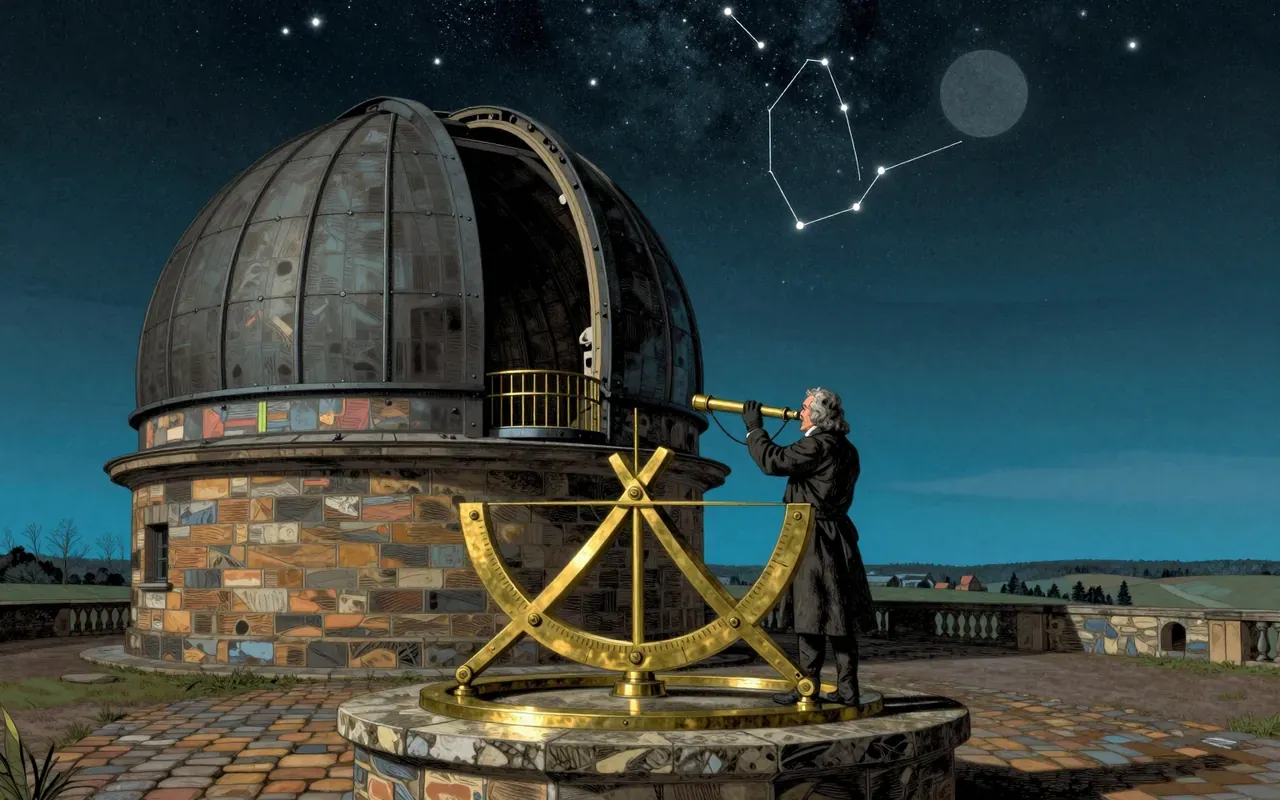
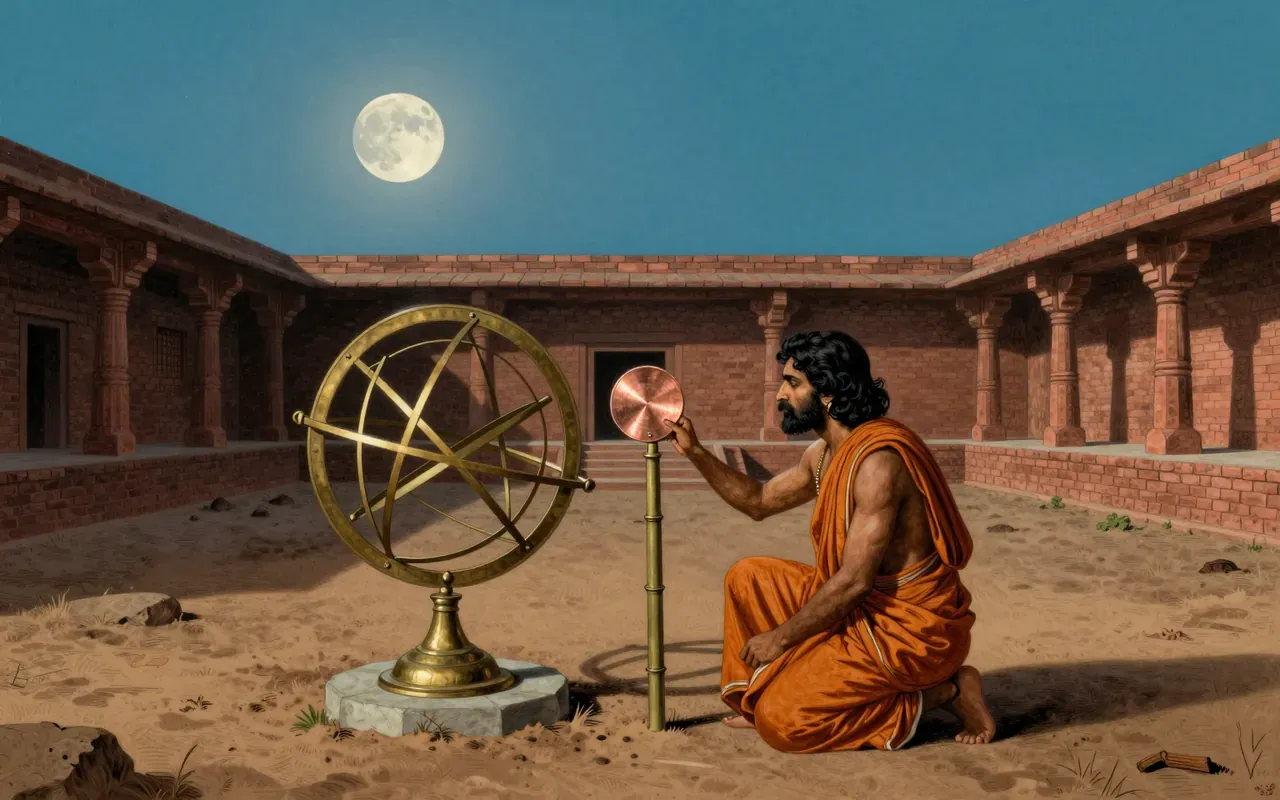
Zu Chongzhi approximated a circle with a 24,576-sided polygon to calculate π. He used the principle of equal cross-sectional areas — comparing solids with matching slices at equal heights — to derive the sphere’s volume. He calculated astronomical periods by observing celestial cycles and refining empirical measurements over decades.
What holds up
His π bound (3.1415926–3.1415927) holds. So does the sphere volume formula πD³/6. His tropical year (365.24281481 days), synodic month (27.21223 days), and Jupiter year (~11.858 years) all match modern values within 0.0003%, 0.00004%, and 0.03% respectively.
What does not
The material does not establish that Zu Chongzhi proved π irrational, derived trigonometric functions, invented algorithms for general computation, or built instruments. It says nothing about his observational apparatus, error margins, sample sizes, or whether his eclipse predictions were statistically tested.
Why it matters beyond the lab
It matters because it shows high-precision quantitative science was possible without telescopes, calculus, or formal error analysis — challenging assumptions about when and how mathematical physics could emerge.
Is it worth your time
Yes. His methods predate calculus by a millennium yet yield results that match modern values to six decimal places in π and four or five in orbital periods — evidence of extraordinary rigour in pre-instrumental science.