sciencebriefs
all subjects →
9:55in productionCh. 1 · The Bacterium and the Belief/ 9:55 · ceiling 15 min
Medicine

Barry Marshall

A man drank bacteria and proved ulcers were infectious—not psychological.

Barry Marshall and Robin Warren discovered H. pylori's causal role in peptic ulcers and gastritis through culture, self-experimentation, and Koch’s postulates—overturning the stress/acid theory.

Chapters & takeaways4
  1. 0:52
    The Bacterium and the Belief

    H. pylori causes many peptic ulcers—and was first cultured in 1982.

  2. 2:33
    The Eight-Day Experiment

    Slow growth hid H. pylori in plain sight—until Marshall drank it and proved stomach colonisation.

  3. 4:22
    What the Postulates Proved (and Didn’t)

    Koch’s postulates were satisfied for gastritis—not ulcers.

  4. 6:00
    From Suppression to Cure

    Killing H. pylori cured duodenal ulcers—making them treatable, not just manageable.

Worth your time?

Yes. Study the whole thing.

4.5/ 5
What works
  • H. pylori causes many peptic ulcers
  • H. pylori colonises the stomach and causes gastritis
  • eradicating H. pylori cures duodenal ulcers
  • H. pylori grows too slowly for standard mucosal culture protocols
What does not
  • gastric cancer causation
  • ulcer causation in all cases
  • Koch's postulates for ulcers
  • transmission mechanism
Study it if
  • clinicians treating dyspepsia
  • students of medical history
  • researchers studying chronic infection
Skip it if
  • epidemiologists seeking population-level burden
  • microbiologists studying H. pylori genetics
The written brief1 min read

What the work claims

H. pylori is a bacterial cause of peptic ulcers and gastritis—not stress, spice, or acid. Its presence is necessary and sufficient to trigger gastritis; its eradication cures duodenal ulcers.

How it was done

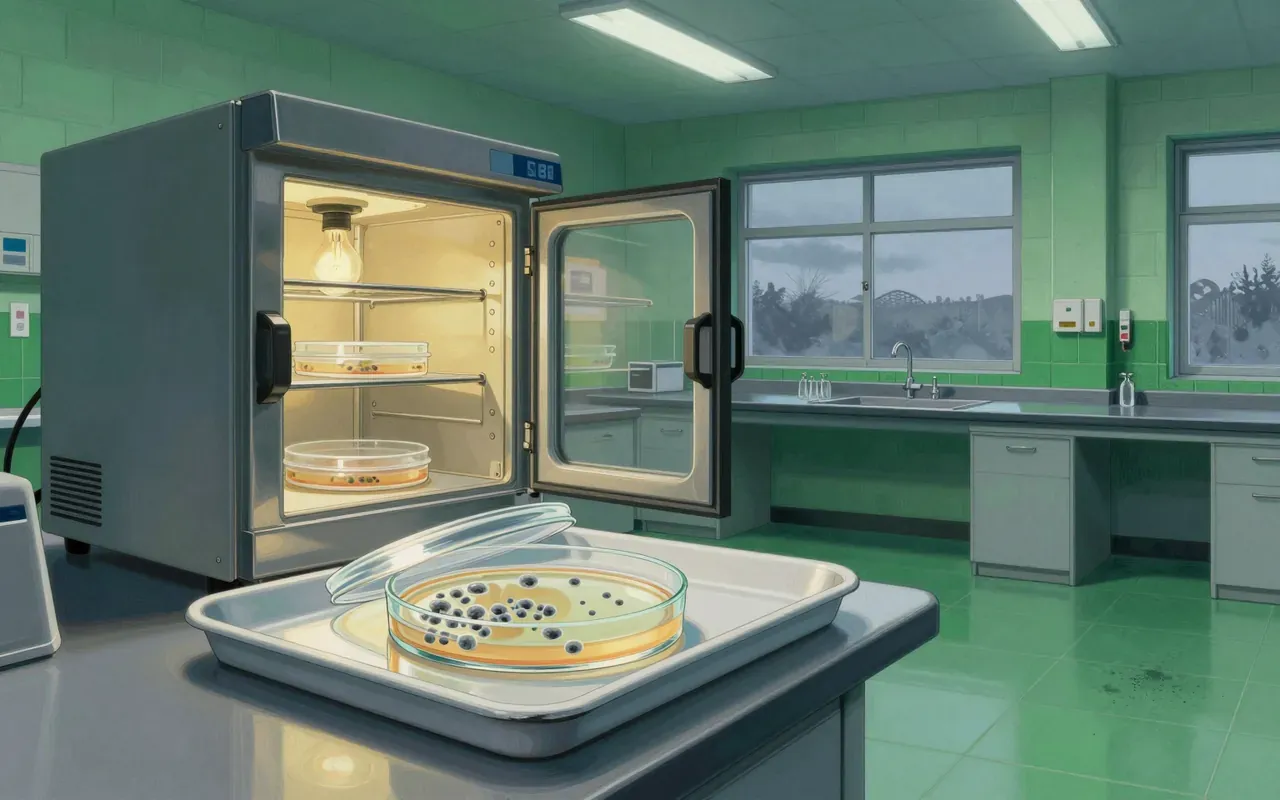
Marshall and Warren cultured H. pylori from gastric biopsies in 1982. They identified its slow growth—beyond the standard two-day mucosal culture window—and confirmed it colonised the stomach by Marshall’s self-inoculation: he drank a broth of cultured H. pylori, then underwent endoscopy on day eight to verify gastritis and bacterial presence.

What holds up

H. pylori plays a major role in causing many peptic ulcers. Antibiotic and bismuth regimens that killed H. pylori cured duodenal ulcers. H. pylori colonises the human stomach and causes gastritis—confirmed by culture, histology, and self-experiment.

What does not

Koch’s postulates were fulfilled for gastritis, not peptic ulcers. The work did not prove H. pylori causes gastric cancer, nor did it establish causation for all ulcers—only ‘many’. No claim was made about prevalence, transmission, or long-term outcomes beyond duodenal ulcer cure with anti-H. pylori regimens.

Why it matters beyond the lab

It replaced decades of misdirected treatment. Acid-suppressing drugs remained first-line for years after the discovery—but the finding enabled curative, targeted therapy. It also validated bacterial origins for chronic inflammatory conditions, reshaping how medicine approaches persistent disease.

Is it worth your time

Yes. It redefined ulcer aetiology, shifted clinical practice from acid suppression to antibiotic eradication, and demonstrated how rigorous application of Koch’s postulates—even via self-experiment—can overturn entrenched dogma.

Same field · Medicine4 of 23
Up next in Science

Bayes' theorem

Thomas Bayes · 1763 · 10:37

Bayes didn’t discover belief updating—he discovered how to bound a binomial probability parameter using conditional probability.

10:37