From a mould extract to a cured mouse
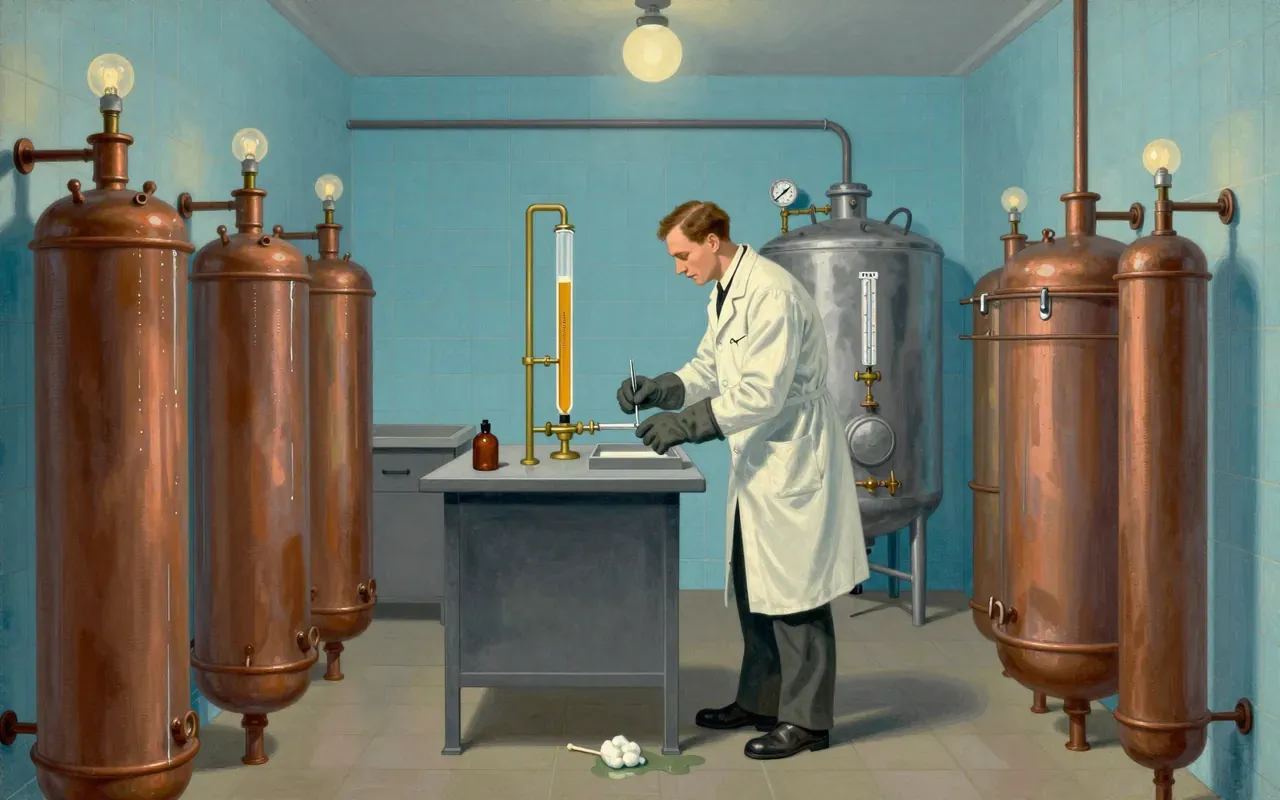
From 1939, Howard Florey assembled an interdisciplinary team at Oxford’s Sir William Dunn School of Pathology, including the biochemist Ernst Chain and the technician Norman Heatley, to investigate whether Alexander Fleming’s decade-old observation about a mould that killed bacteria could be turned into an actual medicine. The team developed methods for growing the mould, extracting the active compound with solvents, and using freeze-drying to preserve it without destroying its effect, working initially on a shoestring budget of a few hundred pounds from the Medical Research Council before securing further support from the Rockefeller Foundation. On 25 May 1940, Florey tested the purified extract by infecting eight mice with a virulent bacterial strain and treating four of them with penicillin; all four untreated mice died by the following morning, while the treated mice survived, a result Florey himself called something close to a miracle.
A human patient, and not enough drug
The team’s first human patient was Albert Alexander, an Oxford police officer with a severe facial infection, treated beginning in February 1941. Alexander’s condition improved dramatically at first, but the Oxford team could not produce enough penicillin to sustain the treatment through his full recovery, and he died in March, a death caused by a shortage of supply rather than any failure of the drug to work. The case demonstrated penicillin’s genuine therapeutic power while making painfully clear that laboratory quantities were nowhere near sufficient for real medical use, and it pushed the team to focus further trials on children, who required smaller doses of the still-scarce drug.
A trip to America and a lucky cantaloupe
Florey and Heatley travelled to the United States in June 1941 specifically to find manufacturers capable of producing penicillin at a scale Oxford’s small laboratory could not match, meeting officials at the Northern Regional Research Laboratory in Peoria, Illinois, where Robert Coghill proposed deep-tank fermentation as a route to mass production. A further breakthrough followed in 1943, when researchers searching worldwide for higher-yielding mould strains found one growing on a cantaloupe at a Peoria fruit market, a strain that substantially outperformed the original mould Fleming had first isolated and that was further improved through radiation-induced mutation in subsequent years.
Billions of units a year
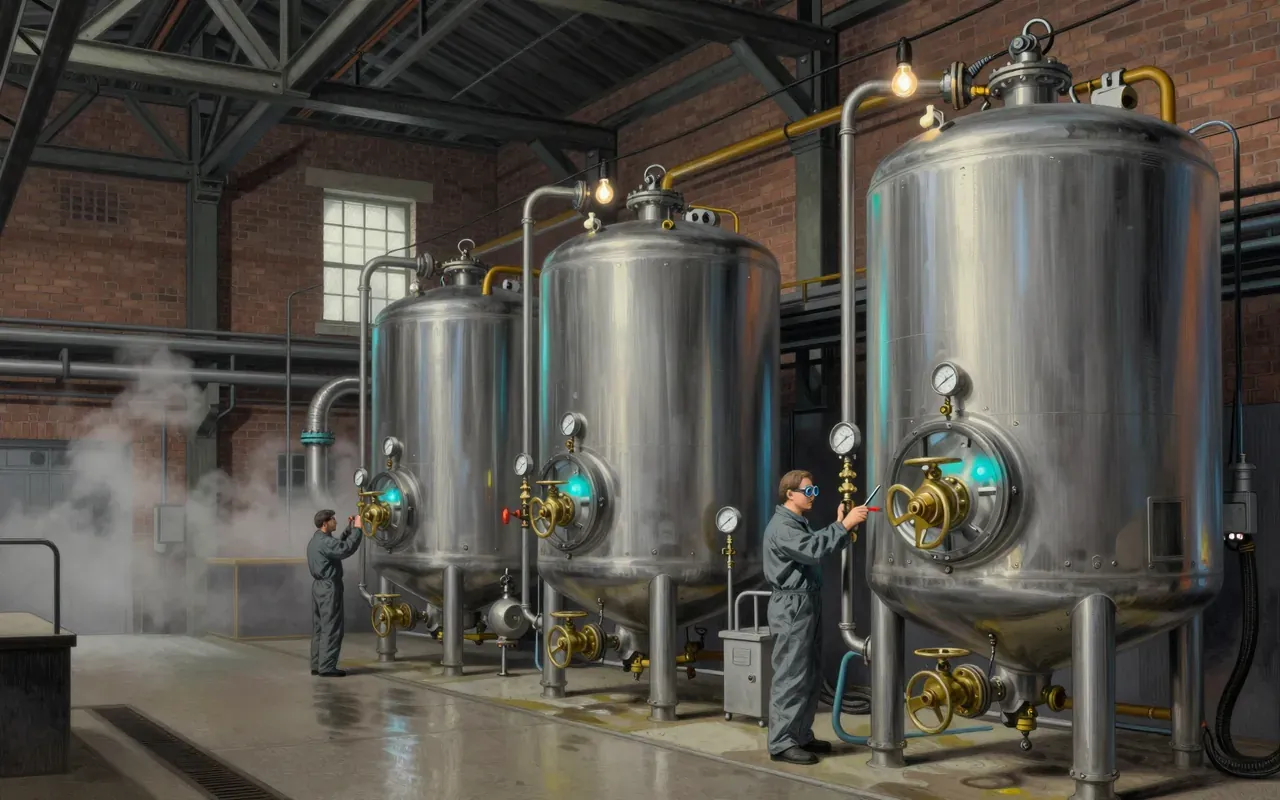
Production scaled at a pace that had no precedent in pharmaceutical manufacturing: from an estimated 21 billion units in 1943, output rose to 1,663 billion units in 1944 and an estimated 6,852 billion units by 1945, driven by American companies including Pfizer, which built large fermentation tanks specifically for the purpose, and by British manufacturers such as Imperial Chemical Industries and Glaxo, whose combined weekly output rose from around 2 million units in mid-1942 to hundreds of millions of units by 1944. That scale-up let penicillin reach military hospitals during the 1944 to 1945 European campaign in large enough quantities to be used both to treat and to prevent infection, sharply reducing deaths from wound infections that had killed large numbers of soldiers in earlier conflicts.
A patent decision Britain later regretted
The rapid American scale-up came with a cost that fell on Britain. Chain wanted the production process patented to protect British commercial interests, but Florey and colleagues at British institutions regarded profiting from the discovery as improper, so the process went unpatented on the British side while American manufacturers patented their own deep-tank fermentation methods without the same reservations. That asymmetry later forced British pharmaceutical firms to pay royalties to American companies for methods that British and American scientists had developed together, a consequence that only became apparent once penicillin’s industrial value was fully established and that eventually prompted Britain to set up its own body for managing research royalties.
Why the industrial half of the story matters
This part of the penicillin story is worth understanding on its own terms because it shows how much organisational and industrial effort stood between a laboratory result and an actual wartime medicine: purifying the compound, finding a manufacturer willing to invest in production, discovering a better mould strain almost by chance on a market cantaloupe, and building fermentation tanks at a scale no one had previously needed for a pharmaceutical product. None of that diminishes Fleming’s original observation, but it makes clear that turning it into the antibiotic era required years of separate, difficult, and only partly scientific work, work whose patent decisions still had financial consequences long after the war that made penicillin’s mass production so urgent had ended.