Three stages, one sinking volcano
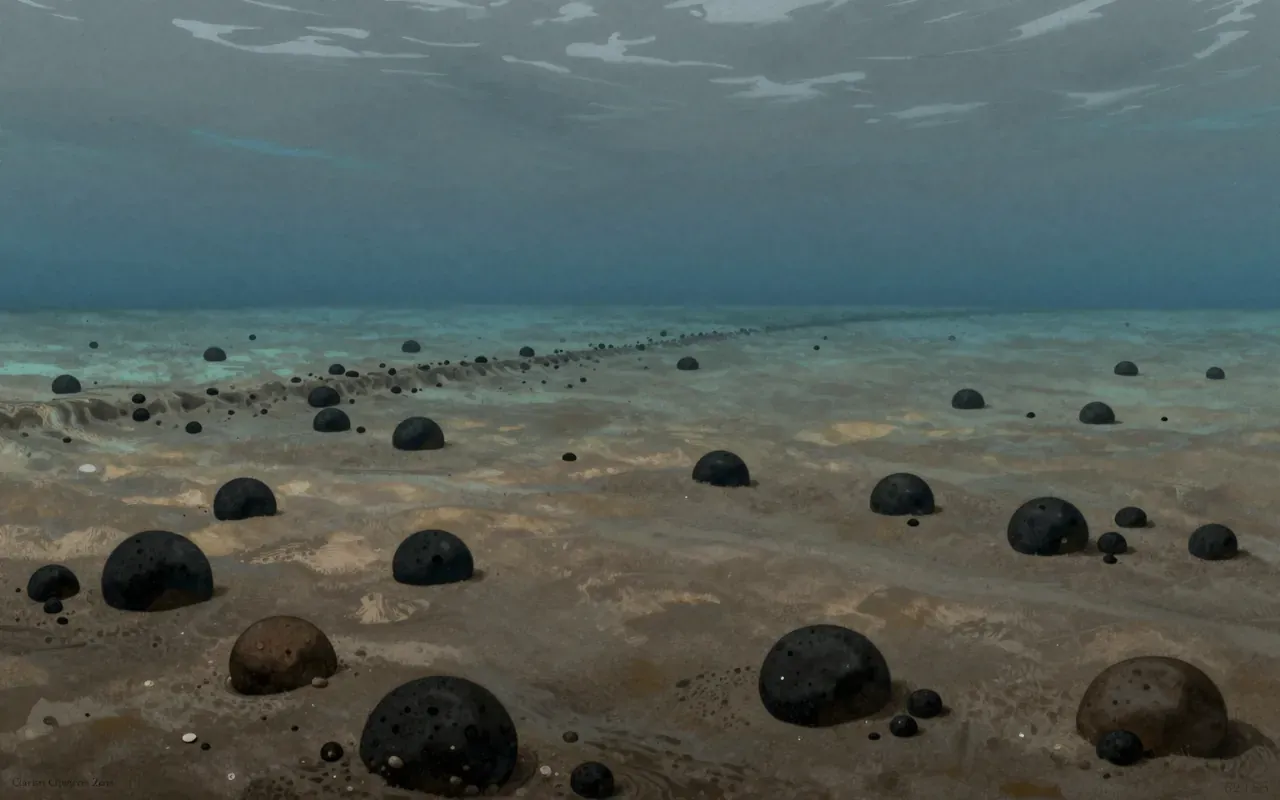
Charles Darwin published The Structure and Distribution of Coral Reefs in May 1842, presenting a three-stage explanation for how ring-shaped coral islands called atolls form, developed years before his work on evolution and drawing directly on observations from his 1831-to-1836 voyage aboard HMS Beagle. His model proposed that a fringing reef first grows directly around the shore of an active volcanic island; as the volcano gradually subsides beneath the sea, the reef’s outer edge keeps pace by growing upward toward the sunlight it needs, pulling away from the shrinking island and forming a barrier reef enclosing a lagoon; and finally, once the volcano sinks entirely beneath the waves, only the ring of coral remains, encircling a lagoon where the island’s peak used to be. The theory explained an entire class of roughly 440 known atolls, concentrated mainly in the Pacific, as the visible endpoint of a slow geological process rather than a distinct or separately formed kind of island.
Built from an earthquake, not an atoll
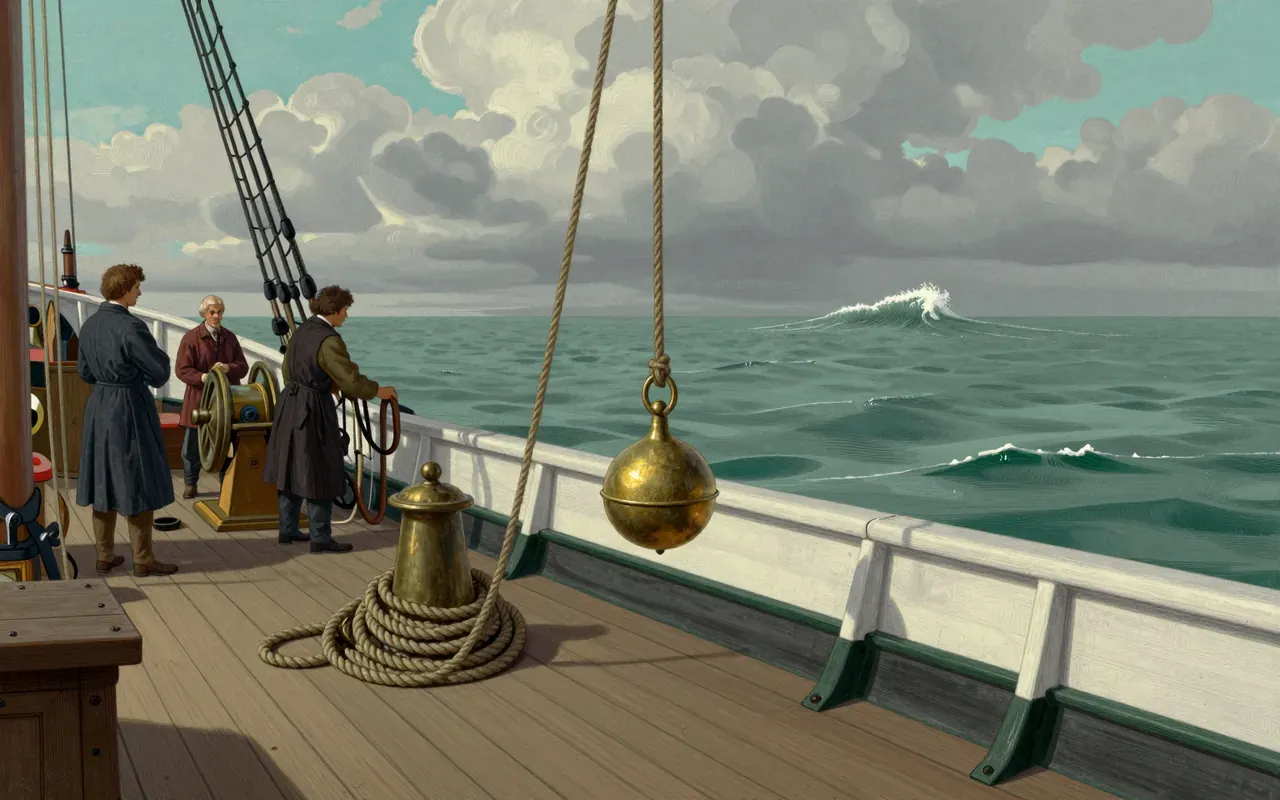
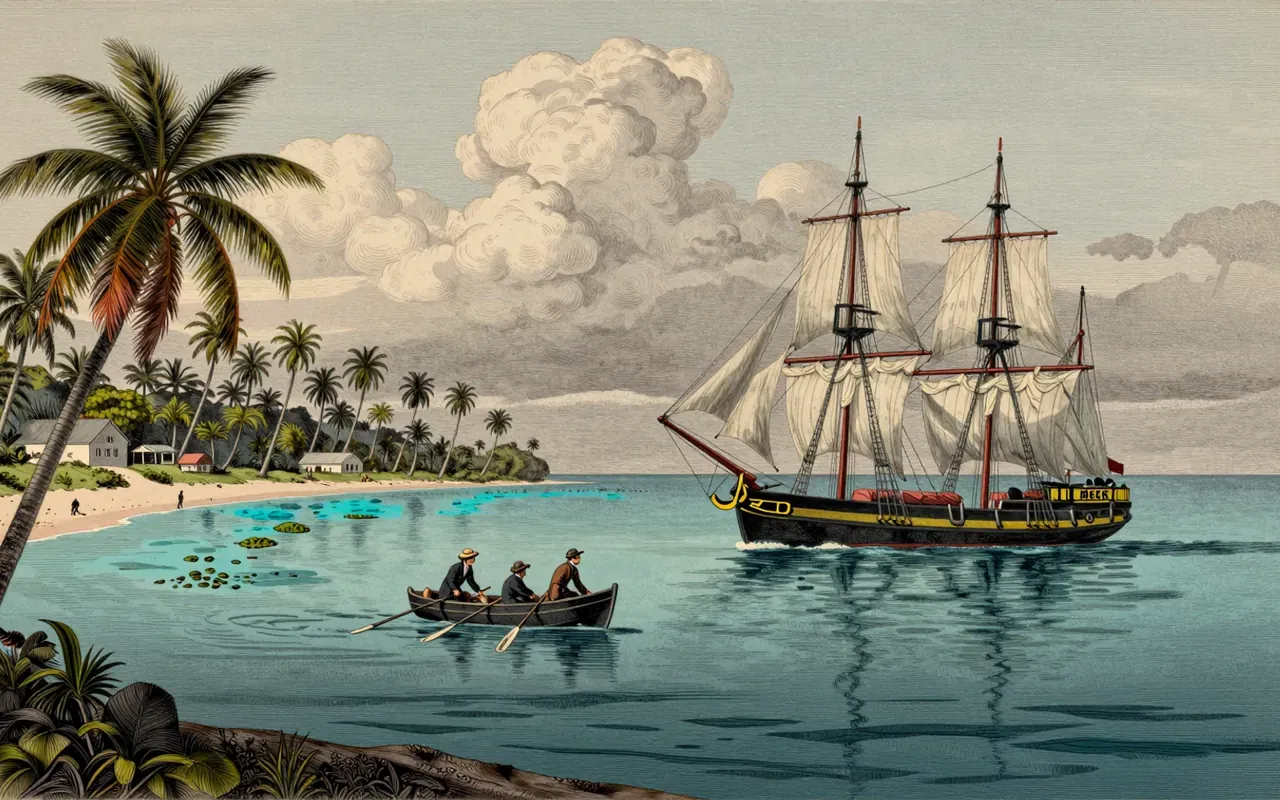
Darwin built the theory from indirect but carefully connected evidence gathered during the Beagle voyage rather than from any direct observation of an atoll actually forming. He had personally witnessed a major earthquake in Chile in 1835 that visibly raised the land, including stranded beds of mussels left above the new shoreline, which gave him direct evidence that large sections of Earth’s crust could rise; from this he reasoned that other regions of crust, including the ocean floor beneath scattered Pacific volcanic islands, might just as plausibly be sinking. Robert FitzRoy’s survey work at the Cocos, or Keeling, Islands during the same voyage offered supporting geological detail consistent with Darwin’s reasoning. The theory was, in effect, an extrapolation: reasoning from a directly observed process, land visibly rising in one place, to infer an unobserved, much slower process, land sinking somewhere else, playing out over a far longer timescale than any single voyage could witness directly.
A drilling expedition to test the claim
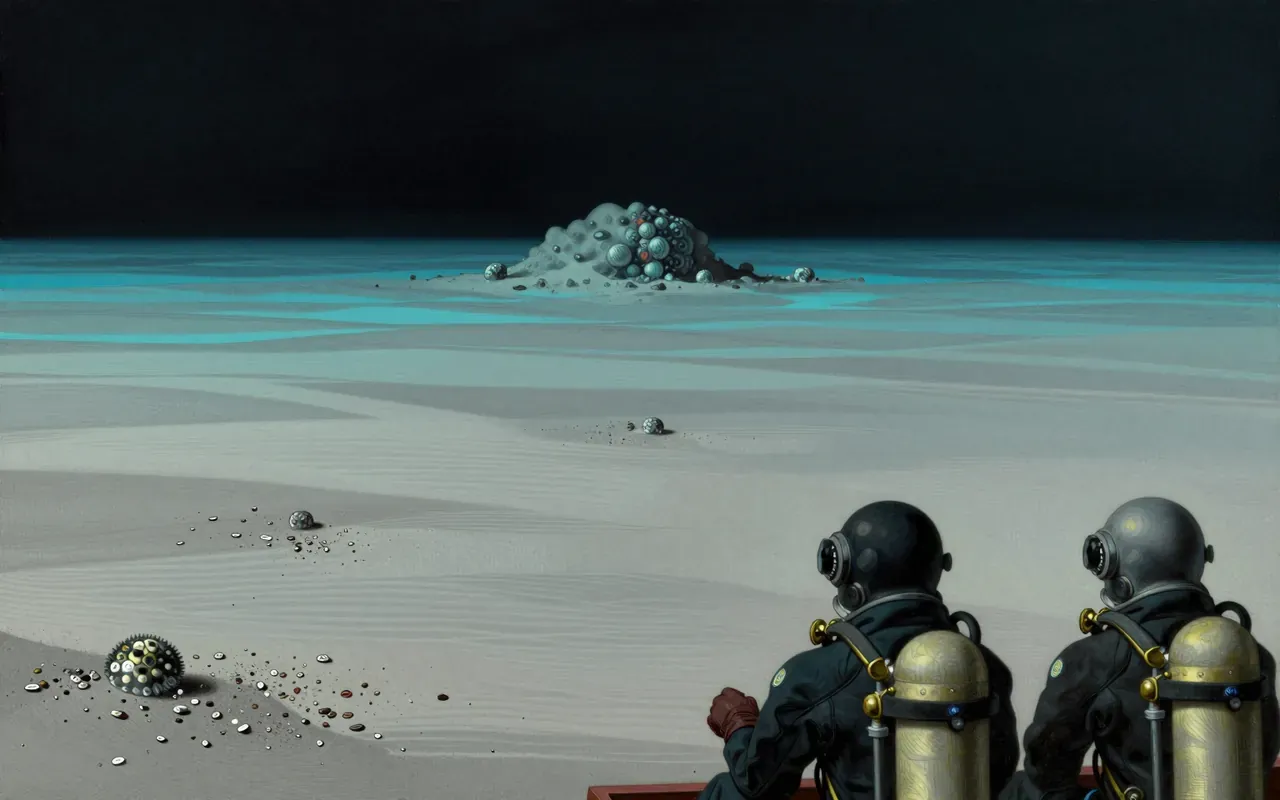
The theory’s basic sequence, fringing reef to barrier reef to atoll, has remained a standard, widely taught account of how many atolls form, and it correctly predicted the general structural relationship between the three reef types decades before anyone could test the claim directly. The most direct test attempted came from the Royal Society of London, which organised drilling expeditions on Funafuti atoll in Tuvalu between 1896 and 1898, led first by William Johnson Sollas and then by Edgeworth David, specifically to look for evidence of shallow-water organisms buried at depth, which Darwin’s subsidence model predicted should be there if a reef had genuinely grown upward for a long period while its foundation sank. That the Royal Society considered the question worth a dedicated, multi-year drilling expedition more than fifty years after Darwin’s original publication shows how seriously the subsidence hypothesis was taken as a testable scientific claim rather than a speculative aside.
A rival explanation for the same shape
More recent research complicates rather than simply confirms Darwin’s original account. Work by researchers including A.W. Droxler and Stéphan Jorry has proposed an alternative explanation, sometimes called the antecedent karst model, in which atoll shapes formed through the preferential dissolution of exposed coral limestone during past glacial periods, when sea levels dropped and left older reef structures exposed to weathering, creating raised rims that later regrew once sea levels rose again, a process largely independent of any volcanic island subsiding underneath. This research specifically argues that many modern atolls are unconnected to a submerged, buried island at all, and that subsidence-driven atoll formation of the kind Darwin described did not become the dominant process until a particular period roughly corresponding to a marine isotope stage from several hundred thousand years ago, meaning Darwin’s mechanism may describe only part of the full story rather than the complete explanation for every atoll observed today.
Part of the story, not the whole
Beyond settling a specific geological question, Darwin’s coral reef theory mattered because it demonstrated, well before his work on evolution made him famous, that he could build a rigorous, falsifiable scientific argument from indirect field observation, reasoning from a directly witnessed geological event to a much larger, unobserved process operating over a vastly longer timescale. That habit of extrapolating carefully from limited direct evidence to a broader mechanism, later tested by others through direct physical investigation, is recognisably the same intellectual approach he brought to natural selection nearly two decades afterward. The coral reef work also established sea-floor subsidence as a legitimate object of geological study in its own right, feeding into later, much more detailed understanding of how ocean floors move and change over geological time.
A scientific method later applied to evolution
This is worth the time as an early example of Darwin’s scientific method operating in a field entirely separate from the one that made him famous, and as a case study in how even a well-reasoned, carefully evidenced theory can turn out to be one part of a more complicated picture rather than the full and final answer. Readers should not expect a clean, closed case: the Funafuti drilling expeditions show how seriously scientists tested Darwin’s specific prediction, but the more recent antecedent karst research suggests his subsidence mechanism, while real, is not the whole explanation for every atoll observed today. That complication does not diminish the achievement so much as place it correctly, as a genuinely important early contribution to a question geology is still actively refining more than 180 years later.