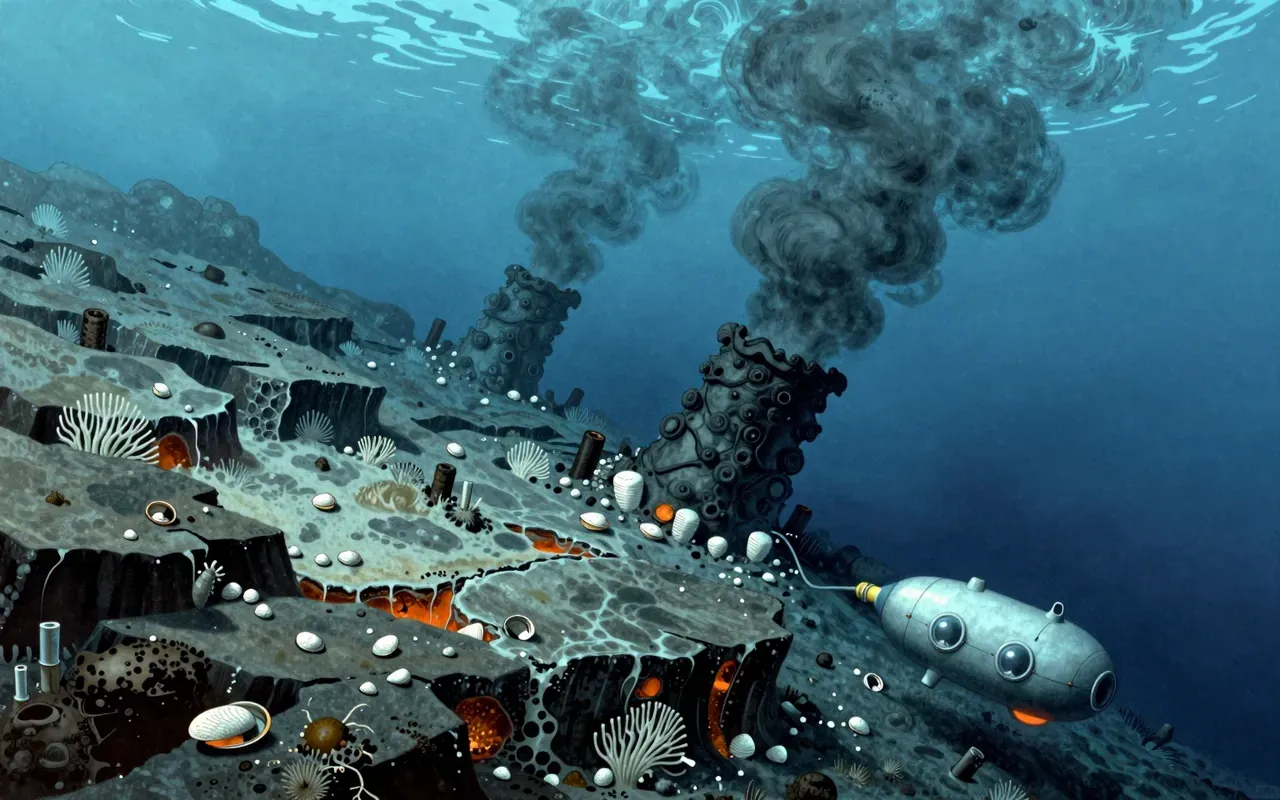
Chimneys built from superheated mineral water
The material describes hydrothermal vents as fissures on the ocean floor, concentrated along tectonically active zones such as mid-ocean ridges, where geothermally heated, mineral-laden water escapes into the surrounding sea. The temperature contrast is stark: vent water can reach several hundred degrees Celsius against an ambient deep-ocean temperature only a few degrees above freezing, and when that hot, mineral-rich water meets the cold surrounding seawater, dissolved minerals precipitate out almost immediately, building chimney structures that can grow rapidly. Two broad types are distinguished by colour and mineral content, black smokers rich in sulphur-bearing minerals and generally closer to the underlying heat source, and white smokers carrying lighter minerals such as barium and calcium, typically found further from the heat and associated with a later stage of a vent field’s activity.
A 1977 dive that found life without sunlight
The scientific discovery of these ecosystems is traced through a specific, dated sequence rather than presented as a vague modern finding. Scientists from the Scripps Institution obtained the first evidence of submarine hydrothermal vents along the Galapagos Rift in June 1976 using imaging equipment, but the pivotal moment came on 17 February 1977, when the submersible Alvin, with researchers including Jack Corliss and Tjeerd van Andel aboard, directly observed a vent site later named Clambake and documented an extensive, unexpected biological community clustered around it. Black smokers specifically were identified two years later, in April 1979, during a separate expedition. This sequence of specific dives matters because it marks the actual moment biologists confirmed a functioning ecosystem could exist independent of sunlight, rather than the idea simply being proposed on paper.
A different way to build organic matter
What sustains that ecosystem is chemosynthesis, a process the material distinguishes clearly from photosynthesis: rather than using light as an energy source, chemosynthetic bacteria oxidise inorganic compounds, most commonly hydrogen sulphide, and use the energy released to convert carbon dioxide into organic matter, producing solid sulphur as a byproduct rather than the oxygen photosynthesis releases. This chemical route allows biological productivity at vent sites to reach many times that of the surrounding, sunlight-starved seafloor, since the bacteria are not dependent on any light reaching these depths at all, drawing their energy instead directly from the chemistry of the vent water itself, a genuinely separate foundation for an ecosystem compared with virtually every sunlit environment on the planet’s surface.
A worm with no mouth and billions of tenants
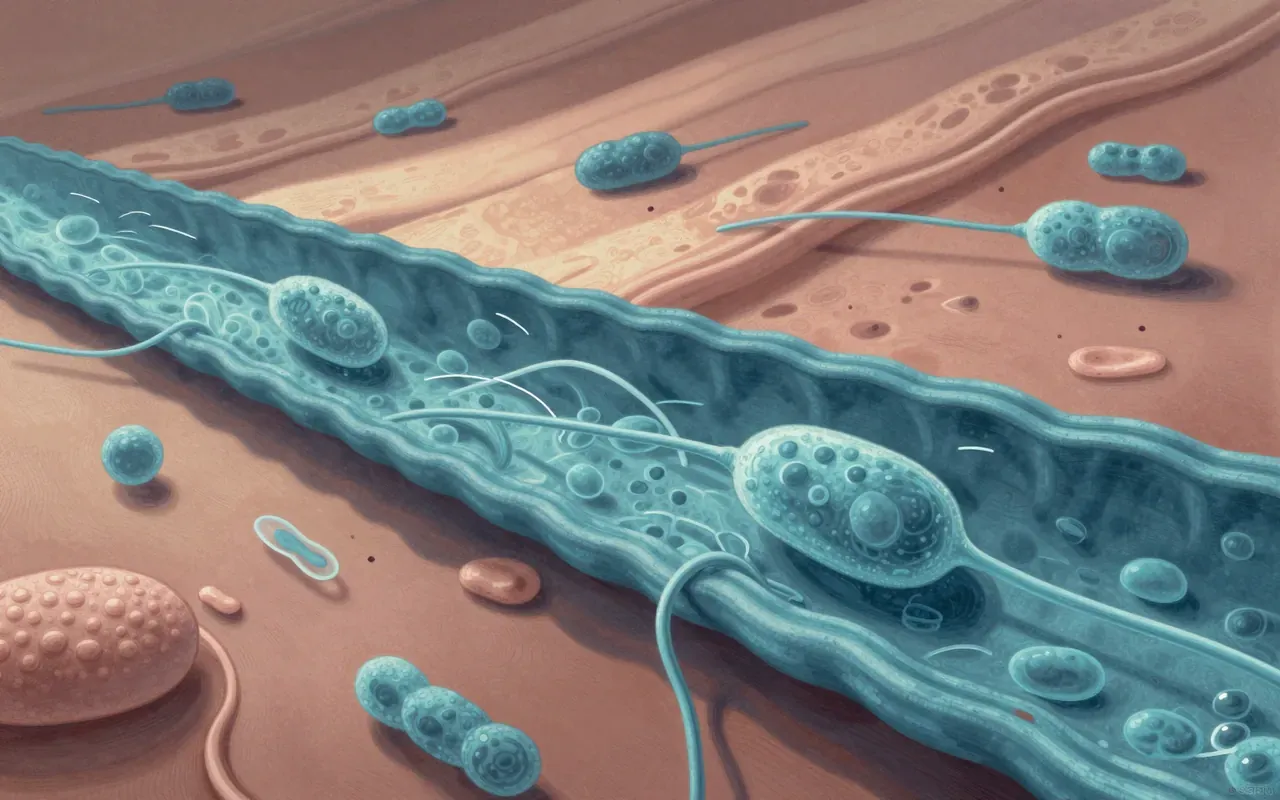
Giant tube worms are presented as the clearest illustration of how far this chemistry can go. These worms grow over two metres tall yet possess no mouth and no digestive tract at all, relying instead on chemosynthetic bacteria housed inside an internal organ called the trophosome, with hundreds of billions of bacteria present in a given amount of tissue. The worm’s distinctive red plume contains haemoglobin that transports hydrogen sulphide from the surrounding water down to its internal bacterial symbionts, which then use that hydrogen sulphide as their energy source to fix carbon and produce the sugars and amino acids the worm actually lives on. This is presented as a genuinely complete nutritional dependency, with the worm having essentially outsourced its entire feeding apparatus to bacteria it carries internally.
A theory that waited eighty years for proof
The theoretical groundwork for chemosynthesis predates its confirmed discovery by decades. Sergei Winogradsky proposed in 1890 that some microbes might survive purely on inorganic matter, and Wilhelm Pfeffer coined the term chemosynthesis itself in 1897, but the idea remained a theoretical proposal without a confirmed real-world example until Colleen Cavanaugh, working in the aftermath of the 1977 vent discovery, proposed and then confirmed that chemosynthetic bacteria were what actually allowed tube worms to survive. The material credits her specifically with demonstrating chemosynthesis as an operating biological process rather than a hypothesis, closing a gap of roughly eighty years between the concept being named and it being shown to actually sustain a real ecosystem.
A candidate site for where life itself began
The closing material turns to origin-of-life theory, where hydrothermal vents, particularly alkaline vents, are treated as a serious candidate environment for how life first assembled its basic chemistry. Günter Wächtershäuser’s iron-sulfur world theory proposes that mineral surfaces at vent sites could have catalysed the formation of simple organic molecules from dissolved carbon dioxide, and the material notes that natural pH gradients at alkaline vents, along with supercritical carbon dioxide found at certain sites, have been proposed as a way around the so-called water paradox, water’s usual tendency to break down organic molecules rather than help build them. Fossilised microorganisms found in 2017 in a rock formation potentially dating back over four billion years are cited as supporting evidence. This is a genuinely rewarding hour, moving cleanly from a well-documented 1977 discovery through confirmed modern biology into a carefully framed, still-open scientific hypothesis.