sciencebriefs
all subjects →
9:30in productionCh. 1 · The Yacht Race Observation/ 9:30 · ceiling 15 min
Ecology · Earth & climate

Great Pacific Garbage Patch

Moore didn’t discover the garbage patch — he named it, after NOAA had already measured it.

Moore’s 1997 observation was vivid and consequential — but not novel in evidence. The 1988 NOAA paper delivered the first empirical basis. The gap between public attribution and scientific priority is the real story.

Chapters & takeaways4
  1. 0:50
    The Yacht Race Observation

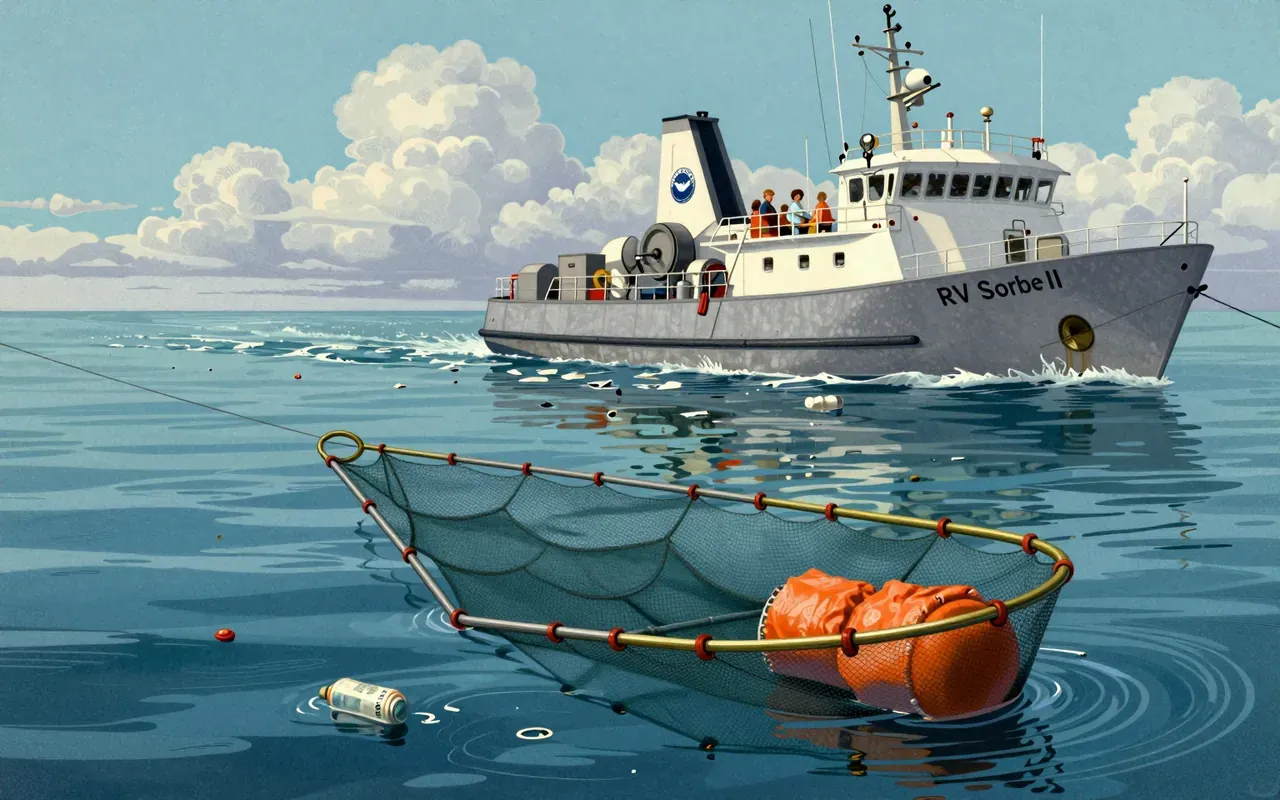
    Moore’s 1997 yacht race transit through the North Pacific Gyre yielded the first widely publicised eyewitness account of the debris field.

  2. 2:32
    The Name Was Born Here

    Curtis Ebbesmeyer named the region the 'Eastern Garbage Patch' after Moore alerted him — coining the term that entered public lexicon.

  3. 4:00
    The Real Discovery Happened in 1988

    The patch was predicted in 1988 using direct measurements of neustonic plastic — not theory or modelling alone.

  4. 5:22
    Confirmation, Not Discovery

    Moore’s observation confirmed a prediction — but added no new quantitative evidence.

Worth your time?

Yes. Study the whole thing.

3.5/ 5
What works
  • naming
  • public framing
  • confirmation of prediction
What does not
  • discovery
  • quantification
  • causal mechanism
Study it if
  • science communicators
  • policy audiences
  • environmental educators
Skip it if
  • marine chemists
  • plastic transport modellers
The written brief1 min read

What the work claims

Moore claimed to have encountered an enormous stretch of floating debris in the North Pacific Gyre. The 1988 paper claimed that neustonic plastic accumulates there at measurable levels — a prediction later associated with the same region.

How it was done

Charles Moore observed floating debris during a 1997 yacht race transit through the North Pacific Gyre. He reported the observation to oceanographer Curtis Ebbesmeyer. A 1988 NOAA-published paper had already predicted the phenomenon using measurements of neustonic plastic in the North Pacific Ocean.

What holds up

The 1988 NOAA paper established the first empirical basis for the patch: actual measurements of neustonic plastic in the North Pacific Ocean. Moore’s 1997 report led to naming the ‘Eastern Garbage Patch’ — a durable label that shaped public and media framing.

What does not

Moore’s 1997 observation did not discover the patch. It did not quantify plastic concentration, distribution, or composition. It did not establish causation, mechanism, or temporal trend. It was not a scientific measurement.

Why it matters beyond the lab

It catalysed global attention on marine plastic pollution — but misattributes discovery to a single visual anecdote rather than the earlier, methodical work. That misattribution still shapes policy narratives and public understanding.

Is it worth your time

Yes — it anchors public awareness of ocean plastic accumulation in a concrete, named location and event. But the 1997 observation added no new data or measurement; it was anecdotal confirmation of a prediction made nine years earlier.
Same field · Ecology4 of 16
Up next in Science

Hayflick limit

Hayflick · 12:05

Cells don’t die from bad conditions — they count their divisions and stop.

12:05