sciencebriefs
all subjects →
9:53in productionCh. 1 · Taxonomist/ 9:53 · ceiling 15 min
Evolution · Ecology

Ernst Haeckel

He gave biology its language — then corrupted its evidence.

Ernst Haeckel’s legacy rests on durable contributions — taxonomy, nomenclature, classification — and a catastrophic methodological failure: falsified embryological illustrations used to prop up the biogenetic law. His language survived. His law did not.

Chapters & takeaways5
  1. 0:50
    Taxonomist

    Haeckel named nearly 700 radiolarians and thousands of other species — a taxonomic output unmatched in scale for his time.

  2. 2:17
    Lexicographer

    He coined ecology, phylum, phylogeny, ontogeny and Protista — and proposed the kingdom Protista in 1866.

  3. 3:39
    Tree-Builder

    He mapped a genealogical tree relating all life forms — the first comprehensive attempt to visualise universal descent.

  4. 5:18
    Recapitulator

    He wrongly claimed ontogeny recapitulates phylogeny — using falsified embryonic drawings to do so.

  5. 7:00
    Physiologist

    He treated psychology as a branch of physiology — an early materialist framing of mind.

Worth your time?

Yes. Study the whole thing.

3.5/ 5
What works
  • His naming of thousands of species.
  • His mapping of a genealogical tree relating all life forms.
  • His coining of ecology, phylum, phylogeny, ontogeny and Protista.
  • His proposal of the kingdom Protista in 1866.
What does not
  • The biogenetic law is false.
  • His embryological drawings were incorrectly drawn.
  • He wrongly claimed ontogeny parallels and summarizes phylogeny.
Study it if
  • Biologists needing historical context for core terminology.
  • Students confronting recapitulation in textbooks.
  • Historians of scientific error.
Skip it if
  • Those seeking empirical validation of recapitulation.
  • Researchers looking for modern phylogenetic methodology.
  • Anyone assuming his embryology holds up.
The written brief1 min read

What the work claims

That individual development (ontogeny) recapitulates and summarises evolutionary history (phylogeny); that life can be organised into a single genealogical tree; and that a new kingdom — Protista — unites microscopic, unicellular organisms.

How it was done

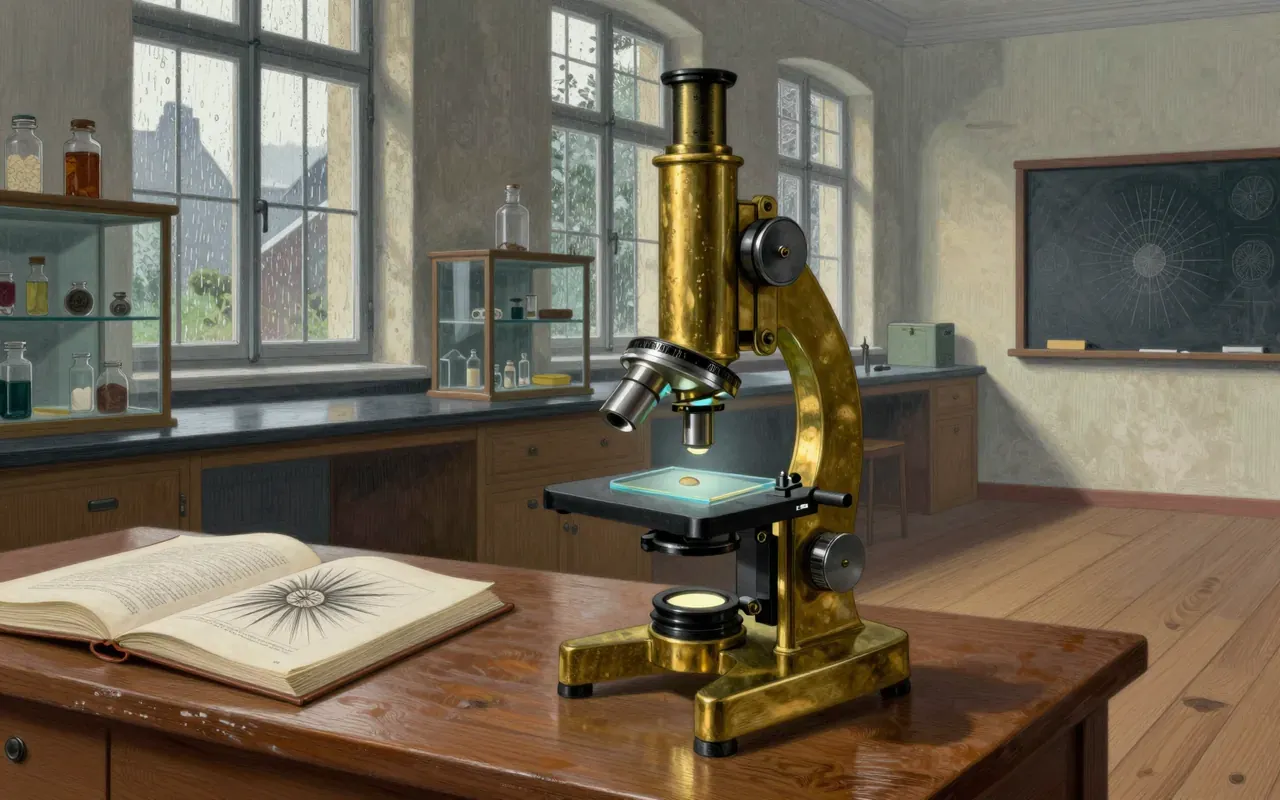
Haeckel discovered, described and named thousands of new species — including nearly 700 radiolarians during a Mediterranean trip — mapped a genealogical tree of life, coined terms including ecology, phylum, phylogeny, ontogeny and Protista, proposed the kingdom Protista in 1866, used a reflecting microscope at the University of Jena to make embryological drawings, and treated psychology as part of physiology.

What holds up

He discovered, described and named thousands of new species. He mapped a genealogical tree relating all life forms. He coined ecology, phylum, phylogeny, ontogeny and Protista. He proposed the kingdom Protista in 1866.

What does not

His biogenetic law — that ontogeny parallels and summarizes phylogeny — is wrong. He derived it using incorrectly drawn human embryonic images.

Why it matters beyond the lab

His terms ecology, phylum, phylogeny and ontogeny are foundational to biological discourse. His genealogical tree prefigured modern phylogenetics. His error in embryology became a textbook case of how methodological flaws distort theory.

Is it worth your time

Yes — because his terminology and taxonomic framework remain embedded in modern biology, even where his theories failed.

Same field · Evolution4 of 45
Up next in Science

Ernst Mach

· 10:01

Mach didn’t discover relativity — he photographed shock waves and mapped how your inner ear keeps you upright.

10:01