What the work claims
Supersonic projectiles generate conical shock waves with the projectile at the apex. These waves compress air ahead of the projectile. Balance depends on fluid movement in the semicircular canals. Absolute motion cannot be detected without external reference — inferred via swivel-chair experiments.
How it was done
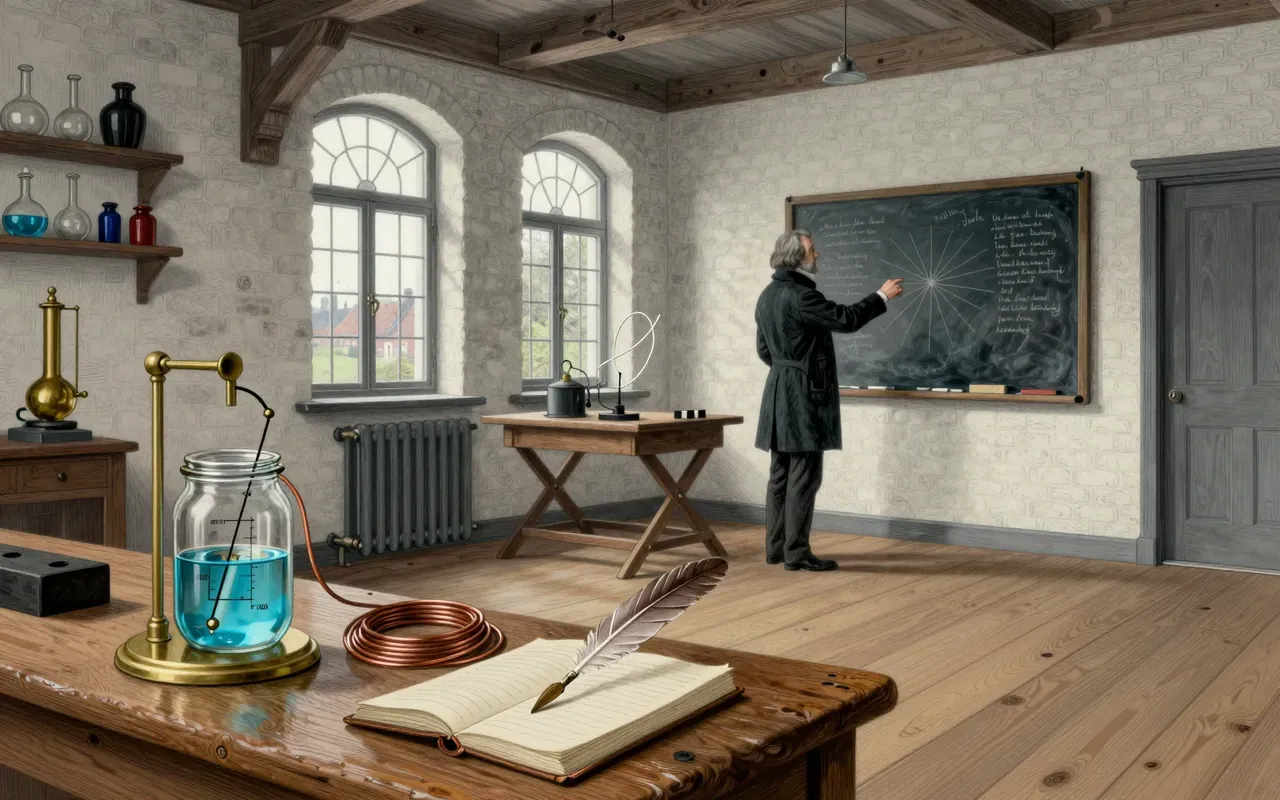
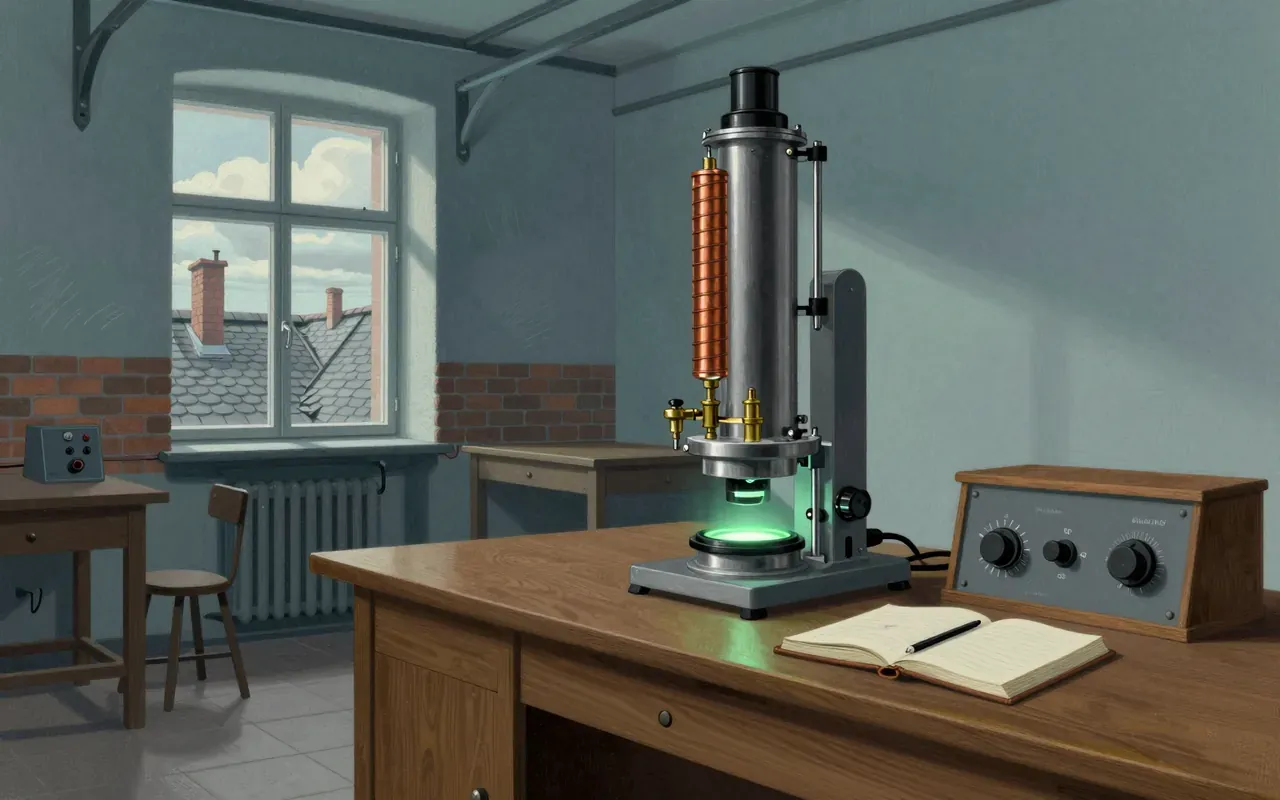
Mach used schlieren photography with his son Ludwig to photograph shock wave shadows. He and Peter Salcher analysed supersonic projectiles in flight. Mach tested motion perception using a swivel chair. He and Josef Breuer independently studied fluid dynamics in the semicircular canals.
What holds up
The conical geometry of supersonic shock waves was experimentally confirmed and photographed. The role of semicircular canal fluid in detecting angular acceleration was independently verified by Mach and Breuer. Schlieren imaging of ballistic shock waves remains a valid, replicable technique.
What does not
The work does not establish a universal theory of relativity, nor does it prove that inertia arises from distant matter — those are later interpretations. It does not quantify shock wave angles, pressures, or energy dissipation. It makes no claim about consciousness, cognition, or subjective experience.
Why it matters beyond the lab
Mach’s shock wave work underpins modern aerodynamics, high-speed ballistics, and flow visualisation. His balance research anchors clinical vestibular diagnostics and neuro-otology. His critique of absolute space influenced Einstein — but that influence is interpretive, not claimed in the work itself.
Is it worth your time
Yes — it established foundational experimental methods for visualising invisible wave phenomena and linked inner-ear fluid mechanics to balance, both still used in physics and neuroscience labs.