sciencebriefs
all subjects →
9:33in productionCh. 1 · A deliberate hunt/ 9:33 · ceiling 15 min
Physics

Hans Christian Ørsted

Ørsted didn’t stumble on electromagnetism — he hunted it for two years with a compass, and got the physics half-right.

Ørsted’s 1820 experiment established the first empirical link between electricity and magnetism using a compass needle. It showed circular field geometry but mischaracterised the effect as radial radiation. Its significance lies not in completeness but in being the indispensable first step — the observation that forced physics to unify two forces.

Chapters & takeaways4
  1. 0:49
    A deliberate hunt

    Ørsted pursued electricity–magnetism links deliberately for two years before succeeding.

  2. 2:14
    The needle moved

    A compass needle deflected by current was the first proof of electromagnetism.

  3. 3:53
    Circular, not linear

    The magnetic field wraps circularly around the wire — not along it.

  4. 5:52
    A flawed analogy

    Ørsted wrongly compared magnetic radiation to light and heat.

Worth your time?

Yes. Study the whole thing.

4.5/ 5
What works
  • demonstrated electricity–magnetism linkage
  • showed circular field geometry
  • used reproducible, low-tech instrumentation
  • initiated a new research programme
What does not
  • quantified field strength
  • derived mathematical law
  • established directional polarity (N/S)
  • disproved competing theories
Study it if
  • students of electromagnetism
  • historians of experimental science
  • engineers tracing origins of power systems
Skip it if
  • anyone seeking quantitative models
  • those needing modern field theory
  • readers expecting technological application details
The written brief1 min read

What the work claims

An electric current deflects a compass needle, proving a direct relationship between electricity and magnetism. The resulting magnetic field is circular around the wire. Magnetic effects radiate from all sides of the current-carrying wire, like light and heat.

How it was done

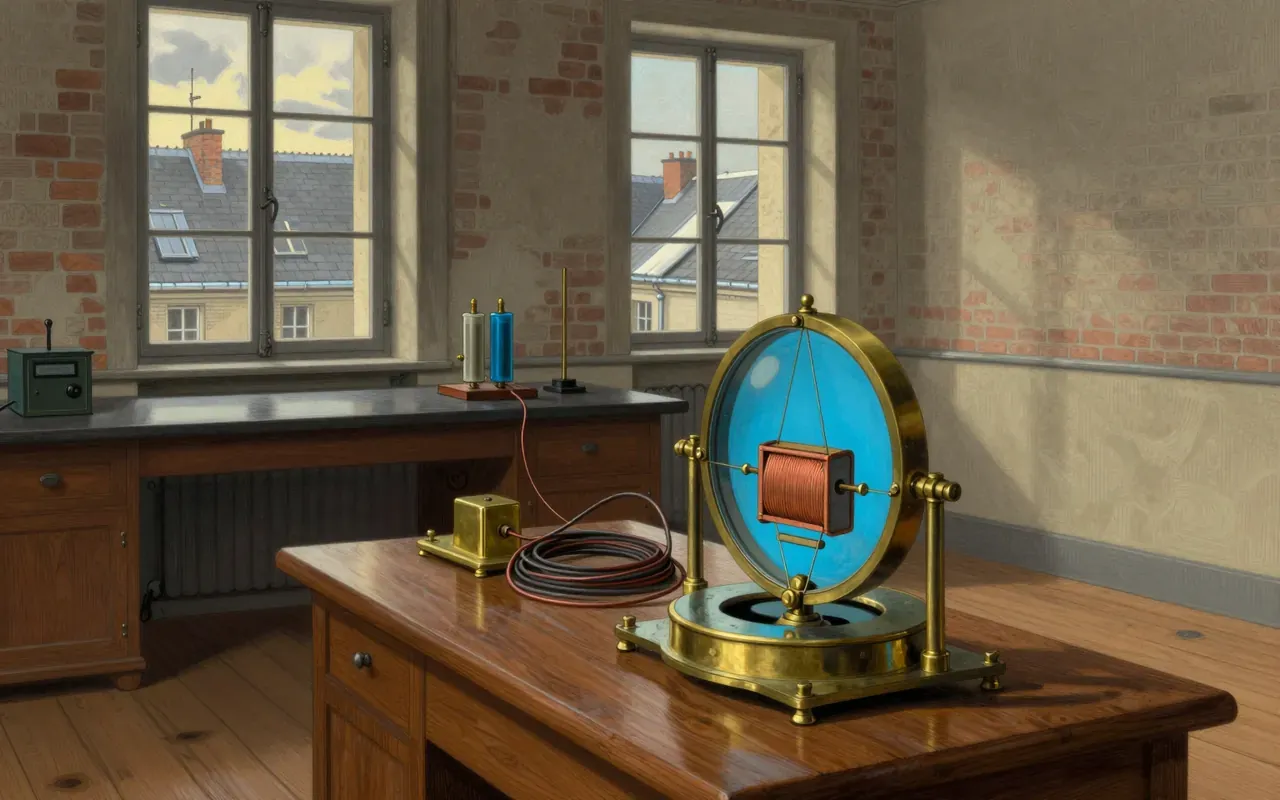
Ørsted used a compass needle as his key instrument. He had deliberately pursued a link between electricity and magnetism since 1818. In 1820, he observed deflection of the needle by a nearby electric current.

What holds up

The deflection of a compass needle by an electric current was observed and reported. The magnetic field is circular around the wire. The connection between electricity and magnetism is direct and experimentally confirmed.

What does not

Ørsted did not quantify the field strength. He did not derive a mathematical law. He did not show directionality beyond circular geometry. His interpretation likened the effect to light and heat radiation — an analogy unsupported by evidence in the material.

Why it matters beyond the lab

This discovery initiated the unification of electricity and magnetism — a prerequisite for Maxwell’s equations, electric motors, generators, and modern power infrastructure.

Is it worth your time

Yes. It is the first experimental demonstration of electromagnetism — the foundational observation that enabled all subsequent electromagnetic theory and technology.
Same field · Physics4 of 114
Up next in Science

Hans Christian Ørsted

· 10:28

Ørsted didn’t prove electromagnetism — he startled a compass, and changed physics forever.

10:28