What the work claims
Planets orbit the Sun in ellipses, not circles. Their motion obeys a geometric rule: equal orbital areas in equal times. Celestial change occurs beyond the planets—SN 1604 was in the fixed stars. Light intensity diminishes with the square of distance. Vision depends on an inverted retinal image. A two-convex-lens telescope improves magnification over Galileo’s design.
How it was done
Kepler used Tycho Brahe’s precise Mars observations and geometric-physical reasoning. He tested nested Platonic solids to model planetary distances, then abandoned that model when elliptical orbits fit the Mars data better. He calculated orbital areas over time to verify equal-area sweeping. He measured absence of parallax in SN 1604. He derived optical principles from geometric analysis of light rays, lenses, and the eye.
What holds up
All three planetary laws hold: elliptical orbits with the Sun at one focus; equal area swept in equal time; and the period–distance relation (though the document only states the first two explicitly, and the third is implied by ‘third law’ in the opening summary). The parallax argument for SN 1604’s stellar distance holds. The inverse-square law of light intensity holds. Retinal image inversion and the Keplerian telescope design are empirically validated and still in use.
What does not
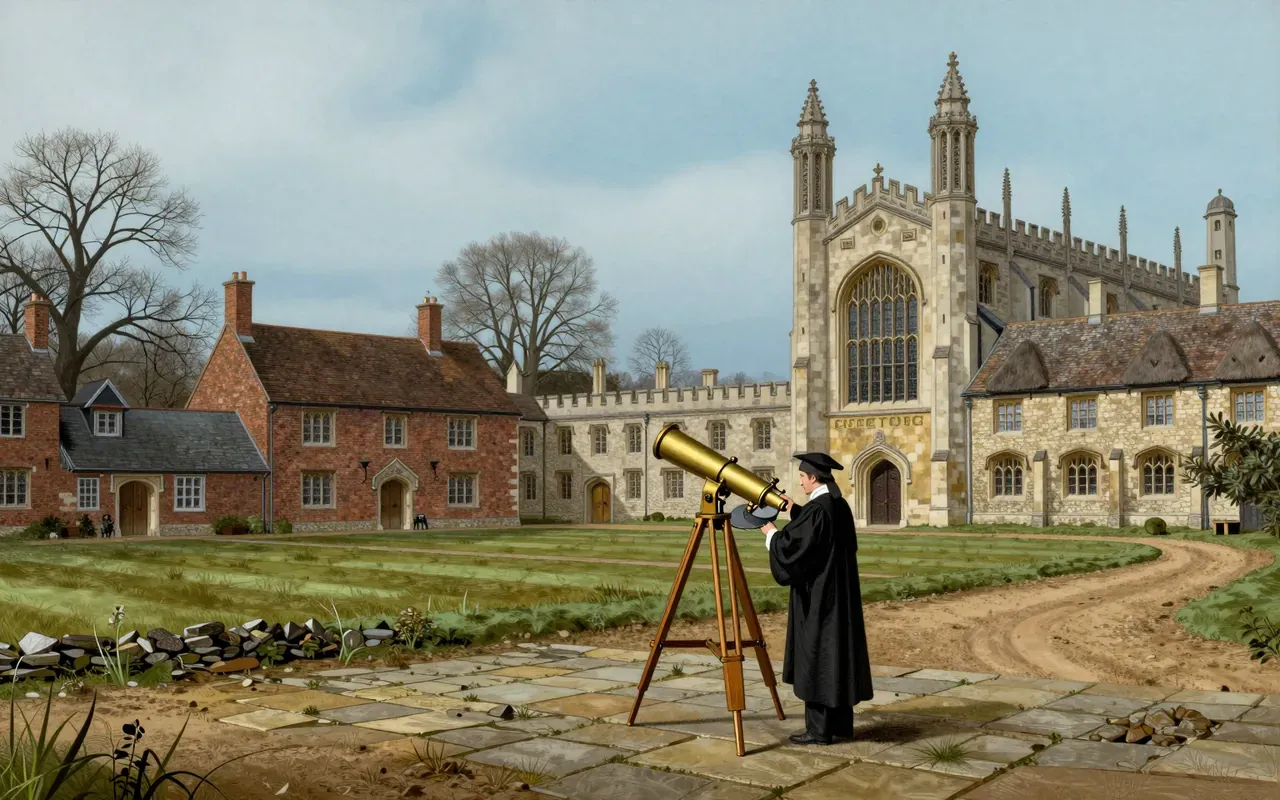
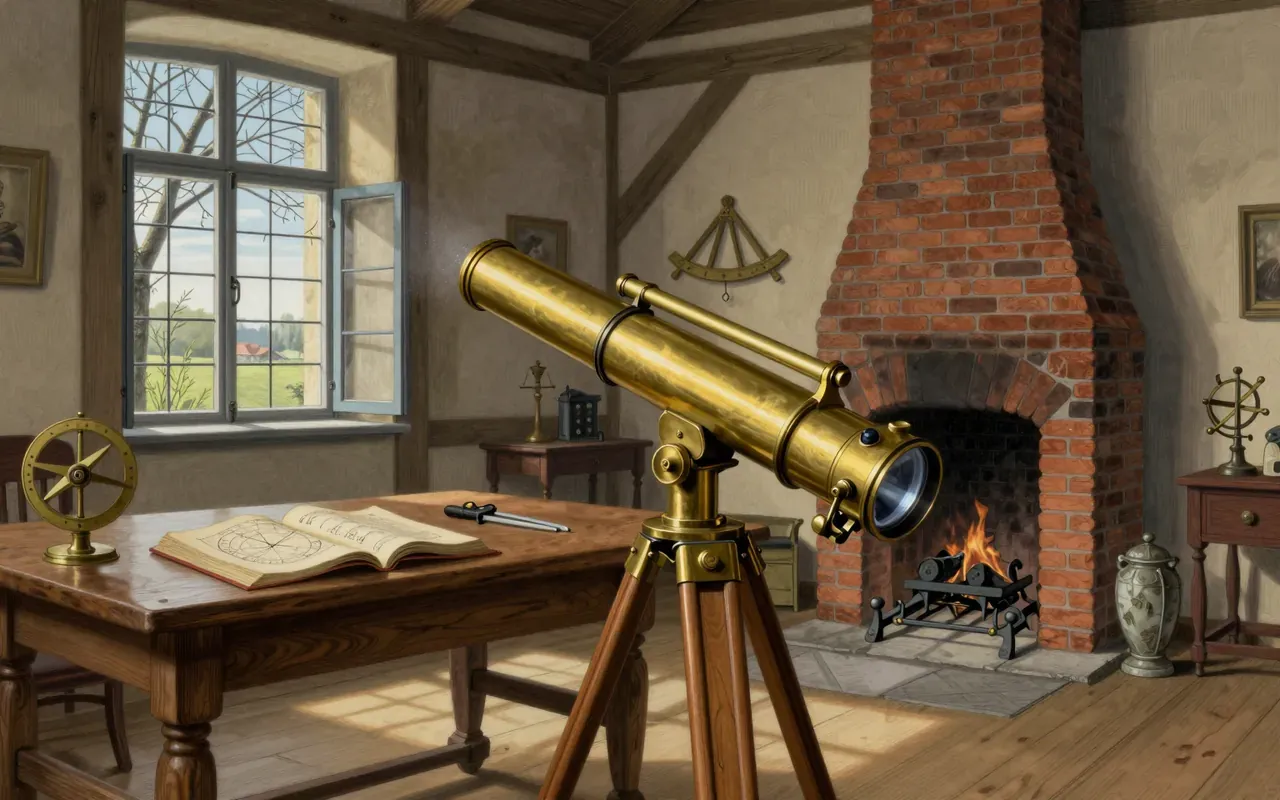
The document does not establish that Kepler proved the inverse-square law of gravity. It does not claim he derived planetary motion from universal gravitation. It does not report experimental verification of retinal inversion by dissection or physiology. It does not say he built or deployed the Keplerian telescope—only that he described it.
Why it matters beyond the lab
Kepler shifted astronomy from kinematic description to causal physics—making it a precursor to Newtonian mechanics. His optics underpin all imaging systems, from microscopes to space telescopes. His rejection of celestial immutability opened cosmology to historical change. His method—rigorous fitting of geometry to empirical data—became the template for modern scientific modelling.
Is it worth your time
Yes. Kepler redefined astronomy as celestial physics—not just mapping positions, but seeking physical causes. His laws remain foundational for orbital mechanics, spacecraft navigation, and exoplanet detection. His optical insights directly enabled modern telescopes and vision science.