What the work claims
That television — defined as the live transmission and display of moving images with tonal gradation — was mechanically achievable using rotating disks, photoelectric cells, and incandescent lamps.
How it was done
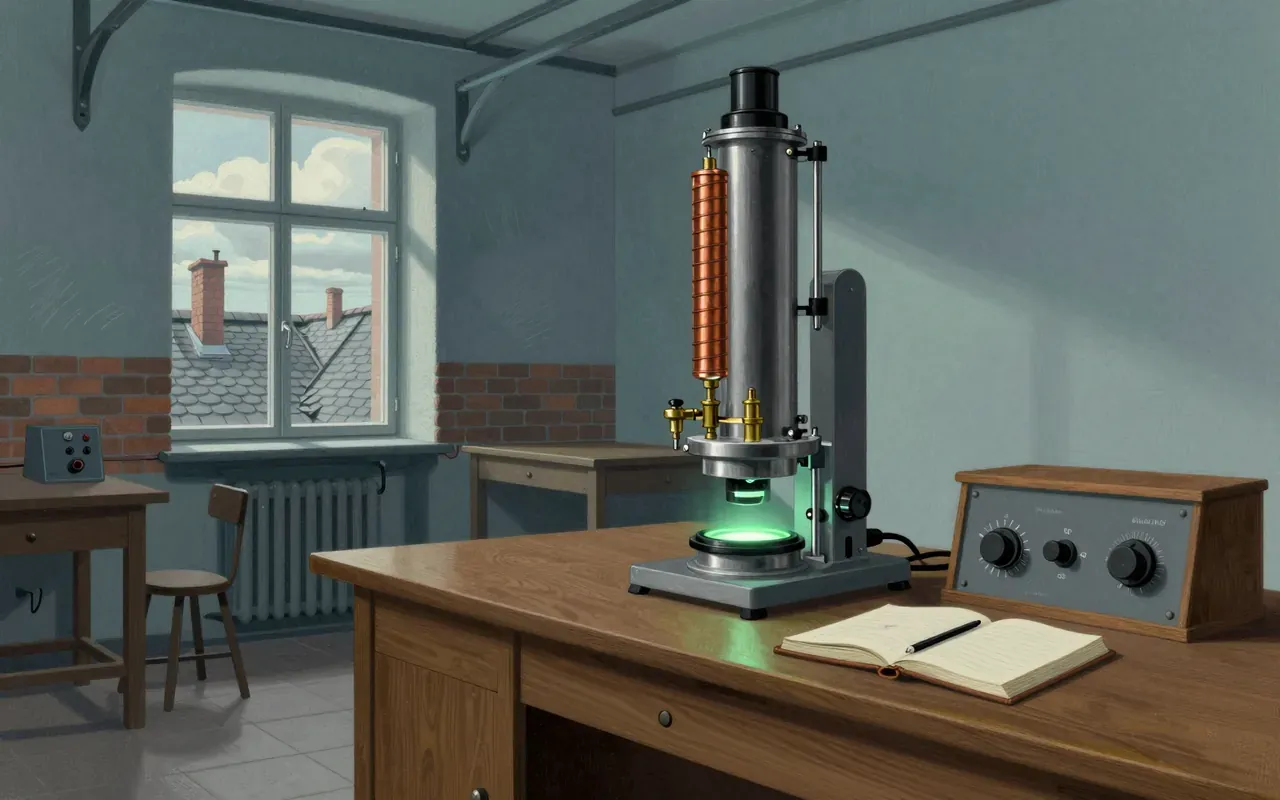
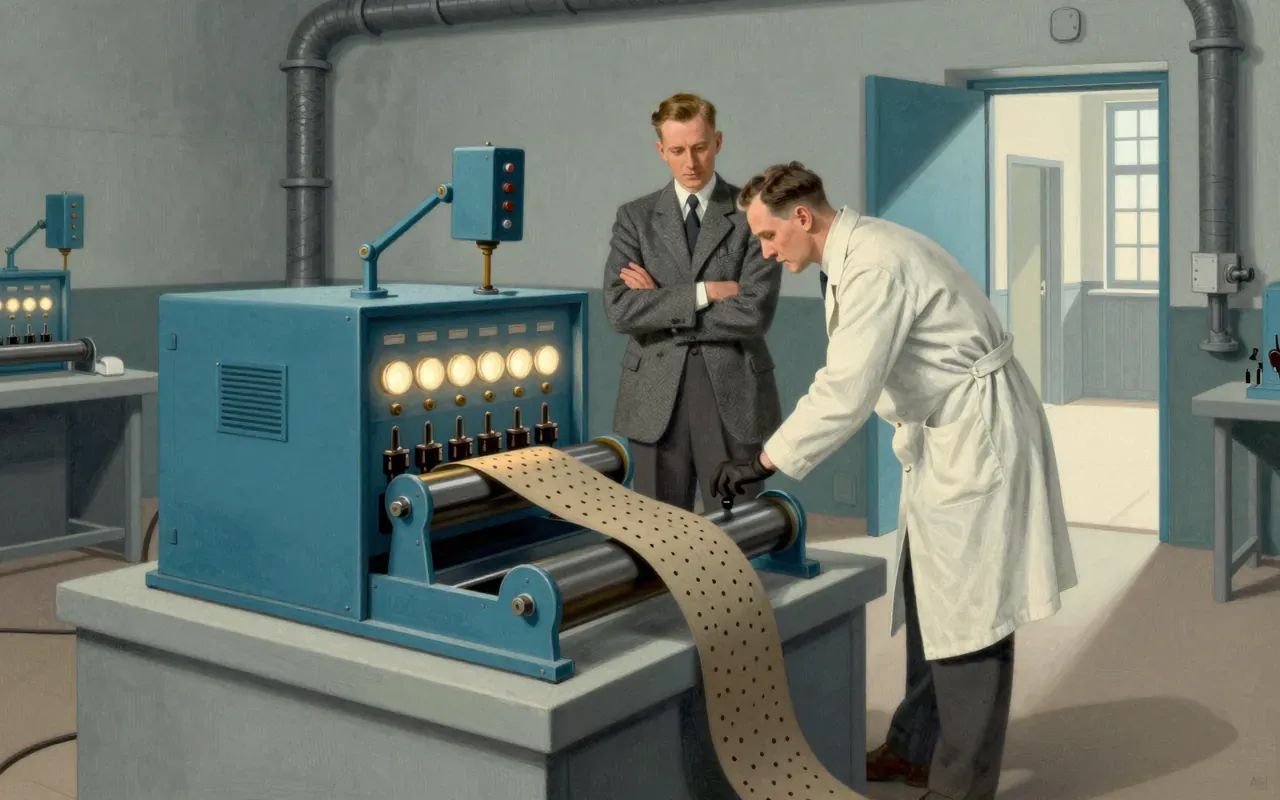
Baird used a Nipkow disk to scan and transmit images mechanically. He built the system in his laboratory at 22 Frith Street. He transmitted moving silhouettes in February 1924. On 2 October 1925, he sent a greyscale image of ‘Stooky Bill’ — a ventriloquist’s dummy — as a 32-line, 5-frames-per-second scan. On 26 January 1926, he demonstrated live moving images with tonal graduation to the Royal Institution and The Times. For colour, on 3 July 1928, he used three-colour-filtered scanning discs and alternating light sources. In 1928, his company sent television signals across the Atlantic.
What holds up
The transmission of the first greyscale television image (Stooky Bill) holds up. William Taynton being televised in full tonal range holds up. The 1926 public demonstration of live moving images with tonal graduation holds up. The 1928 colour transmission using filtered discs and commutated lights holds up. The 1928 transatlantic transmission holds up.
What does not
The work does not establish electronic television. It does not demonstrate high-resolution, stable, or scalable imaging. It does not show persistence of vision as a perceptual mechanism. It does not prove television could become mass media — only that a crude, lab-bound version was technically feasible.
Why it matters beyond the lab
It matters because it forced engineers to confront the trade-offs between resolution, frame rate, bandwidth, and light sensitivity — trade-offs that still define imaging systems today. It also reveals how invention can precede theory: Baird built working television without understanding the physics of scanning or human visual perception.
Is it worth your time
Yes — because it shows how analogue television was made possible before electronics, using only mechanical means and basic photoconductivity. It is worth your time if you want to understand the material constraints that shaped early broadcast engineering.