Al-Tusi didn’t fix Ptolemy — he exposed the logic that held him together.
Nasir al-Din al-Tusi’s work restructured astronomy through geometry, epistemology, and disciplinary separation — not by overturning geocentrism, but by exposing its internal inconsistencies and expanding what mathematics could do.
The Tusi-couple replaced the equant for most planets — but failed for Mercury.
2:07
The first epistemic strike at geocentrism
He showed Ptolemy’s evidence for Earth’s rest was logically insufficient.
3:13
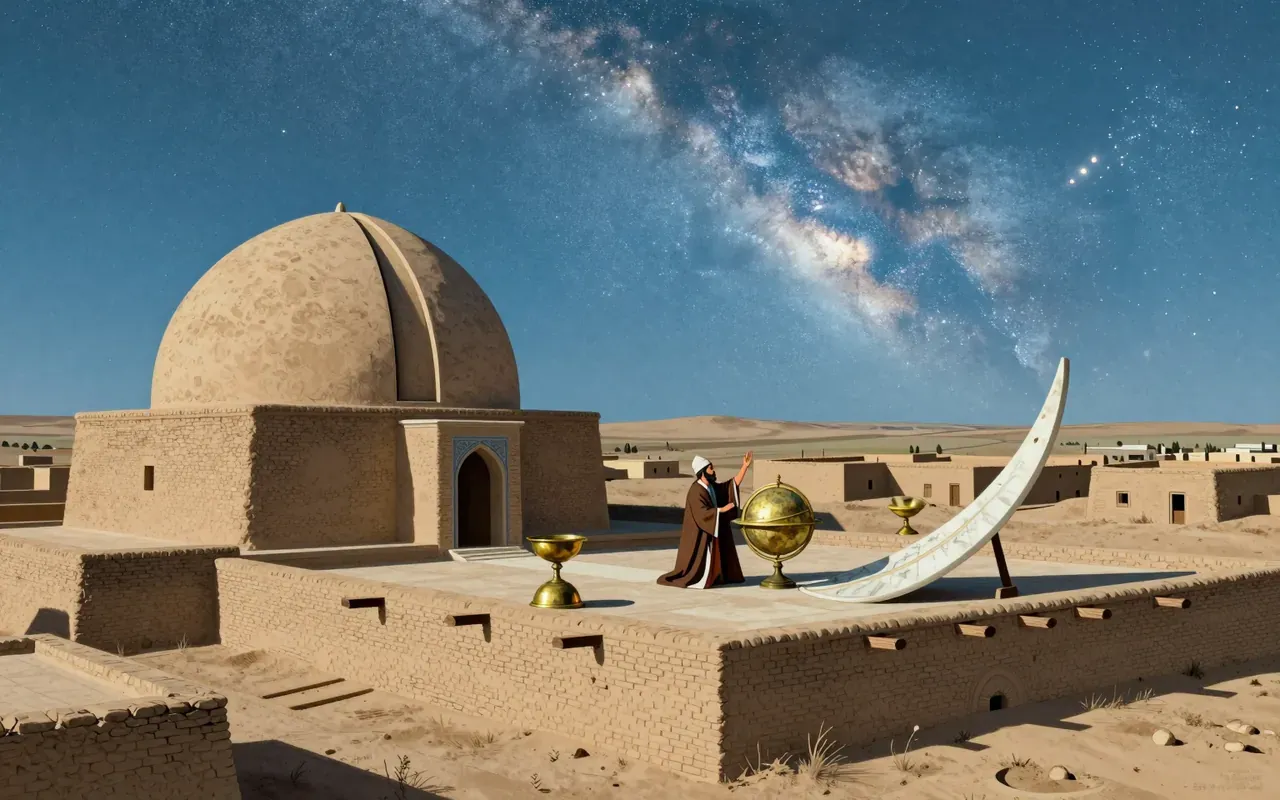
The Milky Way as resolved starlight
He described the Milky Way as unresolved stars — not vapour or divine effluence.
4:47
How trigonometry escaped the sky
Trigonometry became its own discipline — not an astronomical tool.
6:10
Tables built on corrected motion
His Zij-i Ilkhani tables were accurate because they combined new geometry with systematic observation.
7:32
The coherence revolution
He treated astronomy as a problem of consistency, not just prediction.
Worth your time?
Yes. Study the whole thing.
4.5/ 5
What works
The Tusi-couple remains geometrically sound.
His Milky Way description anticipates resolution centuries later.
Trigonometry’s independence is demonstrable in his texts.
His critique of Ptolemy’s proofs holds philosophically.
What does not
al-Tusi did not reject geocentrism.
al-Tusi did not solve Mercury’s equant.
al-Tusi did not prove Earth moves.
al-Tusi did not invent observational astronomy.
Study it if
Historians of science who reject diffusionist narratives.
Mathematicians interested in the origins of disciplinary autonomy.
Philosophers studying pre-modern critiques of empirical proof.
Skip it if
Readers seeking a ‘father of heliocentrism’ narrative.
Those expecting experimental method or instrumentation breakthroughs.
Anyone assuming Islamic science was merely preservative.
The written brief1 min read
What the work claims
That Ptolemy’s equant violates uniform circular motion. That trigonometry need not serve astronomy. That Earth’s rest cannot be proven by naked-eye observation. That the Milky Way is a dense cluster of unresolved stars.
How it was done
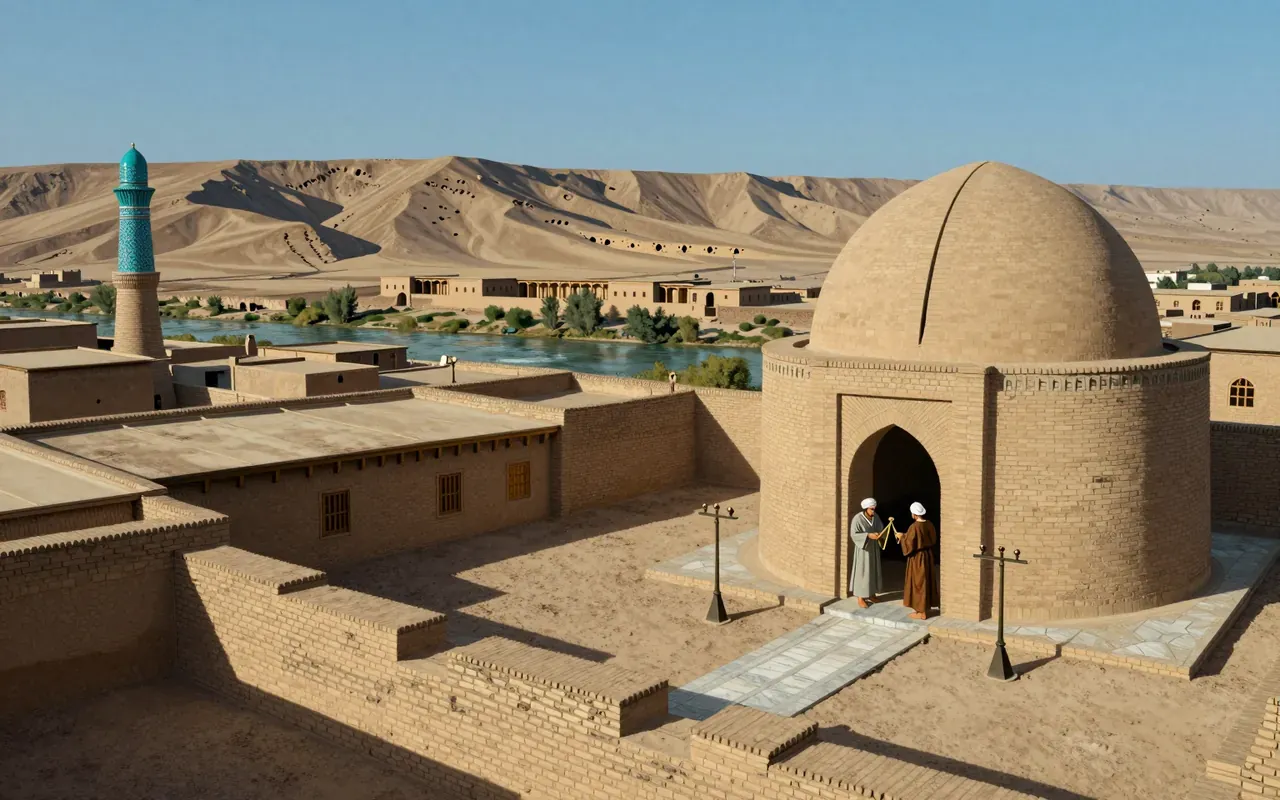
Al-Tusi built the Rasad Khaneh observatory under the Ilkhanate. He used geometric construction to devise the Tusi-couple. He compiled planetary tables from observation and calculation. He wrote the Treatise on the Quadrilateral as a standalone trigonometric text. He critiqued Ptolemy’s observational arguments in the Tadhkira.
What holds up
The Tusi-couple is a valid geometric device producing linear motion from circular components. His planetary tables were empirically accurate for their time. Trigonometry became independent in his hands — verified by the structure and scope of the Treatise on the Quadrilateral. His Milky Way description matches telescopic observation centuries later.
What does not
He did not resolve the equant for Mercury. He did not reject geocentrism outright. He did not prove Earth moves. He did not claim the Milky Way was galactic in scale — only that it appeared cloudy due to unresolved stars.
Why it matters beyond the lab
It shows how conceptual rigour — not just data — drives scientific reform. His critique of observational proof anticipates modern philosophy of science. His separation of trigonometry from astronomy created a template for disciplinary autonomy.
Is it worth your time
Yes. His work redefined how motion, measurement, and mathematical independence were conceived in astronomy — without invoking later European developments or overstating influence.
Natural killer cells attack by noticing what is missing from a cell's surface rather than what is present, an idea that only became testable once researchers could see the cells at all, and this brief follows that logic into innate immunity more broadly.