A lab built to understand polymers, not sell them
The underlying claim is that a wholly synthetic material, built entirely from small molecules joined in a laboratory, could match or exceed the strength and flexibility of a natural fibre like silk. Wallace Carothers set out to test this systematically rather than by trial and error, establishing a research laboratory at DuPont’s Experimental Station staffed with chemists working through the fundamentals of large molecules, or polymers, before ever aiming at a specific commercial product. His group’s first major success, synthetic rubber marketed as Neoprene, came from that same basic research programme in 1930, well before nylon itself existed.
One synthesis, one date, one name on the patent
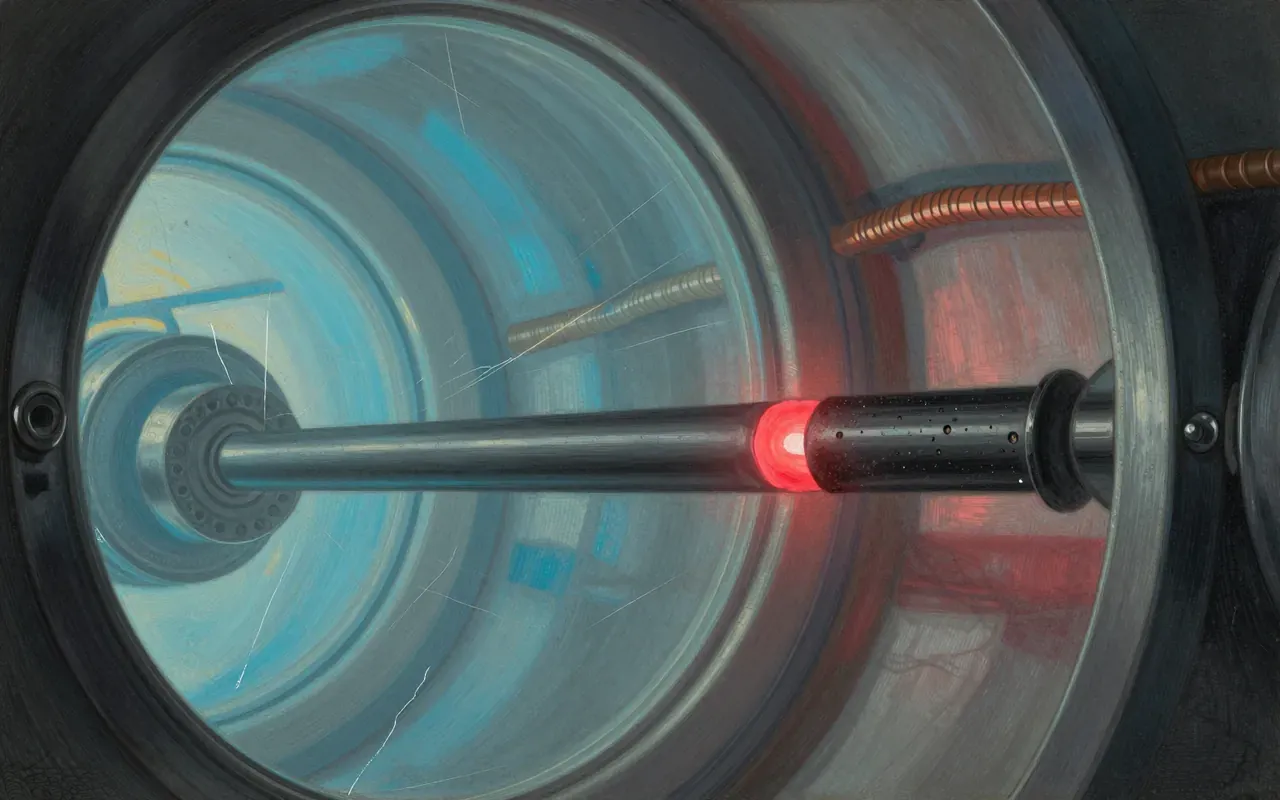
The specific breakthrough came on 28 February 1935, when Gerard Berchet, a chemist working under Carothers’s direction, combined hexamethylenediamine and adipic acid through condensation polymerisation to produce what became known as nylon 66, its name referring to the six carbon atoms present in each of the two component molecules. Carothers also worked out the mathematical relationship, now called the Carothers equation, between how far a polymerisation reaction has proceeded and the resulting molecular weight of the polymer chains, giving the discovery a theoretical backbone alongside the purely practical laboratory result Berchet had produced.
Why the fibre actually holds together
What makes nylon 66 work as a textile fibre is a specific structural feature: it belongs to the polyamide family, meaning its long molecular chains are linked by repeating amide bonds, and hydrogen bonds forming between neighbouring chains hold the material together with enough strength and crystallinity to be drawn out into fine, durable fibres. That structural logic has held up completely since 1935 — it is the same basic explanation used for nylon’s properties today, and it is precisely what let the material substitute for silk in applications where silk’s cost or scarcity had been a genuine limitation.
From toothbrushes to sixty-four million pairs of stockings
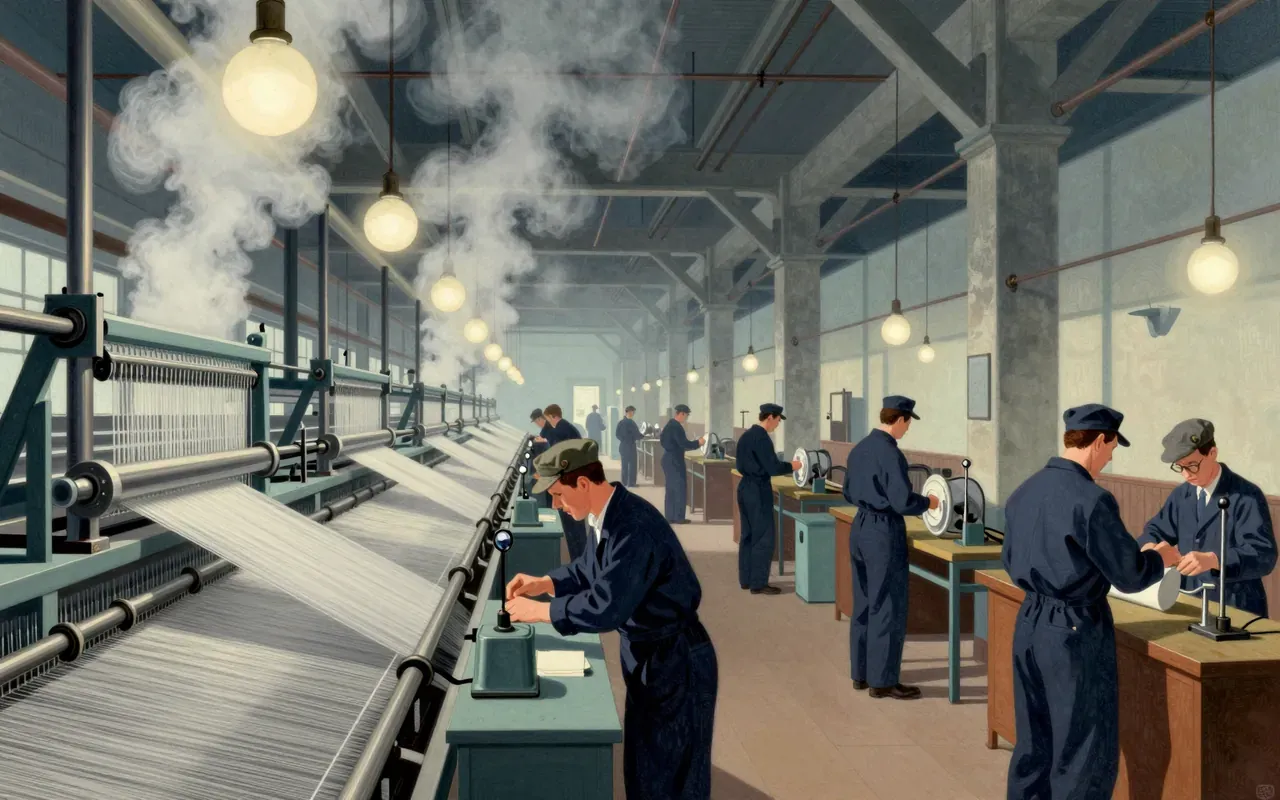
The commercial uptake, once it arrived, was immediate and enormous. Nylon appeared first in toothbrush bristles in 1938, was showcased publicly at the 1939 New York World’s Fair, and launched as women’s stockings on 15 May 1940, selling 64 million pairs in that first year alone from a plant in Seaford, Delaware that had begun production the previous December. A competing route to a similar polymer, nylon 6, was developed independently by Paul Schlack at IG Farben in January 1938 using a different starting material, caprolactam, showing the underlying chemistry was discoverable by more than one route once the general idea of a synthetic polyamide fibre was established.
A wartime material, then a permanent one
Nylon’s usefulness only grew once wartime demand redirected nearly all production toward parachutes, parachute cord, tents and rope starting in February 1942, replacing silk and hemp supplies that the war had made scarce. That same durability is now a documented liability: nylon production carries an estimated carbon footprint of roughly 5.43 kilograms of carbon dioxide equivalent per kilogram of material, the finished polymer takes anywhere from decades to millennia to break down naturally, and nylon fishing nets and textile fibres are a recognised source of microplastic pollution, with global production reaching about 8.9 million tons annually as of 2020 and recycling still limited by cost and difficulty.
A triumph its inventor never saw
None of that commercial or environmental story includes Carothers himself, who battled chronic depression throughout the period of his greatest scientific success, was hospitalised more than once in the years surrounding nylon’s invention, and died by suicide in April 1937, sixteen months before DuPont’s public announcement of the material in October 1938. He never saw stockings sell by the tens of millions, never saw the wartime parachutes, and never saw the environmental reckoning nylon faces today. Reading the nylon story in full means holding all of that together rather than settling for either the tidy success story or the tragic footnote alone, and that combination is exactly what makes the full account worth the time.