A hormone system with no glands
The material’s starting distinction is structural rather than chemical: plants have no dedicated hormone-producing glands the way animals do, and instead essentially any plant cell is capable of manufacturing these signal molecules. Without a circulatory system to move them, plants rely on slower, more local mechanisms, cytoplasmic streaming within cells, diffusion between neighbouring cells, and transport through the vascular tissues that also carry water and sugars. This changes what a plant hormone can realistically do compared with an animal one; signals tend to act over more local ranges and rely on the plant’s own growth and cell arrangement to spread rather than a pump-driven bloodstream. The term phytohormone itself is a comparatively modern coinage, introduced by Went and Thimann in a 1937 book, marking a formal starting point for treating these molecules as a coherent category.
Nine classes, one coordinating job
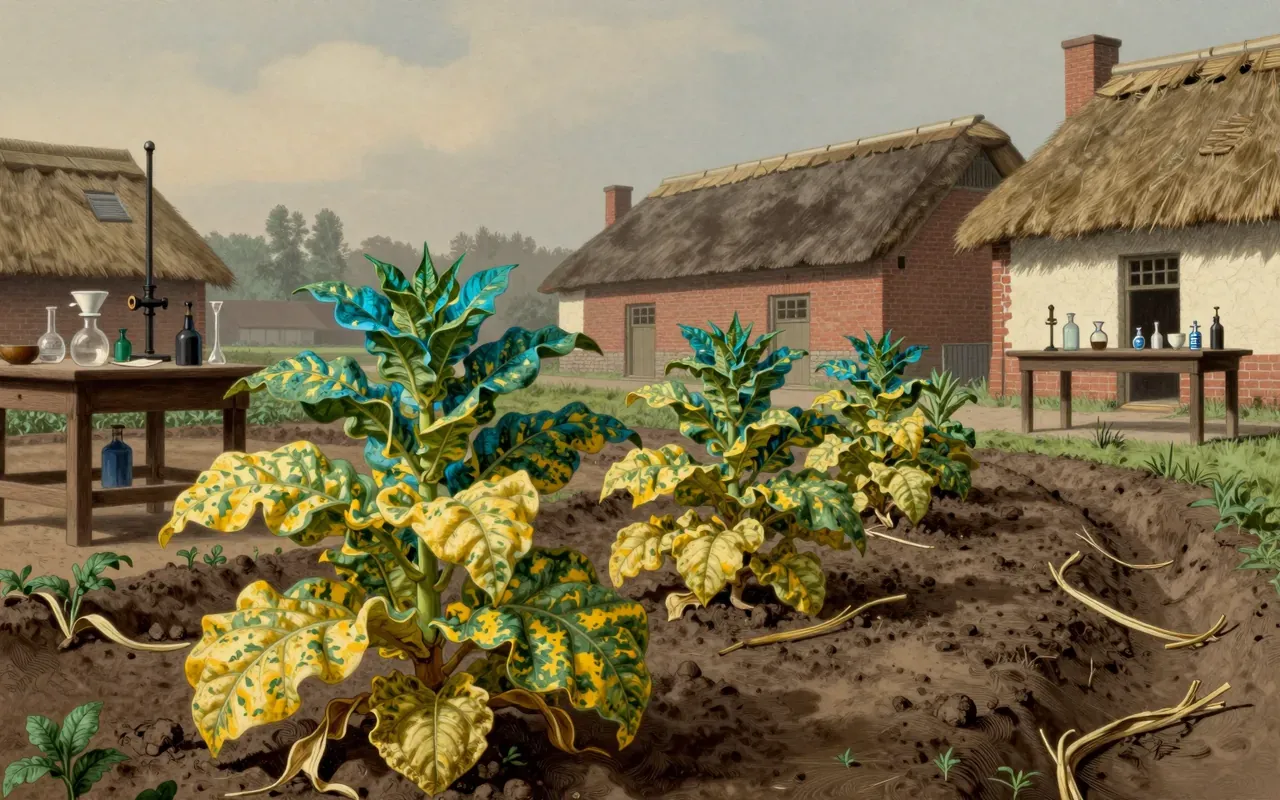
Auxins are described as the first of these growth regulators to be identified, and their core job is promoting cell enlargement along with root initiation and bud formation, though at high concentrations they become toxic to plants, a property exploited directly in synthetic auxin herbicides. Gibberellins, uncovered through work by Japanese researchers including Eiichi Kurosawa on a disease of rice caused by the fungus Gibberella fujikuroi, break seed dormancy and drive cell elongation. Cytokinins govern cell division and shoot formation and are described as working in a ratio with auxins that shapes a plant’s overall growth pattern, meaning the balance between the two matters more than either hormone acting alone.
A fungal disease that led to a hormone class
Ethylene is set apart from the rest of the list by its chemical simplicity: a gas made of just six atoms, rather than a larger organic compound, yet capable of driving effects including fruit ripening and changes to stem thickness under stress. Abscisic acid works largely as a growth inhibitor, regulating seed and bud dormancy and closing stomata when the plant is under water stress, and the material notes it was originally identified under two separate names before researchers recognised they described the same molecule. Brassinosteroids stand out as the only steroid-based plant hormones, with brassinolide, the first one identified, isolated from rapeseed pollen in 1979, and they act through a specific receptor pathway to regulate cell elongation and division.
A gas as a growth signal
The remaining classes covered are tied closely to defence rather than general growth. Jasmonates, originally isolated from jasmine oil, are described as especially important in a plant’s response to being attacked by herbivores or certain pathogens, with a volatile derivative capable of signalling between separate plants through the air. Salicylic acid, extracted originally from white willow bark, plays a comparable role against a different category of pathogen, and its chemical derivative became the basis for aspirin, marketed by Bayer in 1899. Strigolactones round out the list, discovered through studies of how parasitic weed seeds germinate, and they work to inhibit shoot branching while also promoting the growth of symbiotic fungi around a plant’s roots.
Botany’s slow build toward a name
The material is candid that these molecules operate at extremely low concentrations, in the range of millionths to hundred-thousandths of a mole per litre, and that this made them genuinely difficult to detect and study with the tools available for much of the twentieth century, with serious investigation only really taking hold from the late 1970s onward. That timeline helps explain why several of the discovery stories given here, gibberellins through a crop disease, brassinolide from pollen, strigolactones from parasitic weed biology, involve researchers arriving at a hormone indirectly, through an agricultural or ecological puzzle, rather than setting out to find a new signalling molecule directly.
What one document does not claim about Darwin
On Charles Darwin specifically, the material used for this brief is limited and should be reported honestly rather than filled in with outside knowledge: it documents his 1862 study of orchid fertilisation and his final book, published in 1881, on the actions of earthworms, both evidence of a long-standing, careful observational interest in plant and soil biology. It does not describe any experiment by Darwin involving plant movement, light response, or coleoptiles, nor any connection to the later discovery of auxin. Readers coming to this expecting that specific historical thread will not find it here, which is worth stating plainly rather than glossing over. As a survey of the hormone classes themselves, though, the material is specific and worth the time for anyone new to how plants coordinate growth without an animal-style hormonal system.