The objection that stalled Wegener
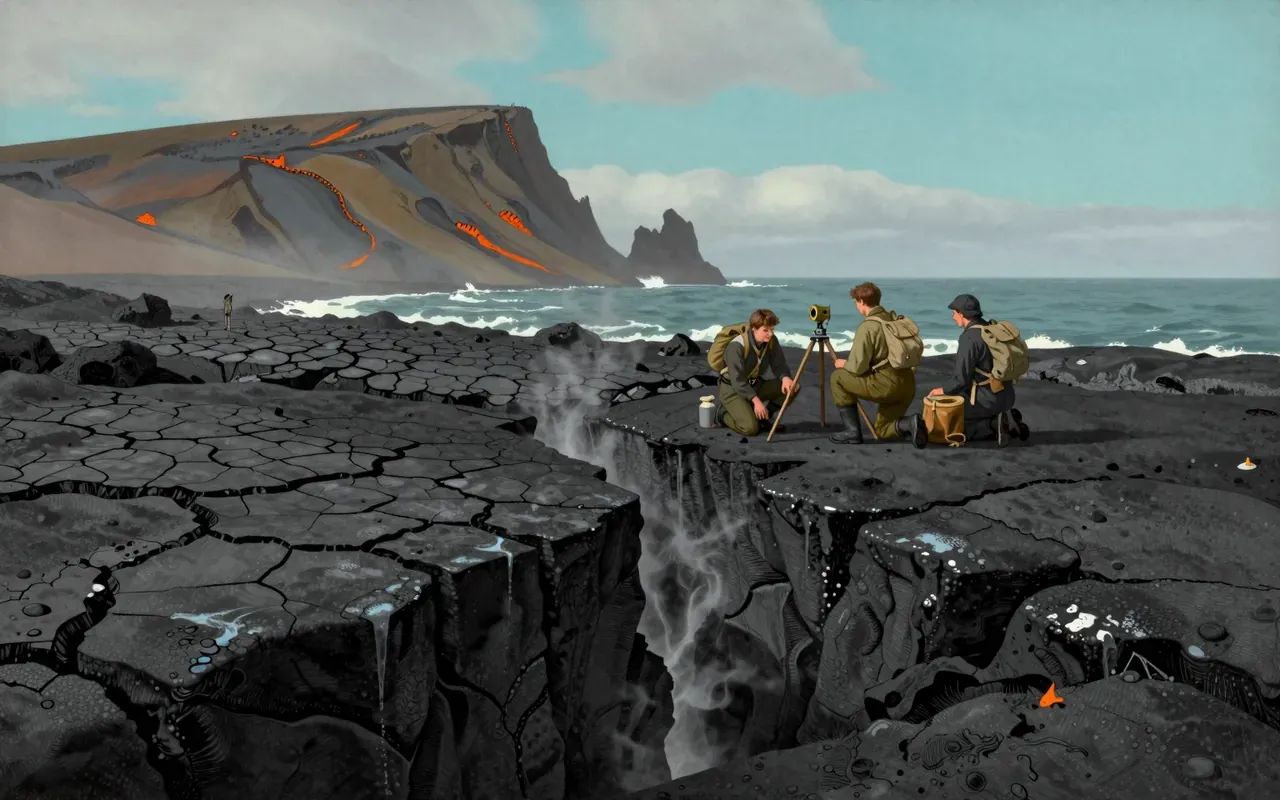
Alfred Wegener’s proposal that Earth’s continents had drifted apart over geological time had circulated since the early twentieth century, but it remained widely rejected for decades because no one could explain a basic physical problem with it: if continents moved, they would need to plough through the ocean floor, which geologists generally treated as a fixed, immovable feature of the planet, and no known force seemed capable of driving solid continental rock through solid oceanic rock in that way. The theory sat largely dismissed until Harry Hess of Princeton University and Robert Dietz of the US Naval Electronics Laboratory proposed, in the early 1960s, a different picture entirely: rather than continents ploughing through a static seafloor, the seafloor itself was moving, spreading outward from mid-ocean ridges as new crust formed there continuously and carried older crust, and the continents riding on it, away to either side.
The seafloor moves too
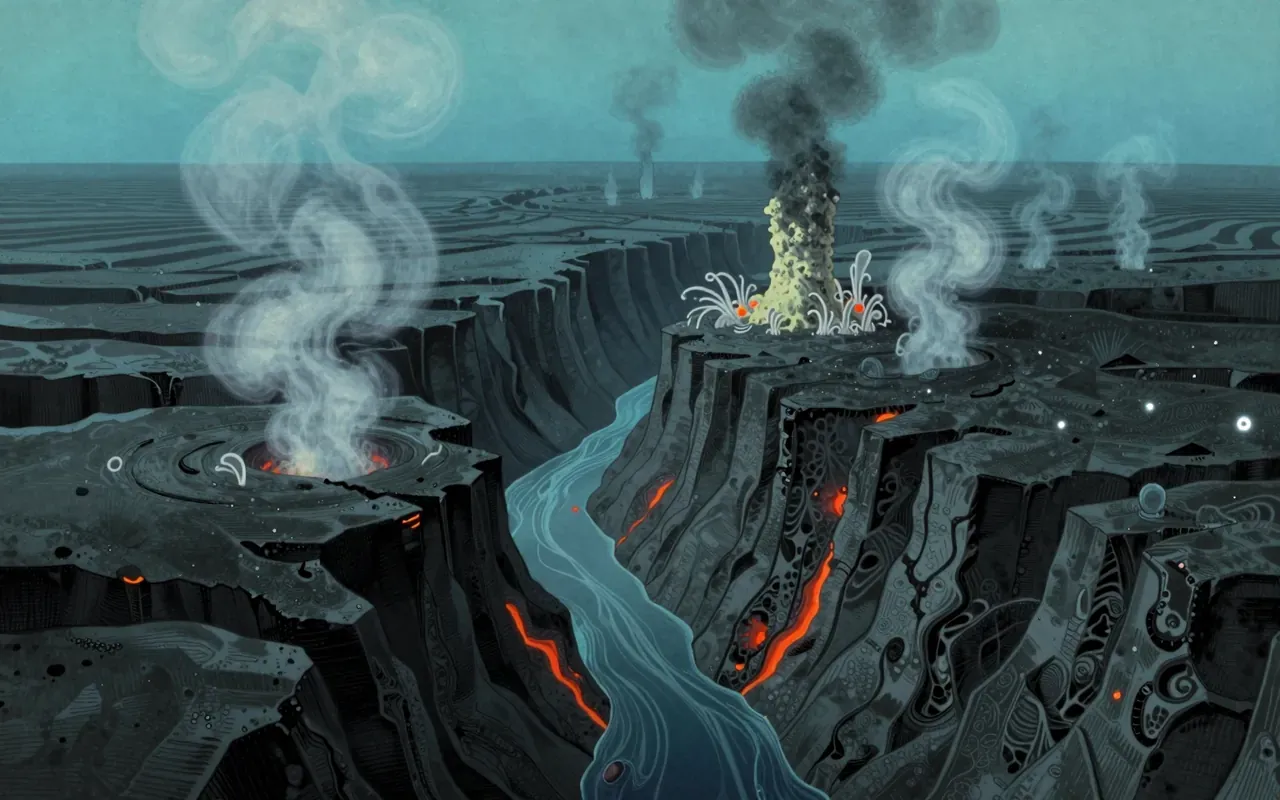
That proposal needed direct physical evidence to move from plausible idea to established mechanism, and the evidence came from Earth’s own magnetic field. As molten rock rises and cools at a mid-ocean ridge, magnetic minerals within it pass through a temperature called the Curie point, below which they lock permanently into alignment with whatever direction Earth’s magnetic field happened to be pointing at that moment. Because Earth’s magnetic field periodically reverses its polarity over geological time, newly formed crust at different points in history ends up recording different magnetic orientations, effectively turning the spreading seafloor into something like a two-headed tape recorder, laying down a continuous, dated record of magnetic reversals in stripes moving outward from the ridge in both directions simultaneously.
A tape recorder made of rock
In September 1963, Fred Vine, a geophysicist, and his Cambridge University advisor Drummond Matthews published this explanation in the journal Nature, proposing that if seafloor spreading were real, it should produce a specific and testable pattern: magnetic stripes that were symmetrical, mirroring each other on opposite sides of a given ridge, since crust formed simultaneously at the same ridge but moving in opposite directions should carry matching magnetic records. What makes the credit history genuinely notable is that Lawrence Morley, a Canadian geologist, had independently reached the identical conclusion, but his own submission to Nature in February 1963 and a follow-up submission to the Journal of Geophysical Research in April 1963 were both rejected, leaving Vine and Matthews with publication priority even though the resulting explanation is now generally known as the Vine-Matthews-Morley hypothesis in partial recognition of his separate, unpublished contribution.
Three scientists, one hypothesis
The hypothesis initially faced real scepticism, since it rested on three separate claims that each still needed independent confirmation: that seafloor spreading was actually occurring, that Earth’s magnetic field genuinely reversed periodically, and that rock could reliably retain a permanent record of past magnetic orientation. That scepticism was addressed through further measurement rather than argument. Allan Cox and colleagues provided supporting evidence in 1964 by directly measuring the magnetisation of lava samples of known age, confirming the reversal pattern independently, and in 1966 Walter Pitman and James Heirtzler measured magnetic anomalies across the Pacific-Antarctic Ridge and found a pattern of striking, precise symmetry on either side, matching exactly what the Vine-Matthews-Morley hypothesis had predicted years earlier.
Symmetry across an ocean ridge
The consequences of this confirmation extended well beyond settling the specific mechanism of seafloor spreading. Once the magnetic striping pattern was established as reliable, it gave geologists a direct method for calculating the rate at which seafloor was actually spreading at different ridges around the world, since the distance between known magnetic reversals of established age could be measured directly against the ridge and converted into a speed. This work also allowed researchers to build a geomagnetic reversal timescale extending back nearly 200 million years, a tool with applications reaching well beyond plate tectonics itself. Together, the vindication of seafloor spreading and the resulting confirmation of continental drift combined into the modern, comprehensive theory of plate tectonics, transforming what had been a marginal, largely rejected idea into the accepted framework for understanding Earth’s surface.
From hypothesis to accepted theory
This is essential reading both for the science and for what it demonstrates about how a genuinely correct, independently discovered idea can still end up unevenly credited depending on which version made it into print first. The magnetic tape recorder mechanism is a satisfying, visualisable piece of physical reasoning, and watching the specific prediction, symmetric stripes on either side of a ridge, actually get tested and confirmed through independent measurements over the following years gives the story real scientific weight rather than presenting the hypothesis as accepted purely on its own elegance. Anyone interested in how plate tectonics moved from contested fringe idea to settled science, and in the specific, human details of how credit for that shift got distributed, will find this thoroughly worth the time.