A parasite that lives in the open
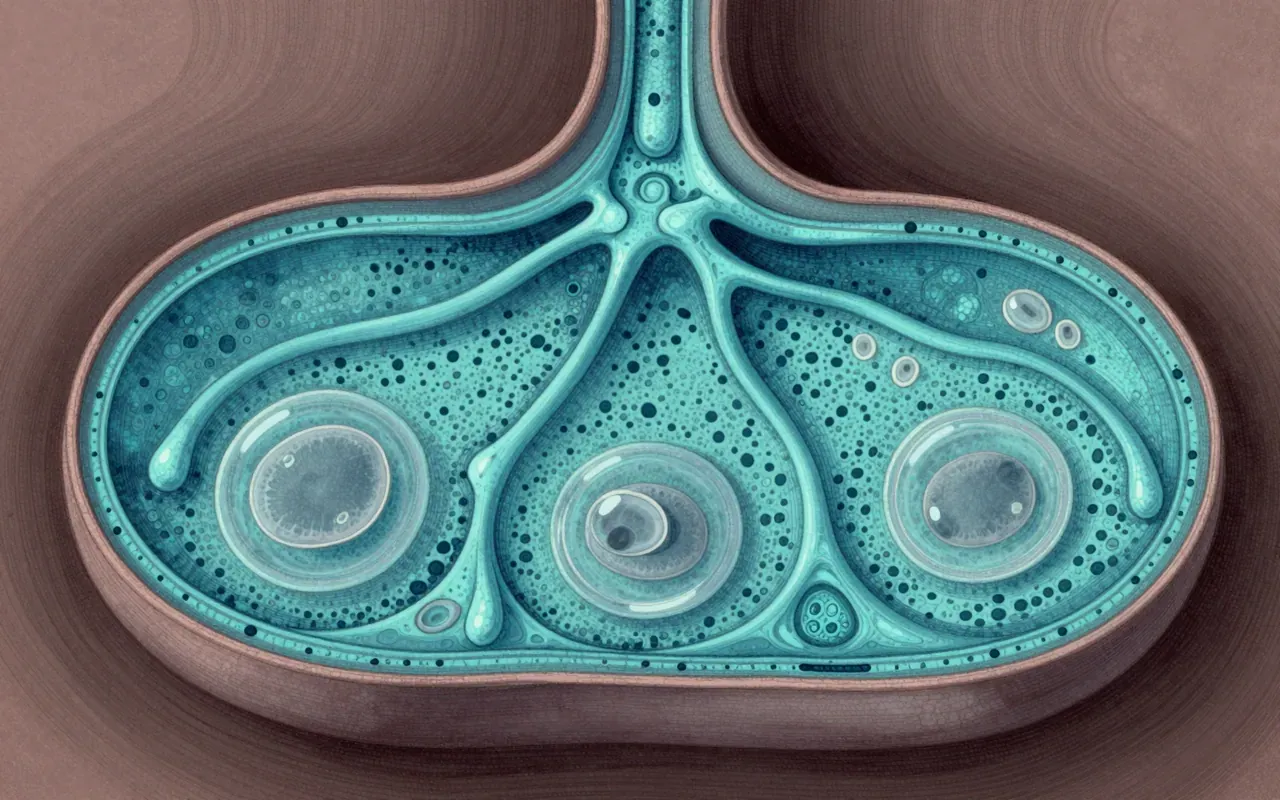
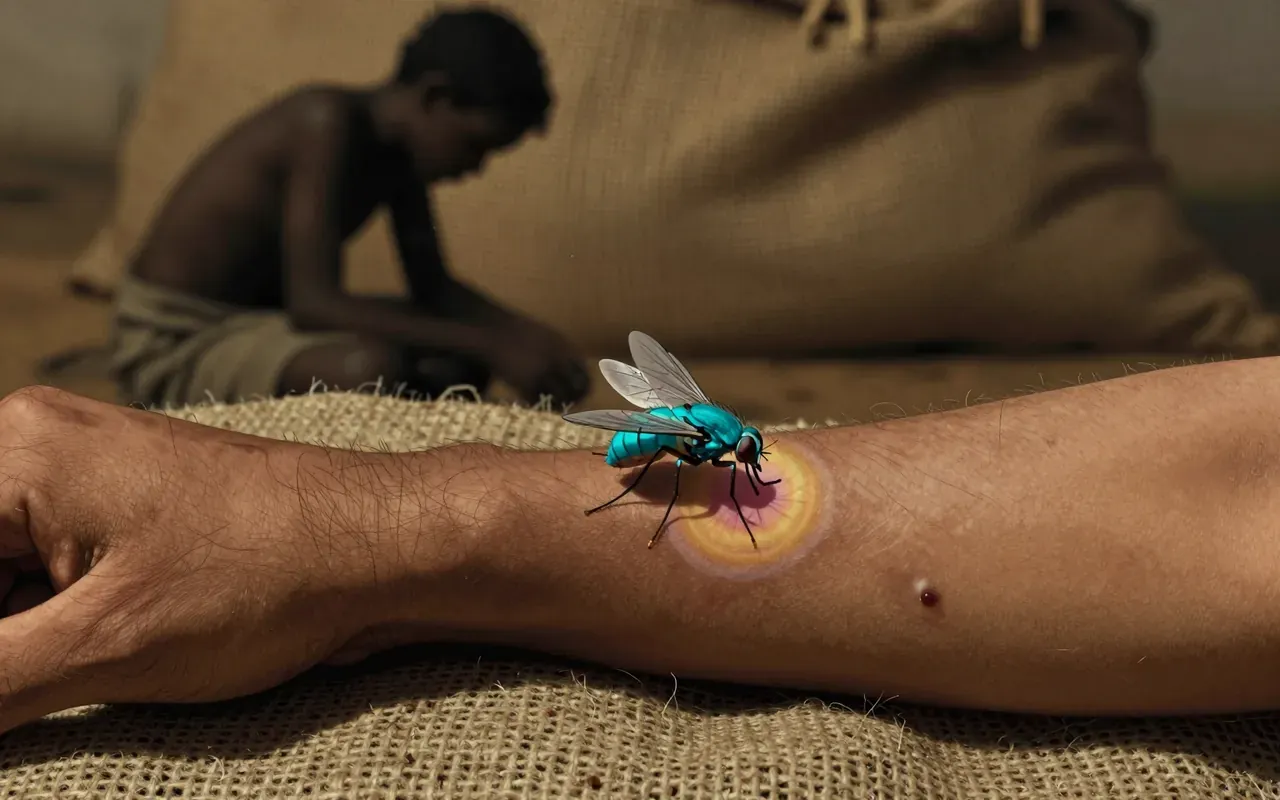
Trypanosoma brucei is described as unusual among parasitic protozoa in that it inhabits the blood plasma and body fluids of its host directly rather than invading and hiding inside host cells. It is transmitted exclusively by tsetse flies, and the material distinguishes several subspecies by the disease each causes and how each is transmitted, with two subspecies, T. b. gambiense and T. b. rhodesiense, responsible for human African sleeping sickness, the chronic and acute forms respectively. T. b. gambiense alone accounts for the overwhelming majority of human cases. Because the parasite lives openly in the bloodstream rather than concealed inside cells, it is directly and continuously exposed to the immune system, which sets up the central biological problem the rest of its life cycle is built around solving.
A coat it keeps changing
The solution is antigenic variation. The parasite’s surface is covered densely by a single type of variant surface glycoprotein, making up roughly ninety percent of all surface protein on the cell, and with each cell division there is a small but consistent chance, roughly one in a thousand, that the parasite switches which variant it expresses, drawing from a genome bank estimated to hold many hundreds if not thousands of distinct variant genes, accounting for as much as a tenth of the parasite’s entire genome. Because the host’s immune system can only target the specific variant it has already encountered, previously unexpressed variants survive each antibody wave and expand, producing successive waves of infection that sustain a chronic illness rather than being cleared outright, a mechanism the material notes still leaves open exactly how the parasite times each switch or selects which variant comes next.
A quarter of a million dead in two decades
The human cost of this evasion strategy is given a specific historical anchor: a sleeping sickness epidemic beginning in Uganda in 1898 escalated sharply, with mortality reaching approximately 20,000 people in 1901 alone, and more than 250,000 deaths recorded over the roughly two decades the epidemic ran its course. This episode devastated lakeshore communities in the region and stands as one of the clearest documented illustrations of how severe untreated sleeping sickness can become at population scale. The material treats this epidemic as central context for understanding why the disease has historically been treated as such a serious public health threat across sub-Saharan Africa, well before modern surveillance and treatment infrastructure existed to contain it.
Treatments that have long been nearly as dangerous as the disease
Treatment history is presented candidly as a long struggle against drugs nearly as dangerous as the disease itself. Early twentieth-century treatments were arsenic-based and caused serious side effects including blindness, and melarsoprol, developed in the 1940s and still used today particularly against the rhodesiense form, causes a severe reactive encephalopathy in a documented percentage of treated patients, a meaningful share of whom die from that reaction rather than the underlying infection. Eflornithine, approved in 1990, offered a somewhat safer alternative for the gambiense form, and the material notes that drug resistance has been documented against essentially every treatment developed so far, underscoring why finding safer, more broadly effective drugs has remained an active priority rather than a solved problem.
How the fly itself gets recruited
The tsetse fly itself is not merely a passive carrier in this story. Once ingested by a fly during a blood meal, the parasite undergoes a distinct developmental sequence inside the fly’s gut and salivary glands over roughly twenty days, and the material describes the parasite actively altering the fly’s own biology during this process, increasing how often the fly feeds and shifting its glucose and monoamine metabolism in ways that appear to improve the parasite’s own transmission opportunities. This detail matters because it reframes the tsetse fly not simply as a vector that happens to carry the parasite, but as an organism whose behaviour the parasite has evolved to manipulate directly, extending the reach of the same evasive, opportunistic strategy the parasite uses inside its human or animal host.
A newly approved drug and a stated elimination target
The material closes on a genuinely current development: acoziborole, a single-dose oral drug, received regulatory approval in February 2026, with the Democratic Republic of the Congo, the country carrying the large majority of the global case burden, becoming the first nation to authorise it for its national sleeping sickness programme shortly afterward. This arrives alongside a World Health Organization target of eliminating gambiense-form transmission by 2030, described as a realistic possibility given case counts that have fallen below a thousand annually since 2018. Between a genuinely elegant immune-evasion mechanism, a documented historical catastrophe, and treatment progress happening in real time, this is a strong hour that earns its place well beyond a standard neglected-disease primer.