A toolkit, not a poison
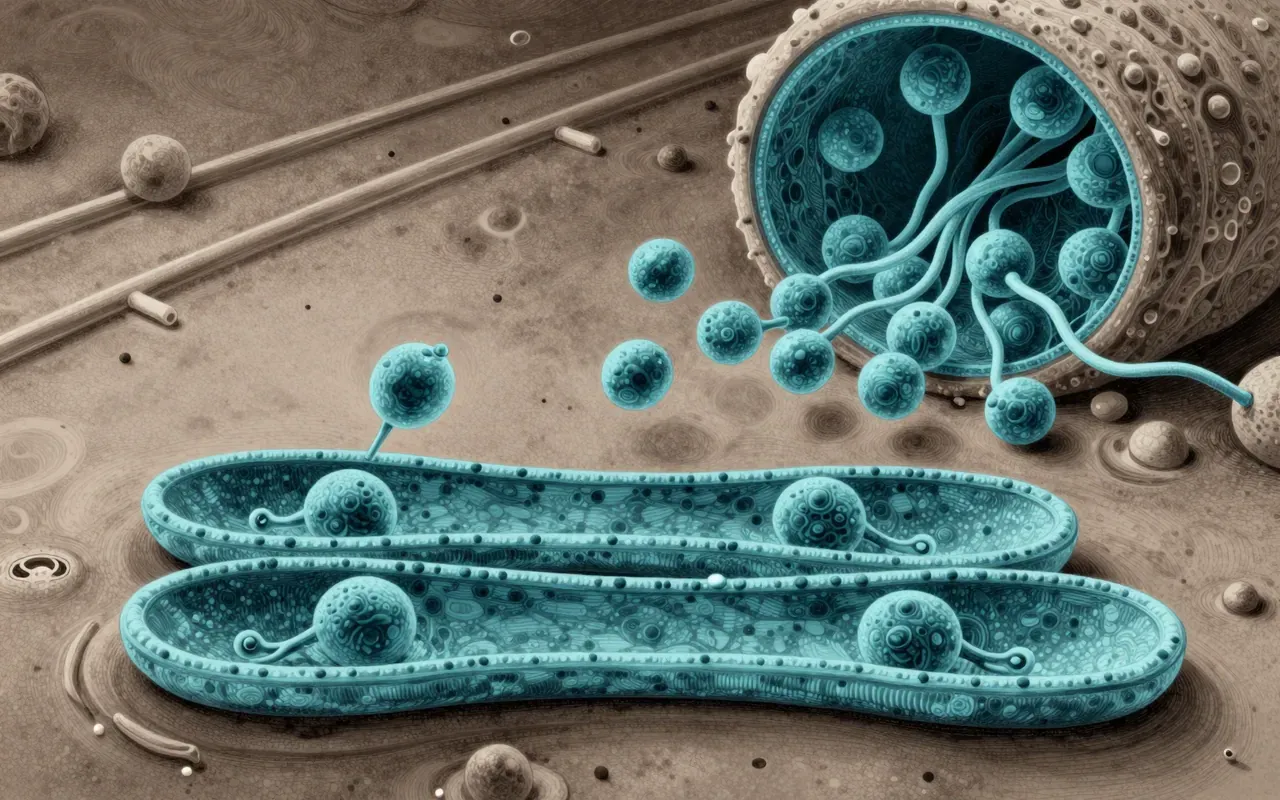
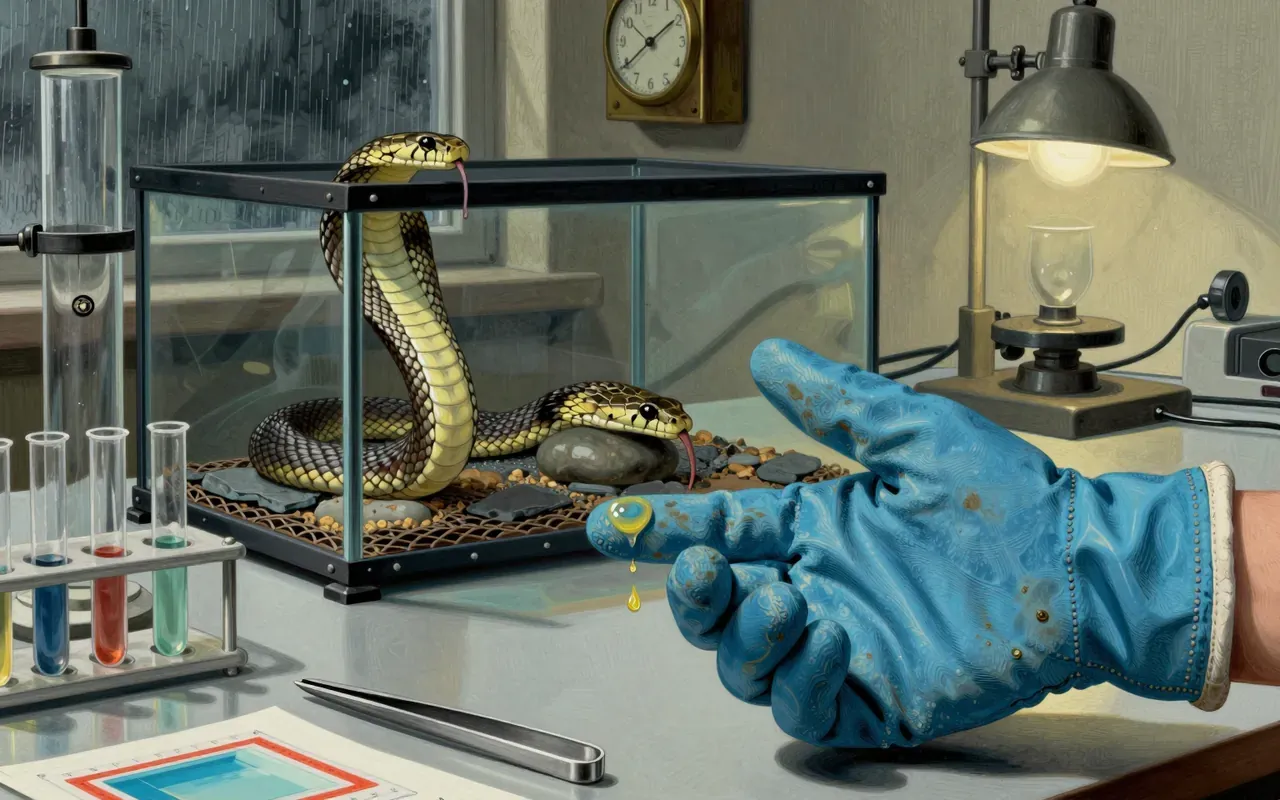
A snake bite is not one poison but a mixture, and the working claim across a century of research is that this mixture can be sorted by what it does once it is inside a body. Most of the dry weight of venom is protein, and those proteins fall into families: enzymes that break down tissue and blood-clotting factors, and smaller polypeptides that act directly on nerves and muscle. Within that second group sit the neurotoxins, which do not poison broadly so much as interfere with one very specific step in how a nerve signals a muscle to contract. Some jam the receptor that acetylcholine would normally occupy. Some stop the enzyme that clears acetylcholine away again. Others block the ion channels that let a nerve fire at all. The claim, in short, is that venom is a toolkit assembled from ordinary body chemistry and aimed at a handful of precise targets.
Isolating the toxins
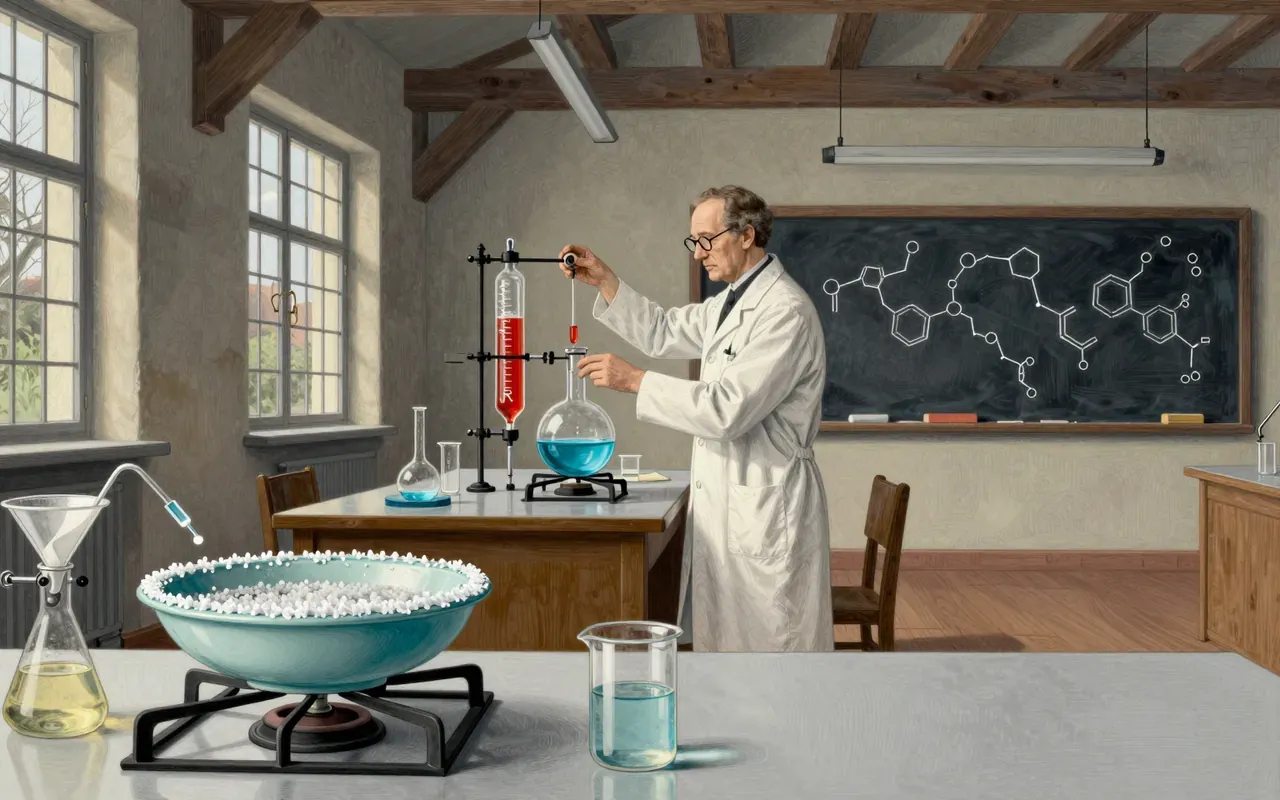
Working out which toxin does what has depended on separating venom into its components and testing each one in isolation, historically through chromatography and increasingly through sequencing, then applying purified toxins to nerve and muscle preparations to see exactly where they interrupt the signal. Potency is compared using a lethal-dose measure, the concentration that kills half of a test population, standardised with a fixed protein diluent so that results from one laboratory can be set against another’s. Alongside this molecular accounting sits an evolutionary one: comparing venom genes across species to see that many toxins are duplicated and repurposed versions of ordinary salivary proteins, and tracing when in snake history venom production began. Cases where snakes have lost venom, or where a species classed as one type produces toxins typical of another, are treated as tests of whether the classification is describing biology or just convenient labels.
Where the mechanism holds
The core mechanism is well supported and consistent across many independent toxin families. Toxins that mimic the shape of acetylcholine and occupy its receptor, blocking the signal at the neuromuscular junction, have been isolated from several unrelated snake lineages and shown to act the same way in nerve-muscle preparations. So have toxins that instead block the potassium or calcium channels a nerve needs to fire, and toxins that stop the enzyme which would otherwise clear acetylcholine from the junction, leaving muscle in sustained contraction rather than paralysis. The broader evolutionary picture also holds up under scrutiny: venom glands are salivary in origin, toxin genes cluster with duplicated copies of ordinary body proteins, and the timing evidence places the origin of venom once, early, in the lineage that also produced lizards, rather than as something each venomous species invented separately.
Where the labels break down
Where the field is more tentative is in matching its two systems of classification to each other: naming a toxin by what it structurally resembles does not reliably predict what it does, and the reverse is also true, so a hemotoxin from one lineage and a neurotoxin from another can share close structural ancestry. Species that break the pattern expected of their family are common enough to be a problem for tidy generalisation, and potency figures measured in one population do not transfer cleanly to another, because diet, geography and individual variation all shift the mixture. A widely held assumption that venom assists digestion has also not survived direct testing in at least one well-studied rattlesnake, where a strongly proteolytic venom made no measurable difference to how quickly food passed through the gut.
Beyond the bite
The specificity of these mechanisms is exactly why treating a bite is harder than one might assume: an antivenom raised against one species’ venom routinely fails against a related species whose toxins act on the same target through a differently shaped molecule, which is why regional antivenoms remain necessary rather than a single universal product. The same specificity has turned toxins into research tools and drug candidates in their own right, isolating particular receptors and channels for study, and in at least a few cases showing activity against tumour cells or pain pathways severe enough to draw pharmaceutical interest. The recent case of a bite enthusiast whose blood, after years of repeated self-exposure, was found to carry antibodies able to neutralise venom from more than one species has renewed interest in whether a broadly effective antivenom might eventually be built from that kind of immune response.
Is it worth an hour
This is a subject worth understanding on its own molecular terms rather than through the usual shorthand of deadliness, because the interesting part is not how dangerous any given snake is but how narrowly targeted its chemistry turns out to be. Anyone curious about how a nerve signal actually gets from one cell to the next will find that snake venom has, in effect, produced a natural library of tools that block that process at every different step, each one isolated and named by researchers precisely because it interferes with only one part of it. It is less rewarding for anyone hoping for a single tidy story: the classification is provisional, the exceptions are numerous, and the honest answer to several basic questions, including why venom evolved at all, remains an argument rather than a settled fact.