A genome from a computer file
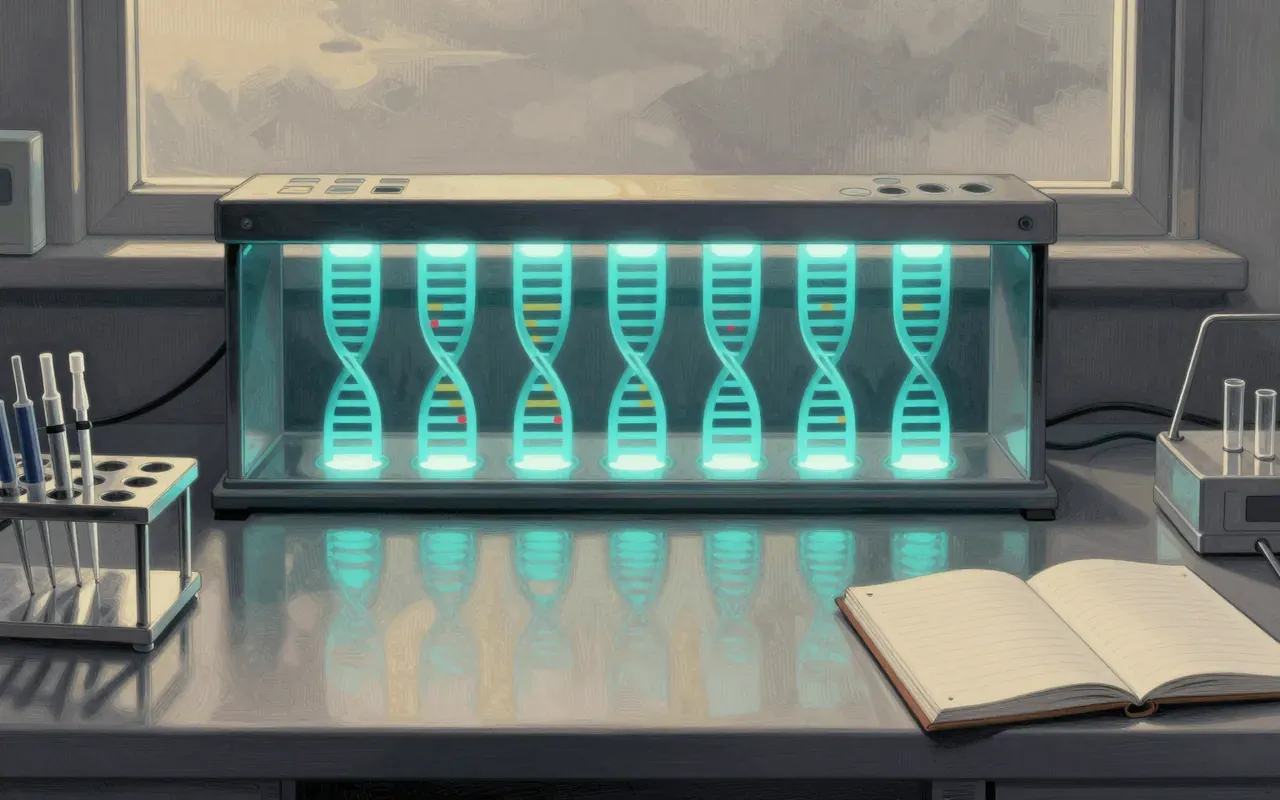
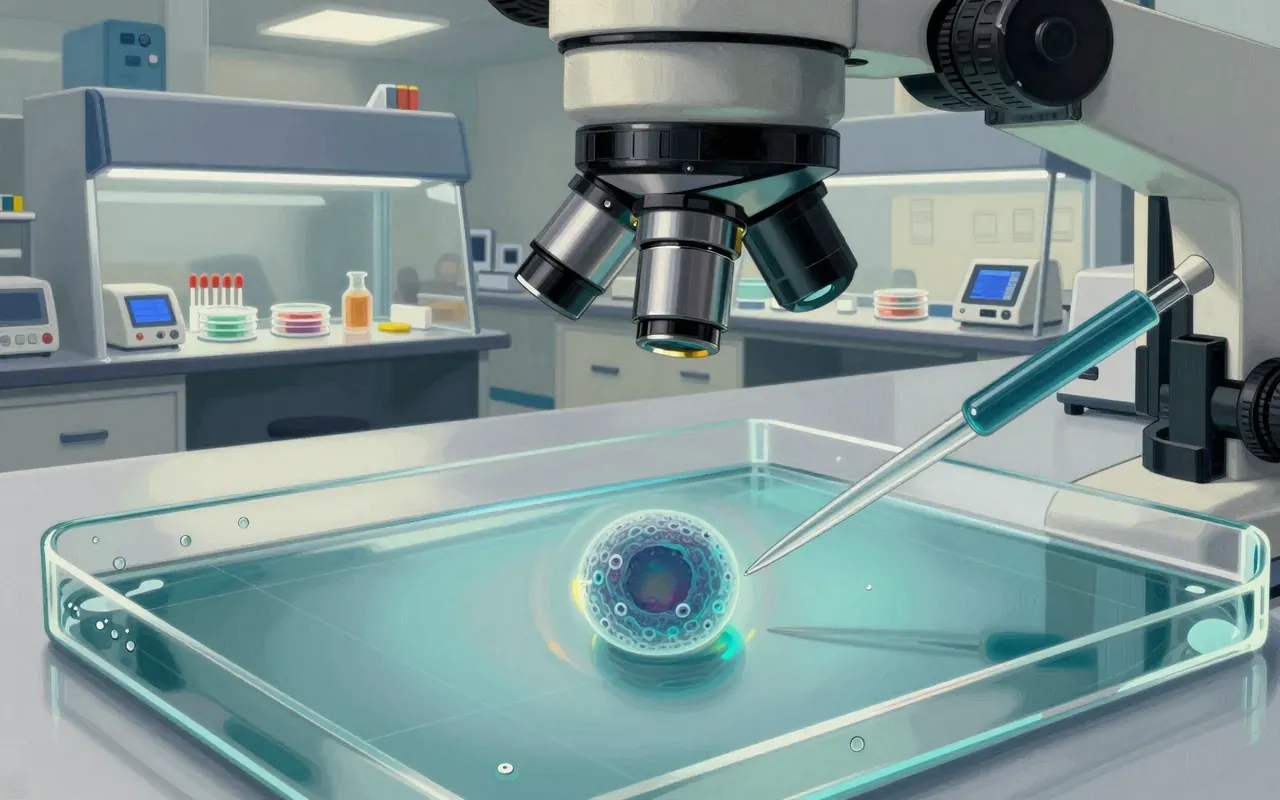
In May 2010, a team at the J. Craig Venter Institute reported building the complete genome of the bacterium Mycoplasma mycoides from chemically synthesised DNA rather than copying it from an existing cell, starting from a digital sequence record and assembling it in stages, from short fragments of around a thousand base pairs up through progressively larger pieces until the full genome was complete. The finished synthetic genome was then transplanted into a cell of a related species, Mycoplasma capricolum, whose own DNA had first been removed, leaving an otherwise intact cell with all its usual proteins and membrane but no genetic instructions of its own. Once the synthetic genome took hold inside that recipient cell, the cell began functioning and dividing according to the new instructions, producing what the team called JCVI-syn1.0.
Transplanting into a hollowed-out cell
The path to that result was not smooth. An early attempt at assembling the synthetic genome failed because of a single frameshift mutation, an error of just one base pair, in a gene needed for the genome to replicate correctly, and tracking down and correcting that one mistake cost the project roughly three months of additional work. That level of fragility is itself informative: a genome running to over a million base pairs can be derailed entirely by a single misplaced letter, which underlines how much precision the synthesis and assembly process demanded and how far it was from simply printing out a known DNA sequence and expecting it to work.
A frameshift mutation and a delay
What the experiment demonstrated has held up as genuine and repeatable: a chemically synthesised genome, built without directly copying an intact natural genome molecule, can indeed take over a cell and direct its behaviour and reproduction going forward. That is a real technical achievement in synthetic biology, and the Venter Institute extended the underlying approach further with JCVI-syn3.0 in 2016, a deliberately minimised genome of 531,560 base pairs and only 473 genes, arrived at by systematically testing which genes could be removed without losing viability. That minimal genome represents, at least for this organism under laboratory conditions, close to the smallest set of genetic instructions found sufficient to sustain independent cellular life.
Life, or borrowed machinery
The claim that this amounts to creating life from scratch does not hold up under scrutiny, and the material is explicit about why: the synthetic genome was never introduced into an empty test tube or an artificial membrane built from raw chemicals, but into an already-living recipient cell that supplied every protein, every piece of cellular machinery, and the membrane itself. The genome provided new instructions, but it did not provide the apparatus needed to read and act on those instructions, which came entirely from the pre-existing Mycoplasma capricolum cell. That distinction is why many researchers describe the achievement more precisely as genome synthesis and transplantation rather than the creation of life, a framing considerably narrower than Venter’s own description of an organism whose parent was a computer.
Shrinking to the essentials
The minimal genome work carries a striking implication beyond the headline achievement of synthesis itself: even after paring the genome down to the smallest set of genes the team could find necessary for survival, 149 of those 473 remaining genes have no known function. That means a substantial fraction of what turns out to be essential for even a minimal, stripped-down form of cellular life is still not understood at a mechanistic level, a genuine gap in biological knowledge that the minimisation experiment exposed rather than resolved. The broader synthetic biology field has continued to build on both the transplantation technique and the minimal genome findings, using them as tools to study what components of a genome are truly indispensable and why.
Genes nobody can explain yet
This is worth understanding on its own terms rather than through the shorthand of scientists creating artificial life, because the more interesting and more defensible story is what the work reveals about the boundary between genetic instructions and the cellular machinery that carries them out, and about how much remains unexplained even in the simplest genomes biologists have managed to construct. The technical detail, particularly the frameshift mutation episode and the unexplained essential genes, gives the story real substance rather than leaving it as an abstract milestone. Readers expecting a clean, uncontested triumph should be aware that the scientific community’s own assessment of what was and was not achieved remains genuinely divided, which is itself part of what makes this worth the time.