Chemical fossils that outlast the organism
Molecular fossils, more commonly called biomarkers, are complex carbon-based compounds that trace back to a living organism but persist in rock or petroleum long after that organism has decomposed, effectively functioning as chemical rather than physical fossils. The material names several specific examples: steranes, derived from cholesterol found in living cells, triterpanes, linked to land plant biochemistry, and porphyrins, which come from the breakdown of chlorophyll, alongside simpler hydrocarbons such as pristane and phytane produced as organic matter degrades. These compounds matter because they can survive geological processes that destroy any visible trace of the original organism, meaning their presence in ancient rock or oil is itself a form of evidence about what kinds of life were present when that rock or oil originally formed, and under what conditions.
Reading depositional history from oil chemistry
In practice, geochemists identify these compounds using gas chromatography and mass spectrometry, sensitive analytical techniques capable of detecting and distinguishing specific molecules within complex mixtures such as crude oil. One specific application given is the ratio between pristane and phytane, two closely related hydrocarbons whose relative abundance serves as an indicator of the environment in which the original organic matter was deposited, useful information for understanding ancient ecosystems and for practical purposes such as assessing oil maturity in petroleum exploration. The material treats this industrial, petroleum-geochemistry application as directly continuous with using the same compounds to trace the deep history of life on Earth, since both rely on the same underlying chemistry surviving intact over enormous spans of time.
A three-part test built from past mistakes
Because claims about ancient or extraterrestrial life carry unusually high stakes, the material lays out a specific three-part test now applied to any proposed biosignature. First, reliability: a genuine biosignature must dominate over plausible abiotic explanations, generally requiring evidence of a chemical disequilibrium unlikely to arise without biological activity. Second, survivability: the signal must be capable of persisting long enough to actually be found, with fossilised organic matter as old as 3.5 billion years cited as proof this kind of preservation is achievable. Third, detectability: the signature must be observable with the instruments actually available, a constraint that rules out signals too faint or too subtle for current technology regardless of whether they might genuinely indicate life.
The meteorite that raised the bar
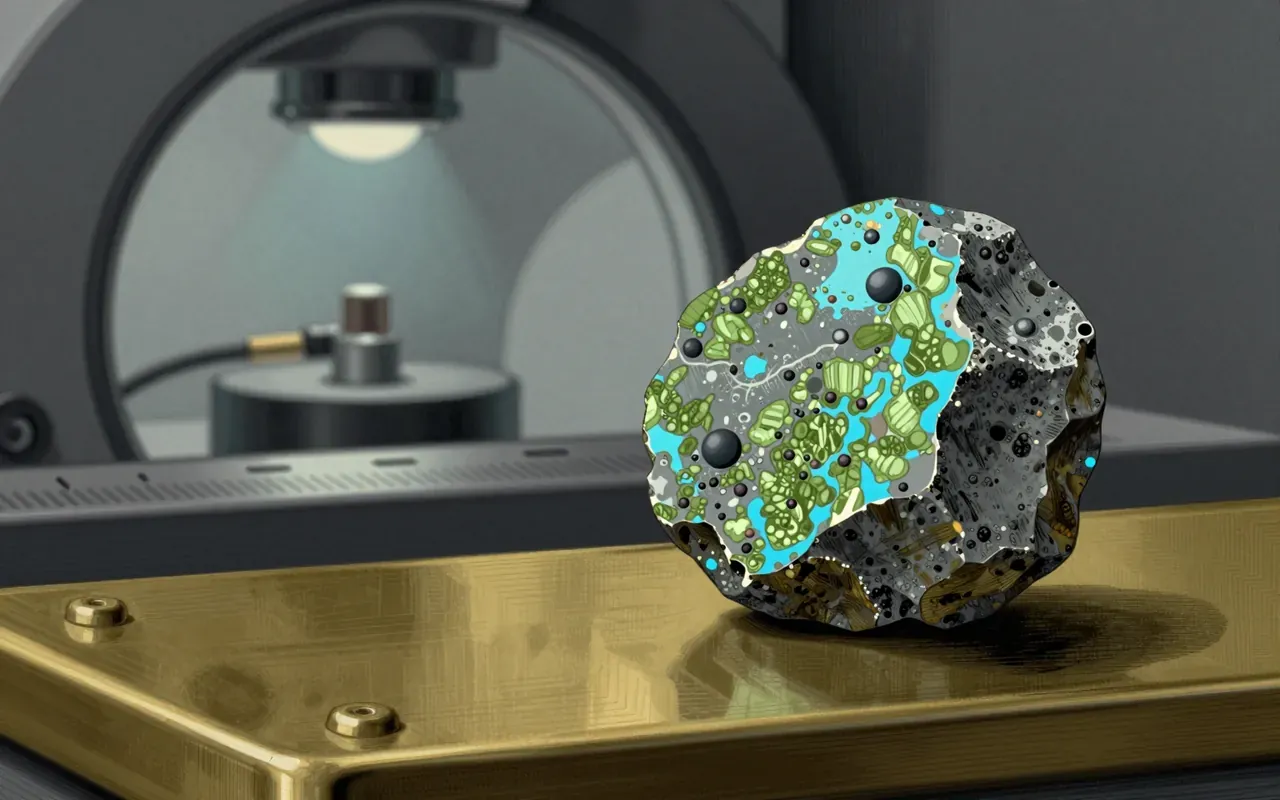
This strict standard exists because morphology alone has previously misled researchers. The material specifically discusses the Martian meteorite ALH84001, where structures initially proposed as fossilised bacteria were later judged likely too small to represent actual cells, a conclusion that established, as a matter of scientific consensus going forward, that morphological evidence alone is insufficient and must be supported by multiple independent lines of evidence before a biosignature claim can be taken seriously. A comparable caution applies to stromatolites, layered structures often associated with ancient microbial activity, where the material notes a disputed 3.7-billion-year-old structure in West Greenland that may be better explained by ordinary tectonic activity than by biology.
Signals still under dispute
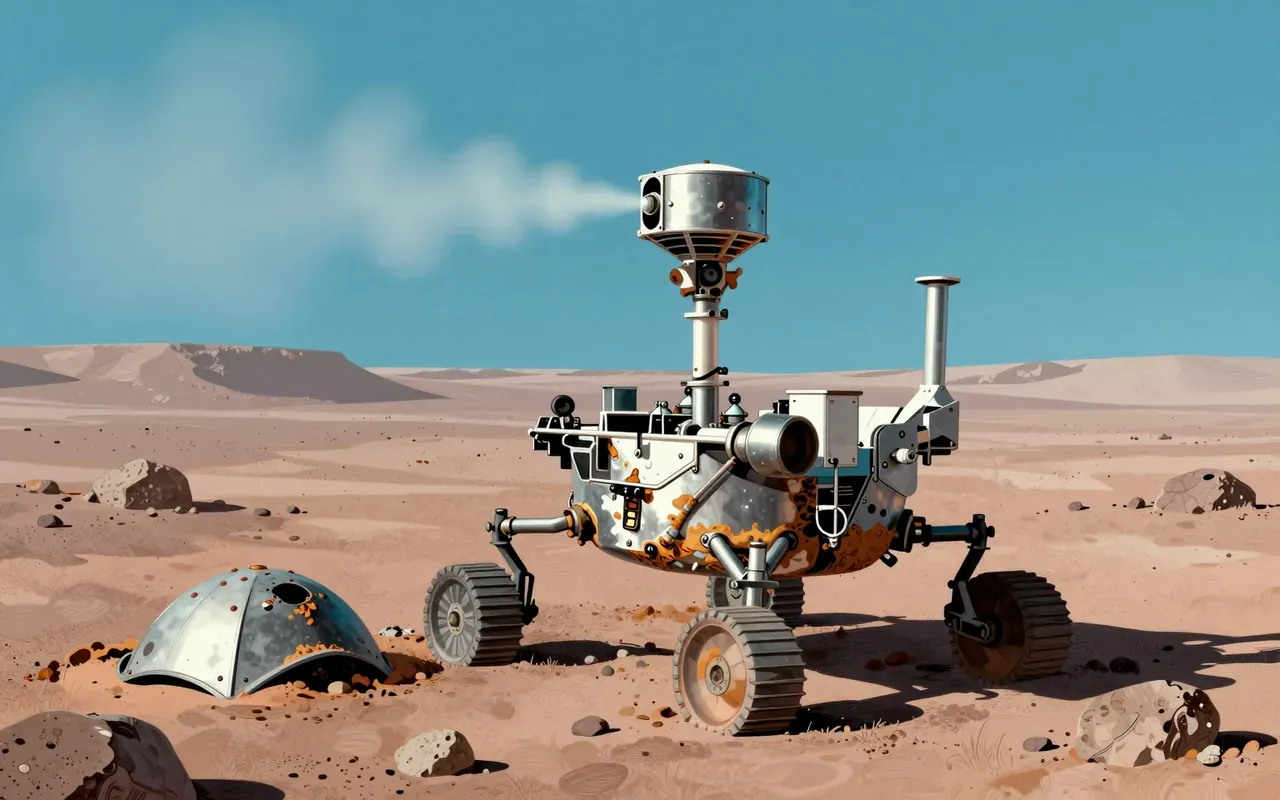
Applying this standard to current solar system exploration produces a picture of genuine, unresolved uncertainty rather than settled discovery. Methane detected on Mars since 2004 remains unexplained in both its sudden appearance and its disappearance, with current photochemical models unable to account for the rapid variations observed. The Perseverance rover’s 2024 discovery at a site called Cheyava Falls found organic matter alongside millimetre-sized mineral features resembling leopard spots, containing iron and phosphate associated with microbial activity on Earth, but a September 2025 NASA report described these findings as requiring further study and eventual sample return before any conclusion can be drawn. Venus presents a similar pattern, with phosphine detections reported in 2020 subsequently challenged by reanalysis suggesting concentrations far lower than the original claim.
A distant candidate still being argued over
Beyond the solar system, the exoplanet K2-18b illustrates how contested even a headline-making result can remain. A possible detection of dimethyl sulfide, one of roughly fourteen thousand proposed atmospheric biosignatures the material references, was reported in 2023, but follow-up analysis has questioned whether the James Webb Space Telescope’s instrumentation can reliably distinguish this specific signal from background methane noise, and potential abiotic sources for the same chemical have since been identified. This closing material is exactly why the brief is worth the time: it treats the search for life beyond Earth not as a countdown to an announcement but as a genuinely difficult evidentiary problem, one where the same rigorous three-part standard developed from studying ancient rock on Earth is now being applied, appropriately cautiously, to some of the most exciting and unresolved claims in current planetary science.