What the work claims
That light propagates as a wave; that elastic collisions obey invariant momentum and kinetic energy relations; that centrifugal force follows a precise geometric relation to motion; that Saturn is girdled by a non-contacting, inclined ring; that Titan is its largest moon; and that time can be regulated with pendulum isochronism.
How it was done
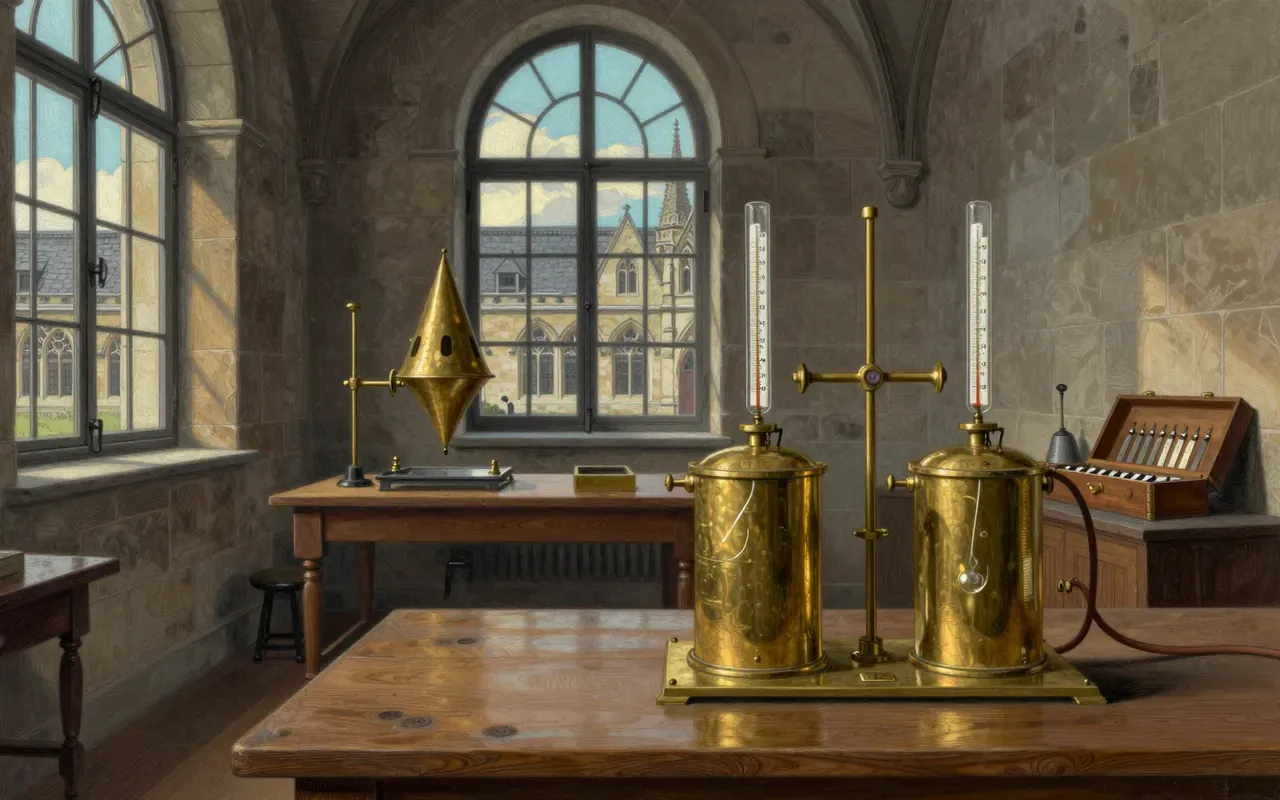
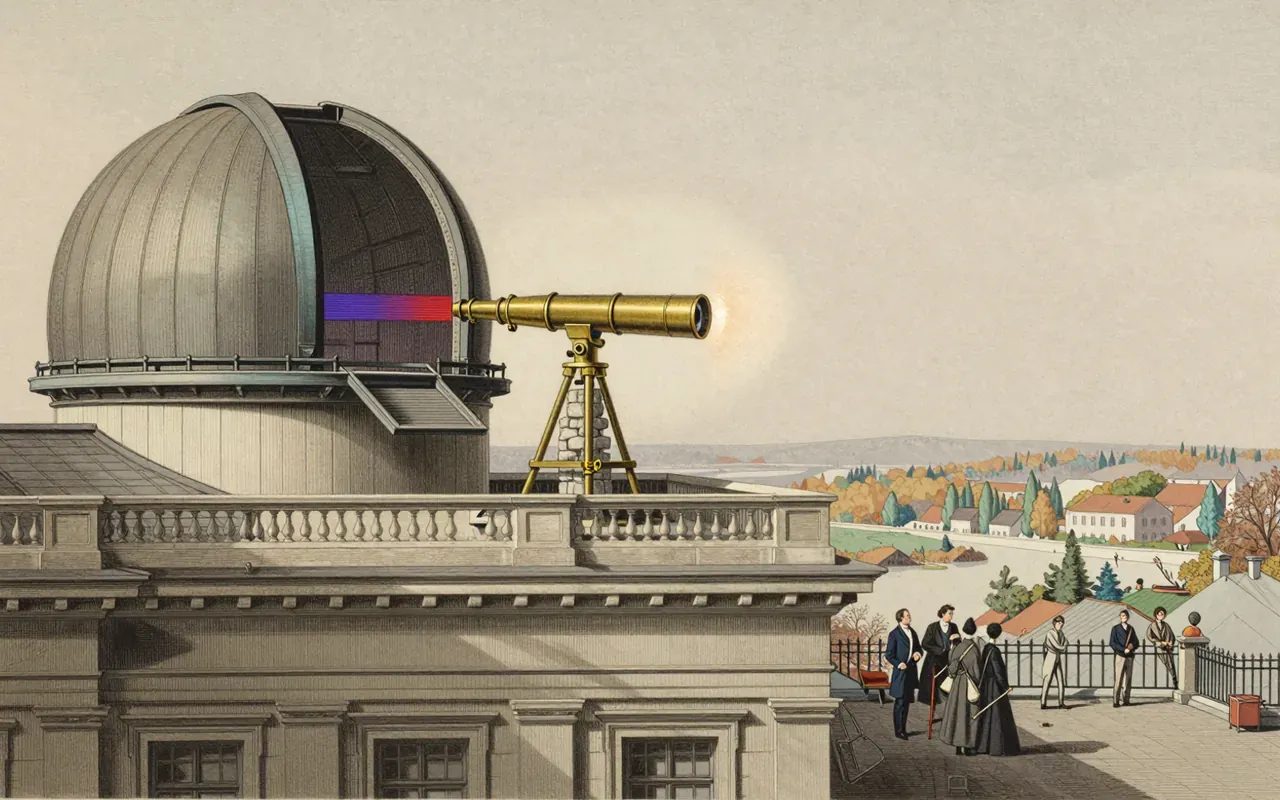
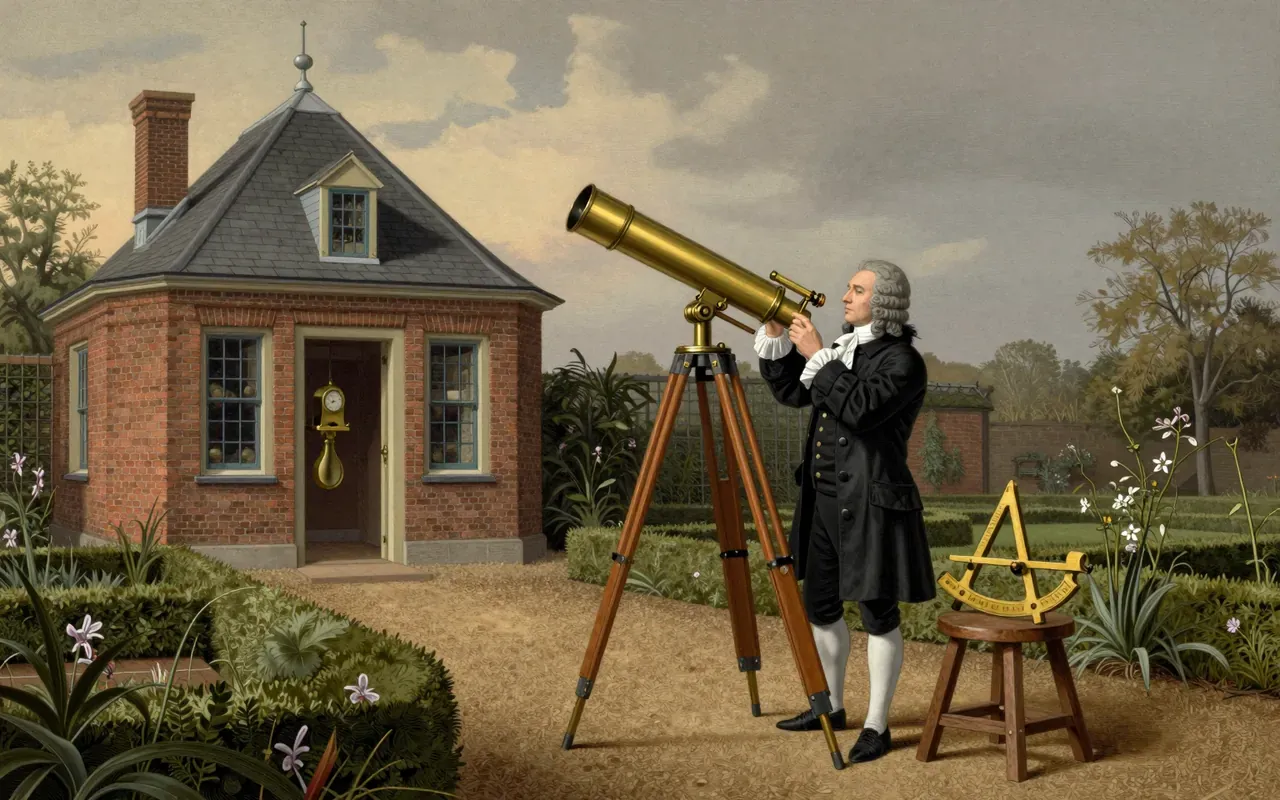
Huygens used geometric derivation to find laws of elastic collision and centrifugal force. He ground lenses with his brother to build refracting telescopes. He invented and patented a pendulum-based timekeeper. He formulated light propagation as a wave phenomenon using mechanical analogies and geometry.
What holds up
His geometric derivation of elastic collision laws (1656), centrifugal force formula (1659), invention and patenting of the pendulum clock (1657), discovery of Titan (1655), correct interpretation of Saturn’s ring (1655–1659), and wave theory of light (1690) all hold as verified claims.
What does not
The document does not establish that Huygens proved light is exclusively wavelike, nor that his wave theory displaced Newton’s corpuscular model at the time. It does not claim he measured collision or centrifugal force experimentally, only derived them geometrically.
Why it matters beyond the lab
The pendulum clock enabled navigation, cartography, and experimental repeatability. His Saturn and Titan observations set observational standards for planetary astronomy. His wave theory laid groundwork for interference and diffraction work two centuries later. His geometric method shaped how physics formalises nature.
Is it worth your time
Yes. His methods—geometric reasoning, instrument-led observation, idealised modelling—prefigured modern physics practice. His results remain embedded in engineering, astronomy, and timekeeping.