10:41in productionCh. 1 · The homemade apparatus/ 10:41 · ceiling 15 min
Physics
Georg Ohm
Ohm didn’t discover a universal law — he built a working model for a narrow class of circuits, and it stuck.
Ohm’s 1827 law is a precise, empirically derived proportionality — not a fundamental principle, not universally valid, but indispensable for designing real circuits.
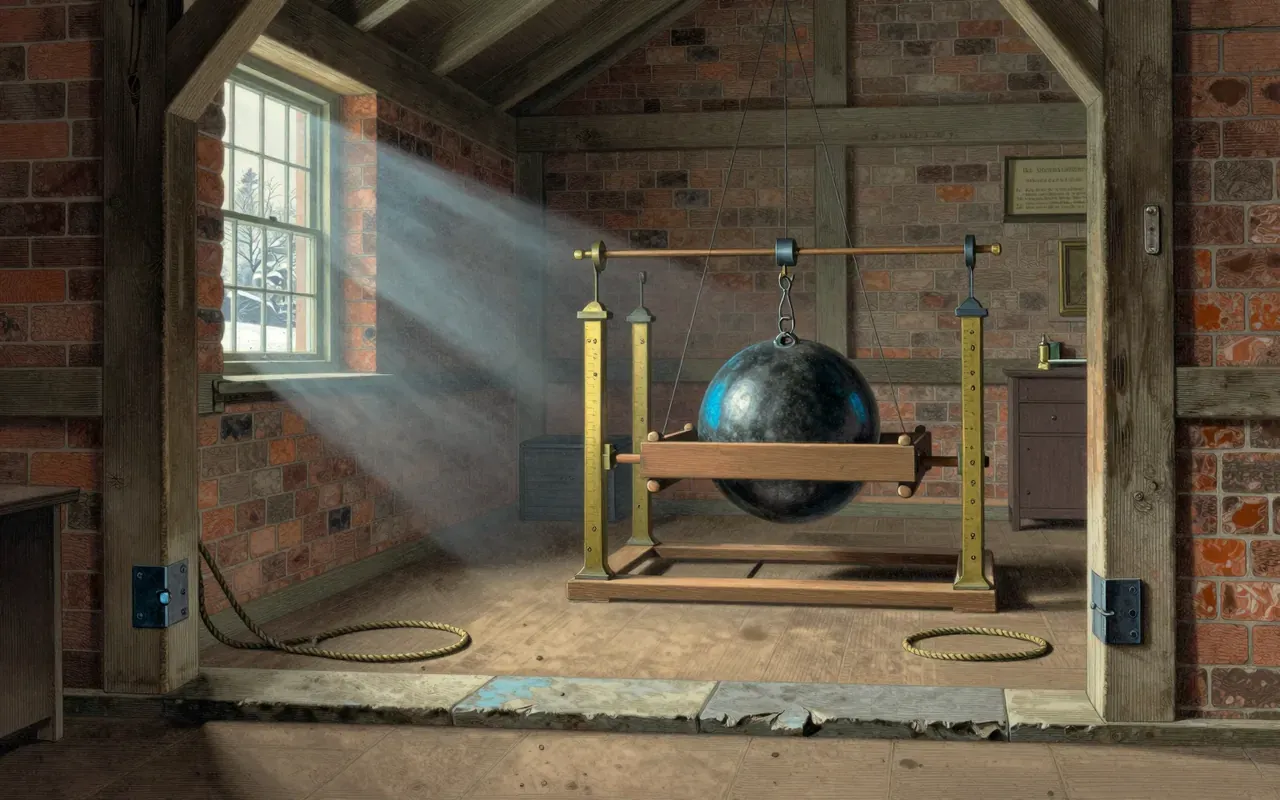
Ohm measured voltage and current with instruments he made himself, starting with wire-length experiments in 1825.
2:35
Heat as a blueprint
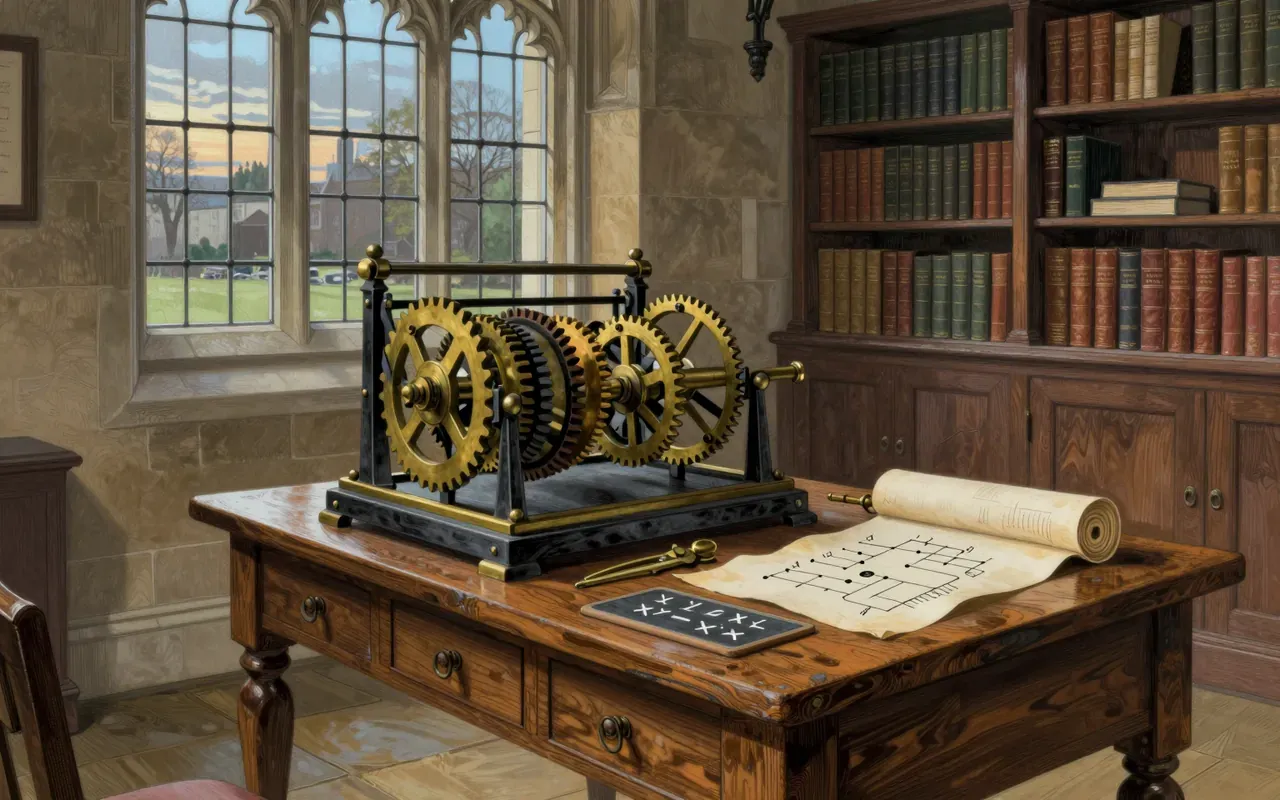
He borrowed Fourier’s mathematics of heat flow to describe electric conduction in 1826.
3:54
The law in print
In 1827, he published the full equation: electromotive force = current × resistance.
4:58
What the equation means
The law is a direct proportionality — not a definition, not a derivation from deeper principles, but an empirical fit.
6:07
Where it stops working
It works for uniform metallic conductors under steady direct current — nothing more.
7:22
Why it scaled
It turned electricity from spectacle into engineering — enabling everything from telegraphs to grids.
Worth your time?
Yes. Study the whole thing.
4.5/ 5
What works
predictive circuit design
quantitative teaching of DC electricity
historical understanding of theory-building
What does not
establish resistance as a material property
quantify temperature dependence
address non-steady or non-metallic conduction
Study it if
engineers
physicists
historians of science
Skip it if
general readers seeking breakthrough narratives
students expecting universal laws
The written brief1 min read
What the work claims
Ohm claimed that the electromotive force across a circuit segment equals the product of the current through it and its resistance. He derived this from experimental observation and analogy to heat flow.
How it was done
Ohm built his own equipment to measure voltage and current. In 1825, he tested how electromagnetic force changed with wire length. In 1826, he modelled conduction on Fourier’s heat theory. He published the full law in 1827.
What holds up
The direct proportionality between voltage and current holds for many conductors under steady conditions. The formulation ‘electromotive force = current × resistance’ is consistent with the measurements Ohm reported using his self-built apparatus.
What does not
The work does not establish resistance as an intrinsic material property. It does not quantify resistivity, temperature dependence, or limits of validity. It does not address non-ohmic materials, alternating current, or time-varying fields.
Why it matters beyond the lab
It enabled predictive design of circuits before electronics existed. It shifted electricity from qualitative demonstration to quantitative engineering — making telegraphy, lighting, and later power grids possible.
Is it worth your time
Yes. It is the first quantitative, experimentally grounded, mathematically formalised relationship in circuit theory — and it remains foundational for all electrical engineering.