sciencebriefs
all subjects →
10:31in productionCh. 1 · The detector that found the gas/ 10:31 · ceiling 15 min
Chemistry · Astronomy & space

James Lovelock

A gas detector built for Mars revealed Earth’s pollution — and mistook it for safety.

Lovelock’s electron capture detector enabled the first global detection of CFCs — in all 50 samples from Ireland to Antarctica — and revealed Mars’ chemically inert atmosphere, leading him to infer no life there and to conceive Gaia as a contrastive idea. He declared CFCs harmless — correctly, based on the evidence he had — but missed their stratospheric risk. The work established detection capability, atmospheric comparison logic, and a new diagnostic use for chemical equilibrium — not ecological theory or atmospheric hazard assessment.

Chapters & takeaways4
  1. 0:56
    The detector that found the gas

    Lovelock’s electron capture detector was the first tool sensitive enough to reveal CFCs everywhere — from Ireland to Antarctica.

  2. 2:40
    Global detection, local blind spot

    He found CFC-11 in all 50 air samples — but dismissed its danger because he didn’t know how it breaks down in the stratosphere.

  3. 4:54
    Mars taught him how to read life from air

    Studying Mars for NASA, he saw chemical stillness — no oxygen, no methane — and took it as evidence of no life.

  4. 6:50
    Gaia started as an instrument calibration

    The Gaia hypothesis began not as ecology, but as a planetary comparison: Earth’s air is restless because life remakes it.

Worth your time?

Yes. Study the whole thing.

4.5/ 5
What works
  • global CFC detection
  • comparative planetary atmospheric analysis
  • instrument-driven hypothesis generation
What does not
  • prove Gaia
  • show CFCs damage ozone
  • establish consensus on planetary biology
Study it if
  • instrument designers
  • atmospheric chemists
  • planetary scientists
Skip it if
  • ecologists seeking validation of Gaia
  • policy makers needing ozone-risk data
The written brief1 min read

What the work claims

That Earth’s atmosphere is chemically dynamic due to life, unlike Mars’ inert, equilibrium atmosphere — a contrast that led Lovelock to formulate the Gaia hypothesis. That CFCs are globally distributed but harmless — a conclusion drawn before stratospheric chlorine chemistry was understood.

How it was done

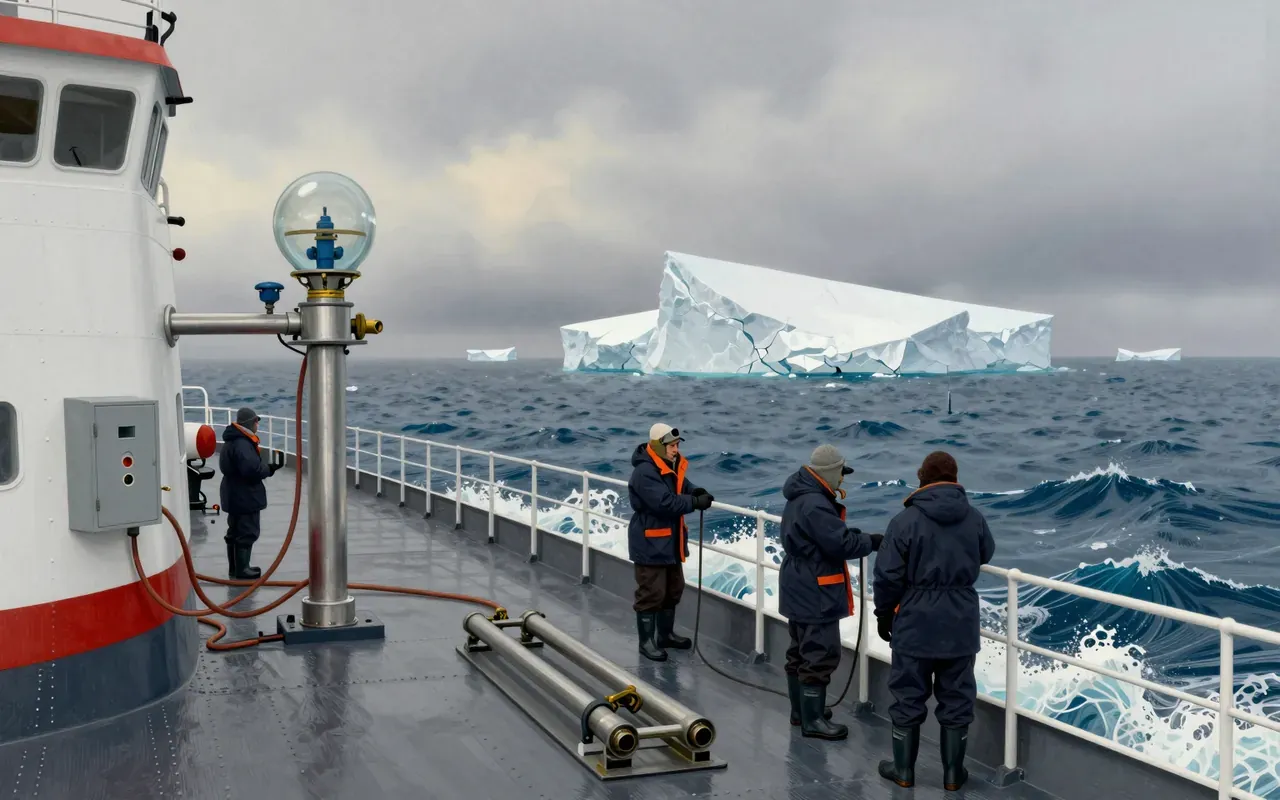
Lovelock invented the electron capture detector. He used it to detect CFC-11 in 50 air samples collected aboard the RRS Shackleton from the northern hemisphere to Antarctica. He also used it to analyse the Martian atmosphere while designing instruments for NASA in 1961.

What holds up

Lovelock was the first to detect widespread CFCs in the atmosphere. He measured CFC-11 globally using his own detector. He found Mars’ atmosphere in chemical equilibrium — with little oxygen, methane or hydrogen — and inferred life’s absence from that stability.

What does not

The work does not establish that CFCs harm the ozone layer. Lovelock explicitly concluded they posed ‘no conceivable hazard’. The Gaia hypothesis was not tested or verified by this work; it emerged as a conceptual inference from atmospheric comparisons.

Why it matters beyond the lab

It matters because it demonstrates how instrumental innovation (the electron capture detector) enabled the first global trace-gas survey — a methodological pivot for environmental monitoring. It also reveals how comparative planetary chemistry can generate biological inference — not as proof, but as a diagnostic heuristic.

Is it worth your time

Yes — because it shows how a single, portable instrument reshaped atmospheric chemistry and planetary science, and how a simple chemical observation can seed a major hypothesis — even when misinterpreted at first.

Same field · Chemistry4 of 24
Up next in Science

James Prescott Joule

· 10:20

Heat is not a substance — it is work in disguise.

10:20