9:46in productionCh. 1 · The First Lecture/ 9:46 · ceiling 15 min
Evolution · Life sciences
Jean-Baptiste Lamarck
Lamarck didn’t get evolution wrong — he built the first working theory of it, and it still shapes how we ask biological questions.
Lamarck’s theory was the first to treat evolution as a unified, mechanistic process — not philosophical conjecture. It rested on direct observation of fossil succession, introduced enduring terminology, and framed evolution as directional and environmentally responsive. It did not rely on genetics, population data, or experimental validation — none of which existed in 1800. Its strength lies in structure and scope; its limit is testability within its own era.
Lamarck’s evolutionary theory debuted publicly on 11 May 1800 — not in a book, but in a lecture at the Muséum national d'Histoire naturelle.
2:55
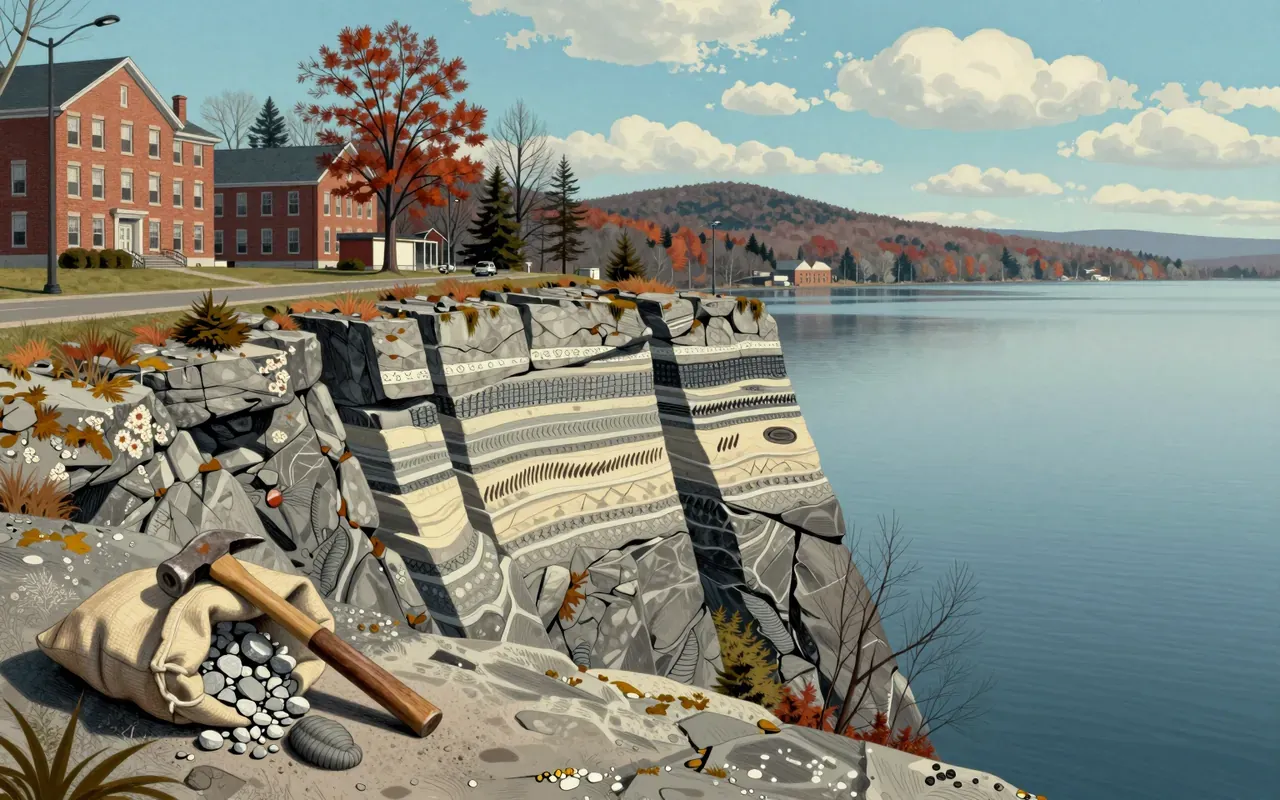
Molluscs Over Time
He concluded molluscs evolved in place over geologic time — rejecting both extinction and migration as explanations for changing fossil assemblages.
4:29
Naming the Nameless
He coined 'invertebrates' and defined them in a major 1801 classification work — establishing a foundational category for zoology.
5:52
The First Cohesive Theory
He produced the first truly cohesive theory of biological evolution — not just speculation, but a structured explanation with mechanisms and scope.
Worth your time?
Yes. Study the whole thing.
4.5/ 5
What works
first cohesive evolutionary theory
empirical basis in fossil succession
coining of 'invertebrates'
establishment of 'biology' as discipline
What does not
inheritance of acquired characteristics
genetic mechanism
experimental verification
quantitative prediction
Study it if
historians of science
biologists studying conceptual origins
students of taxonomy and systematics
Skip it if
anyone seeking evidence for modern evolutionary synthesis
those looking for validated mechanisms of heredity
The written brief1 min read
What the work claims
Lamarck claimed that life evolves through two forces: a complexifying force (‘le pouvoir de la vie’) and an adaptive force (‘l’influence des circonstances’), driven by environment and use/disuse. He claimed molluscs changed over time in response to environmental change — not through extinction or migration.
How it was done
Lamarck observed changes in mollusc assemblages across geologic time in Europe. He presented his ideas publicly in a lecture at the Muséum national d’Histoire naturelle on 11 May 1800. He coined the term ‘invertebrates’ and published Système des animaux sans vertèbres in 1801.
What holds up
Lamarck developed the first truly cohesive theory of biological evolution. He constructed one of the first theoretical frameworks of organic evolution. He rejected extinction and migration as explanations for observed faunal change — a claim grounded in his mollusc observations.
What does not
Lamarck did not prove evolution occurred. He did not demonstrate inheritance of acquired characteristics. The material does not report any experimental test, replication, or quantitative measurement of change over generations.
Why it matters beyond the lab
Lamarck established ‘biology’ as a discipline and ‘invertebrates’ as a taxonomic category. His work set the terms — and the expectations — for all subsequent evolutionary theory, including what would later be tested, refined, or discarded.
Is it worth your time
Yes — it is worth your time to understand Lamarck not as a wrong precursor to Darwin, but as the first to build a cohesive evolutionary theory grounded in empirical observation of fossil succession.