sciencebriefs
Topic

Palaeontology

Reconstructing whole animals from the parts that fossilise.
26
in science
10:48
average
281 min
in total
29
across the network
Palaeontology across the network →
All briefs26
8:07

Henry Gee

Henry Gee is a British palaeontologist and evolutionary biologist, a senior editor at Nature, and the author of books on deep time, the origin of vertebrates and human evolution.
10:48

Charles Darwin

Darwin did not discover evolution — he discovered how it works, and why it must be true.
9:01

David M. Raup

Extinction isn’t random — but the 26-million-year pulse Raup found is not a law of nature.
9:17

Donald Johanson

One glance at a bone changed human evolution—by forcing palaeontology to redraw the family tree around a single, incomplete skeleton.
10:41

Edward Drinker Cope

Cope didn’t found American palaeontology—he flooded it with names, many of which still stand only because no one has cleared the backlog.
13:00

Sinosauropteryx

A 1996 fossil found by a farmer in Liaoning gave the first non-bird dinosaur with feather-like structures, and later melanosome studies even reconstructed its probable colouring, though the collagen-versus-feather argument took two decades to close.
9:58

Georges Cuvier

Cuvier didn’t just name extinct beasts — he proved life could vanish, and made Earth’s history a story of catastrophe, not continuity.
13:00

Homo floresiensis

A metre-tall skeleton found in an Indonesian cave in 2003 was either a new dwarfed human species or a sick modern human, a dispute settled largely by CT scans of its brain case rather than by its strikingly small size alone.
9:46

Jean-Baptiste Lamarck

Lamarck didn’t get evolution wrong — he built the first working theory of it, and it still shapes how we ask biological questions.
11:29

Louis Leakey

Leakey didn’t discover human origins — he relocated them to Africa. And then mislaid them again in California.
13:00

Australopithecus afarensis

Lucy's 1974 skeleton, confirmed two years later by footprints preserved at Laetoli, showed that walking upright evolved long before the large human brain, though her species' exact lifestyle and lineage remain debated.
13:00

Lucy (hominid)

Lucy's pelvis, knee and spine show she walked upright 3.2 million years ago with a small, ape-like skull, evidence that bipedalism came well before big brains, though her proportionally long arms still divide researchers over how much time she spent in trees.
9:30

Meave Leakey

A flat-faced skull from Kenya shattered the illusion of a tidy human family tree.
10:26

Punctuated equilibrium

Gould and Eldredge

Punctuated equilibrium is a descriptive claim about fossil patterns — not a mechanism, not a refutation, not a universal law. It says what is seen (stasis), what is rare (gradualism), and where change appears (cladogenesis). Its power lies in its restraint.

11:04

Richard Leakey

Leakey didn’t find 'human origins' — he found five fossils that pinned Homo sapiens, erectus, rudolfensis, ergaster, and aethiopicus to East Africa, nothing more.
9:12

Richard Owen

Owen didn’t discover dinosaurs — he invented the category, and got the logic right before the fossils did.
13:00

Alvarez hypothesis

The Alvarez team's 1980 iridium anomaly predicted a hidden asteroid crater, confirmed a decade later at Chicxulub, turning the dinosaurs' extinction from vague speculation into a dated, physically evidenced event.
9:13

Burgess Shale

The Burgess Shale doesn’t prove an ‘explosion’ — it’s the only place where we can see what exploded.
13:00

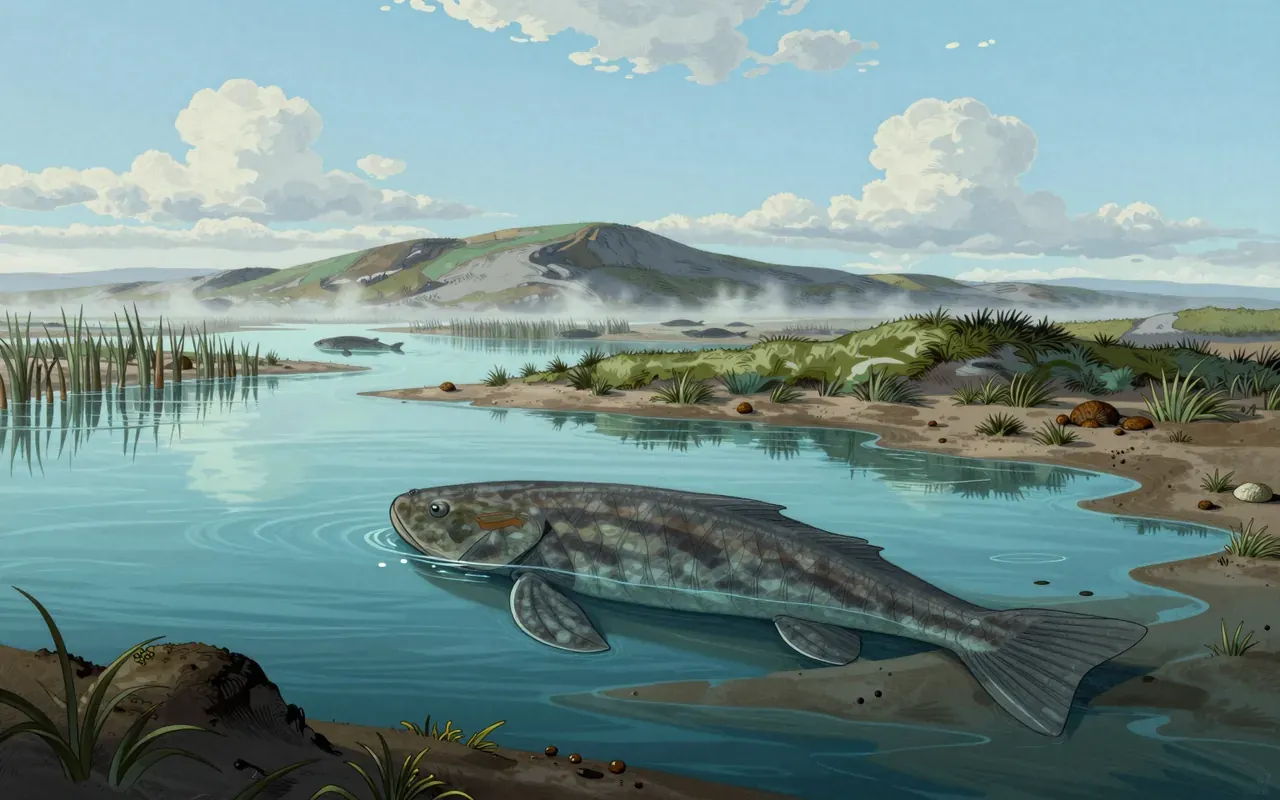
Tiktaalik

Neil Shubin's team predicted where a fish-to-land transitional fossil should be found, went looking on Arctic Ellesmere Island, and found Tiktaalik, though a 2010 trackway discovery has since complicated the tidy story of what it represents.
11:01

Tim D. White

Two fossils—one 4.4 million, one 2.5 million years old—don’t prove human ancestry, but they do break the timeline into testable chunks.
10:35

William Buckland

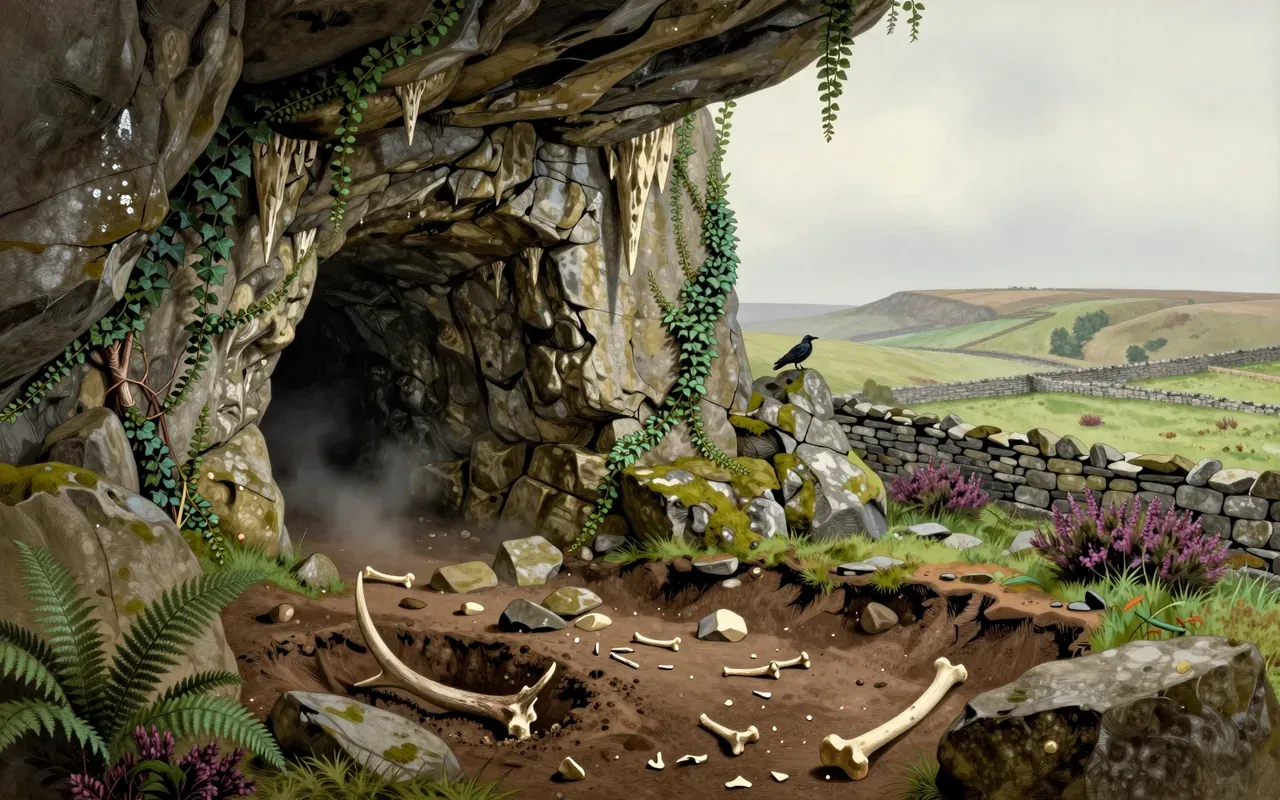
He proved hyaenas once ruled Yorkshire caves—but still buried them under Noah’s flood.