What the work claims
Owen claimed a new taxonomic category for dinosaurs based on shared skeletal traits; that Protichnites trackways were terrestrial and arthropod-made; that Trichina spiralis caused trichinosis; that molluscs divided cleanly into two branchial groups; and that Australian megafauna represented extinct, giant marsupials.
How it was done
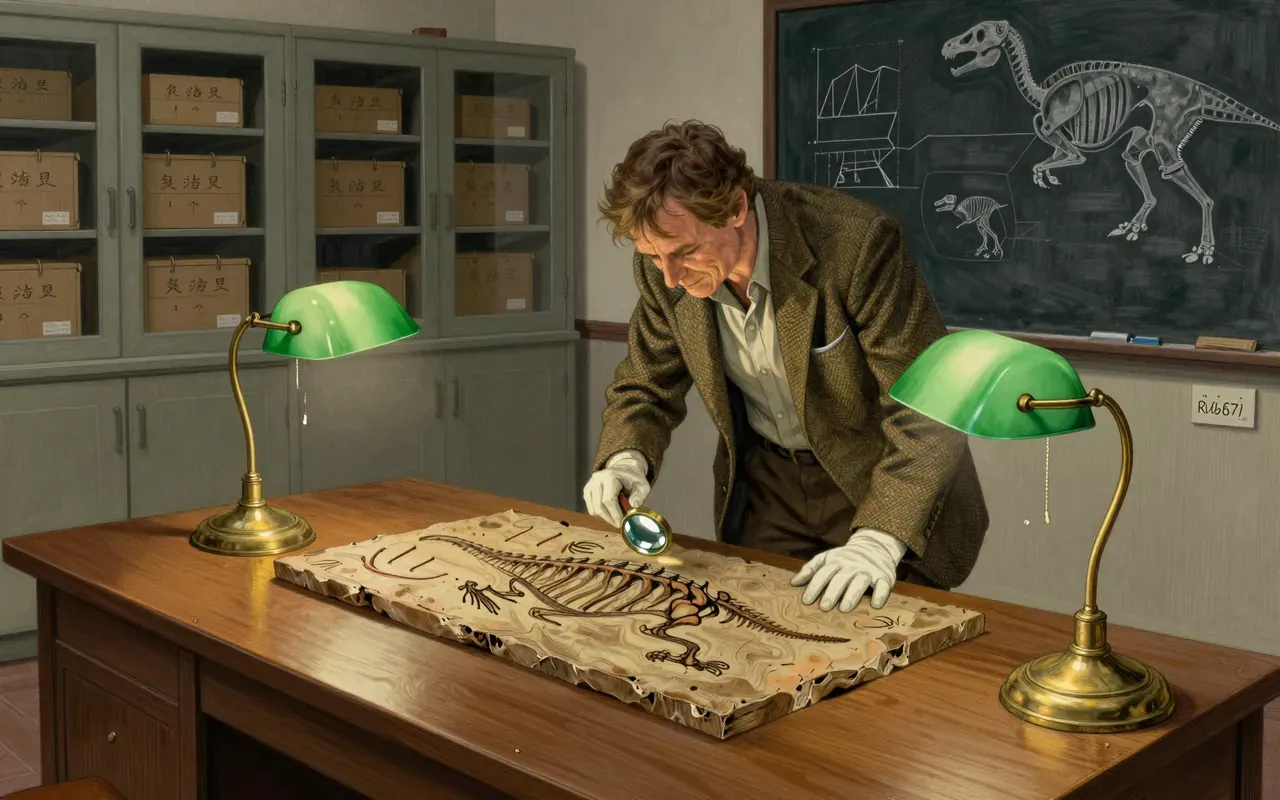
Owen defined dinosaurs by anatomical comparison of fossil specimens from three British genera. He named Protichnites by analysing trackway morphology and inferring the maker’s biology. He identified Trichina spiralis through microscopic examination of human muscle tissue. He proposed molluscan subdivisions by comparative anatomy of cephalopod soft tissues and shells. He described Diprotodon and Thylacoleo from fossil bones collected in Australia.
What holds up
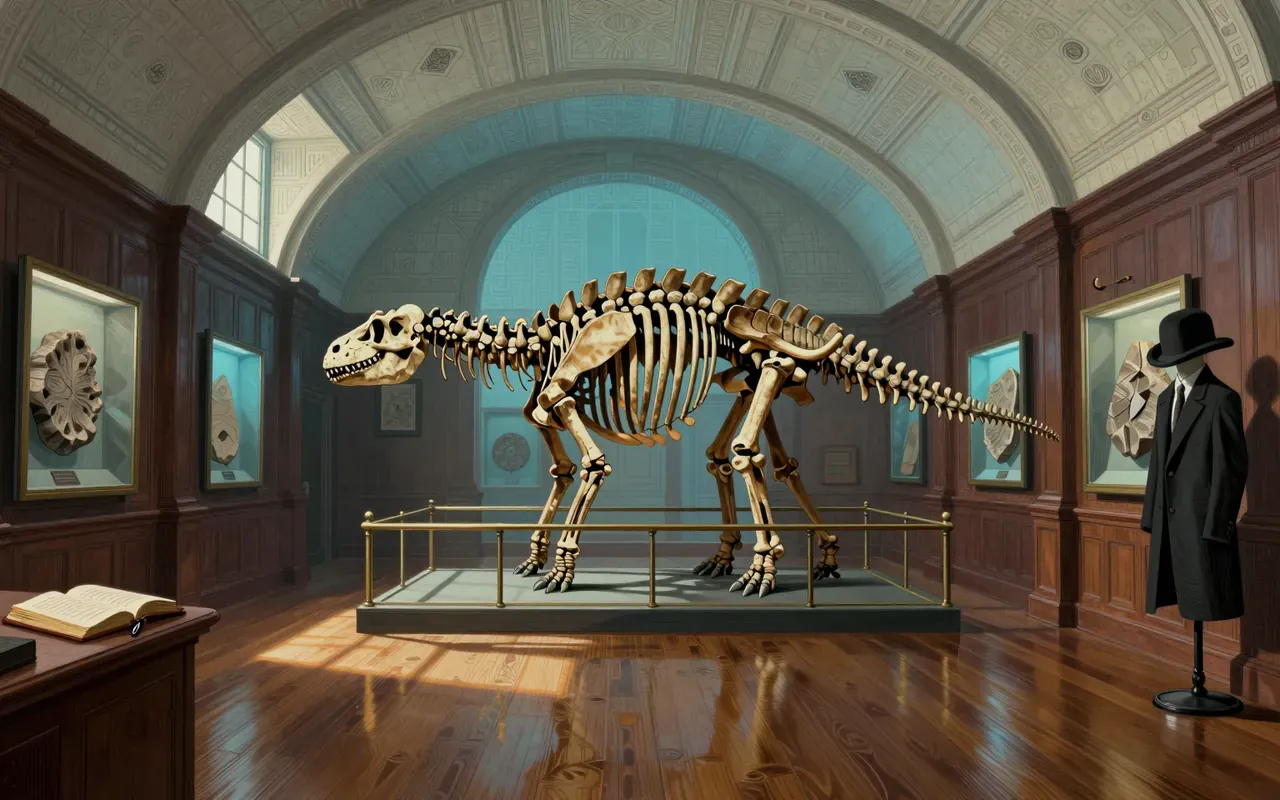
Owen coined Dinosauria. He defined it using Megalosaurus, Iguanodon, and Hylaeosaurus. He identified Protichnites as the oldest land footprints and correctly attributed them to an extinct arthropod. He discovered Trichina spiralis in 1835. He proposed Dibranchiata/Tetrabranchiata in 1832. He described Diprotodon (1838) and Thylacoleo (1859). All are verified claims grounded in primary evidence cited in the source.
What does not
The material does not establish that Owen’s Dinosauria definition excluded other contemporary reptiles on phylogenetic grounds — only that it was based on shared anatomical features of three genera. It does not say he claimed universality for his molluscan classification beyond its anatomical utility. It does not report consensus, replication, or refutation of any claim.
Why it matters beyond the lab
Owen’s naming of Dinosauria created the conceptual container for all subsequent dinosaur science — not as a clade, but as a morphologically coherent group. His Protichnites attribution demonstrated predictive power of comparative anatomy over 150 years before fossil confirmation. His parasite discovery linked microscopic observation to human disease — a template for medical parasitology.
Is it worth your time
Yes — Owen’s work anchors foundational categories in palaeontology, parasitology, and comparative anatomy. His definitions and attributions remain structurally embedded in modern taxonomy and stratigraphic interpretation, even where later evidence revised his conclusions.