What the work claims
That Kirkdale Cave was a prehistoric hyaena den whose fossils reflected local predation and accumulation—not transport by global flood—and that Megalosaurus was a distinct, giant extinct reptile.
How it was done
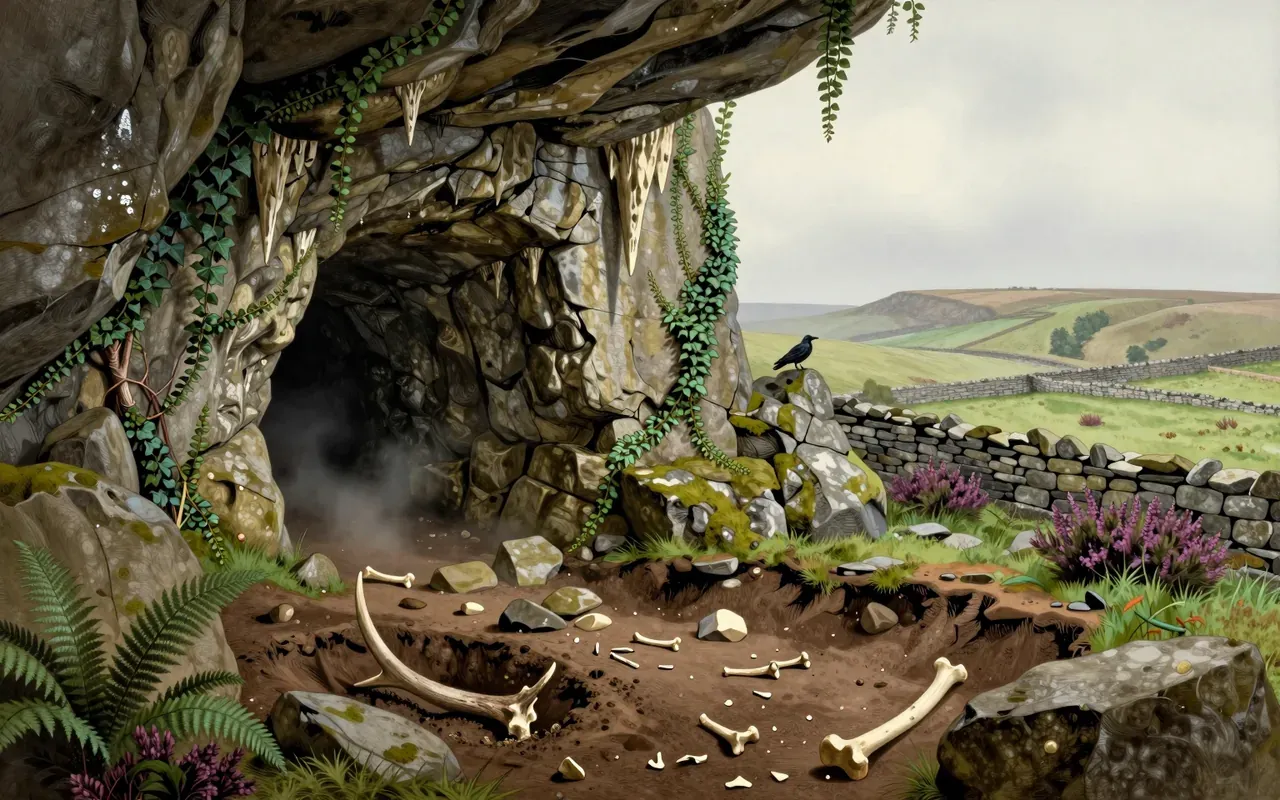
Buckland analysed bone condition and fossilised excrement from Kirkdale Cave. He compared them to the feeding and defecatory habits of a live spotted hyena named ‘Billy’. He coined the term ‘coprolites’ and used them as evidence.
What holds up
His conclusion that Kirkdale Cave was a hyaena den holds up. It was based on gnawed, comminuted bones and calcareous excrement matching live hyena output—evidence directly observed and experimentally validated.
What does not
Buckland did not reject biblical geology outright. He accepted the Kirkdale bones were pre-flood, but insisted the thin mud layer above them came from Noah’s ‘Universal Deluge’.
Why it matters beyond the lab
It shifted palaeontology from diluvial storytelling to ecosystem reconstruction. But it did not yet sever geology from theology: Buckland kept the Flood as a separate, later event.
Is it worth your time
Yes. Buckland’s work established that fossil assemblages could be interpreted as ecological units—not just debris of catastrophe—but his flood-based framework limited that insight.