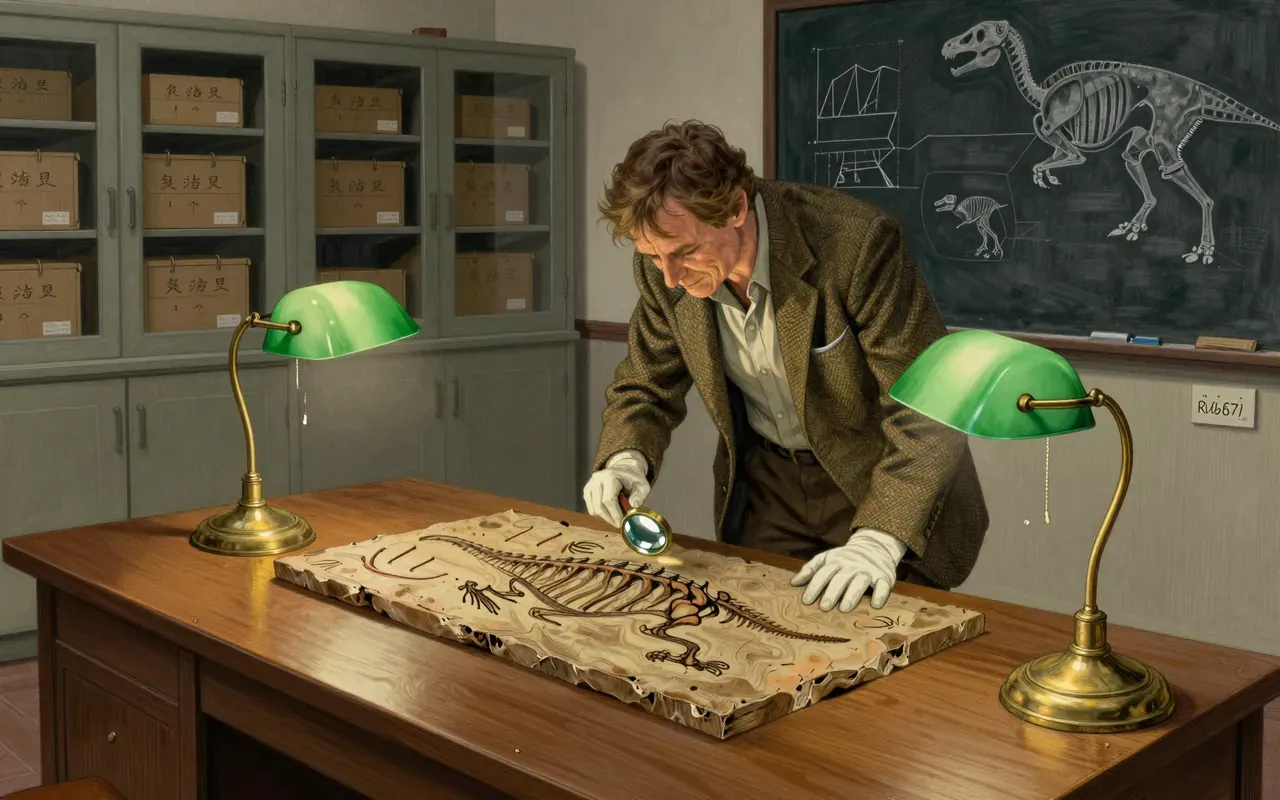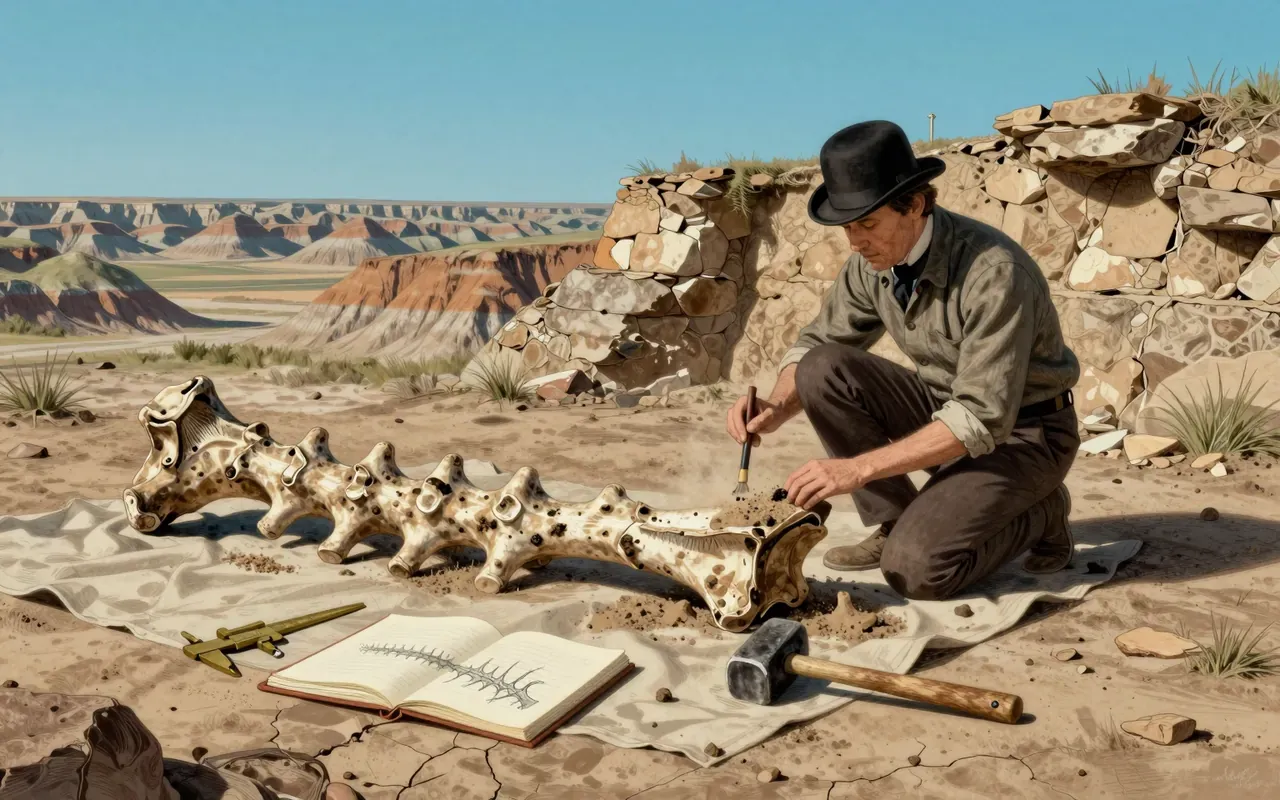
sciencebriefs
all subjects →
10:41in productionCh. 1 · The Name Flood/ 10:41 · ceiling 15 min
Evolution · Natural sciences

Edward Drinker Cope

Cope didn’t found American palaeontology—he flooded it with names, many of which still stand only because no one has cleared the backlog.

Edward Drinker Cope was a prolific American paleontologist whose output defined early vertebrate taxonomy in North America—but whose speed and volume came at the cost of verification, leaving a legacy of names more than settled science.

Chapters & takeaways6
  1. 0:48
    The Name Flood

    Cope named over 1,000 vertebrate species—including dozens of dinosaurs.

  2. 1:48
    Speed Over Scrutiny

    He published 1,400 papers, many under competitive pressure during the Bone Wars.

  3. 2:46
    What Stuck (and What Didn’t)

    His work established foundational specimens and nomenclature—but not their lasting validity.

  4. 3:58
    Bone Wars Output

    Fifty-six of his dinosaur species came from Bone Wars fieldwork in the American West.

  5. 5:34
    Major Works

    His major works include On the Origin of Genera, The Vertebrata of the Tertiary Formations of the West, and Essays in Evolution.

  6. 7:19
    How the Fossils Were Found

    Fieldwork was done largely via the U.S. Geological Survey and independent expeditions.

Worth your time?

Yes. Study the whole thing.

3.5/ 5
What works
  • establishing scale and scope of North American vertebrate fossil discovery
  • producing primary descriptive material still referenced in taxonomic databases
  • documenting field practice during the U.S. Geological Survey’s formative years
What does not
  • accuracy of individual species descriptions
  • current taxonomic standing of his named species
  • consensus among peers during his lifetime
  • mechanism or evidence for evolutionary claims in his essays
Study it if
  • historians of science
  • palaeontologists tracing nomenclatural origins
  • students of scientific competition
Skip it if
  • anyone seeking validated phylogenies
  • those needing error-checked morphological data
  • readers assuming 19th-century publication equals modern reliability
The written brief1 min read

What the work claims

Cope’s work claims to document vertebrate diversity in North America through empirical description and naming—establishing genera, species, and evolutionary relationships, notably in On the Origin of Genera and Essays in Evolution.

How it was done

Cope conducted field work across the American West, often through the U.S. Geological Survey and independent expeditions. He discovered, described, and named species from fossil material he collected and examined.

What holds up

Cope discovered, described, and named over 1,000 vertebrate species. He published 1,400 scientific papers. During the Bone Wars, he discovered 56 new dinosaur species.

What does not

The material does not establish that Cope’s species descriptions were accurate, widely accepted, or enduring. It notes rivals debated the accuracy of his rapidly published works—but gives no data on error rates, revisions, or current taxonomic status.

Why it matters beyond the lab

His output shaped museum collections, geological surveys, and early American palaeontology—but it also exemplifies how speed, competition, and institutional support can drive volume at the expense of verification.

Is it worth your time

Yes—if you need to understand how vertebrate taxonomy was built in 19th-century North America. No—if you assume his output reflects modern standards of verification or reproducibility.
Same field · Evolution4 of 45
Up next in Science

Edward Jenner

· 8:44

Jenner didn’t invent vaccination — he invented the human challenge trial.

8:44