11:21in productionCh. 1 · The 1870 Bonanza/ 11:21 · ceiling 15 min
Evolution · Natural sciences
Othniel Charles Marsh
Marsh didn’t prove evolution — he built the first major fossil scaffold for it in North America.
Marsh’s work established North America as the locus of early horse evolution, documented vertebrate diversification through field collection, and linked dinosaurs to birds using fossil morphology — but did not prove macroevolution or validate his brain-growth law beyond the specimens he studied.
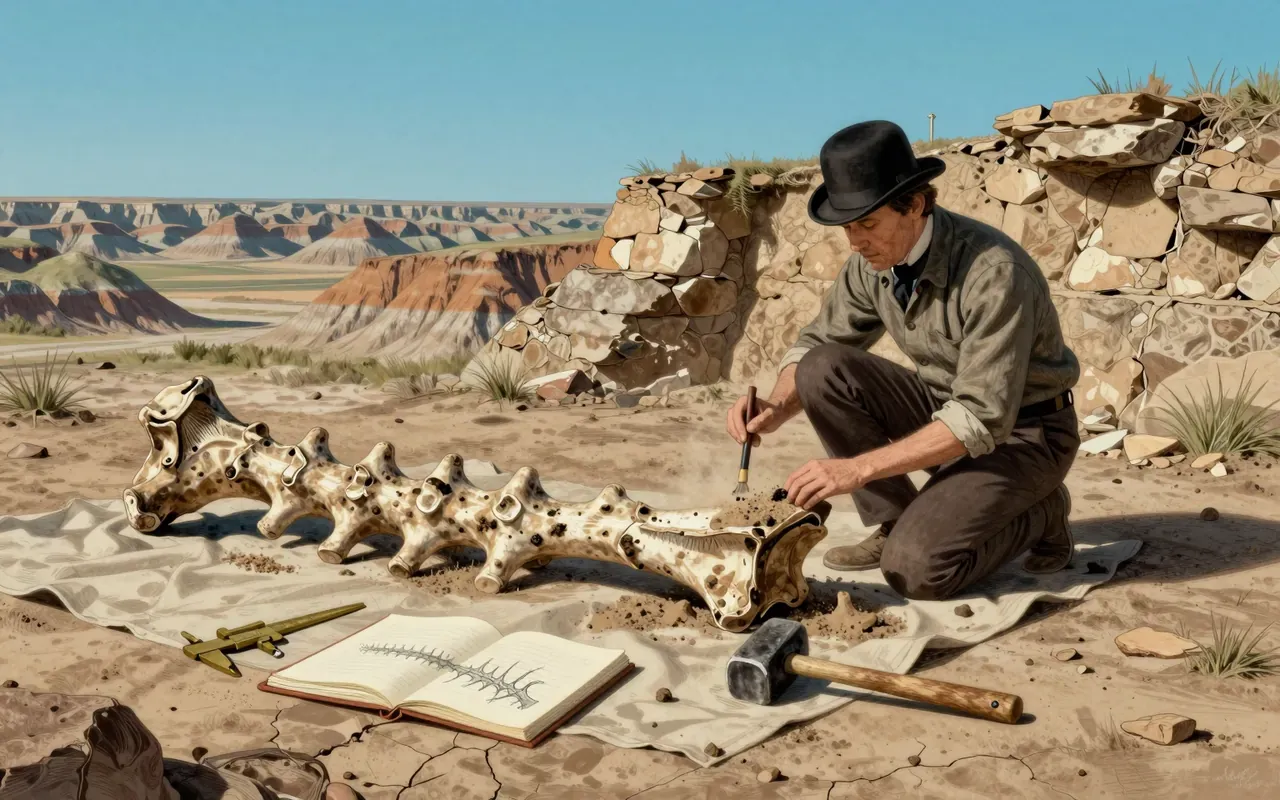
One expedition in 1870 yielded over a hundred new vertebrate species.
2:39
North America, Not Europe
Marsh’s horse fossils overturned the European origin story for equine evolution.
4:12
Gradual Change, Fossil by Fossil
The horse series showed measurable, stepwise change — from dog-sized, three-toed ancestors to modern single-hoofed forms.
5:21
Dinosaurs, Birds, and Bridges
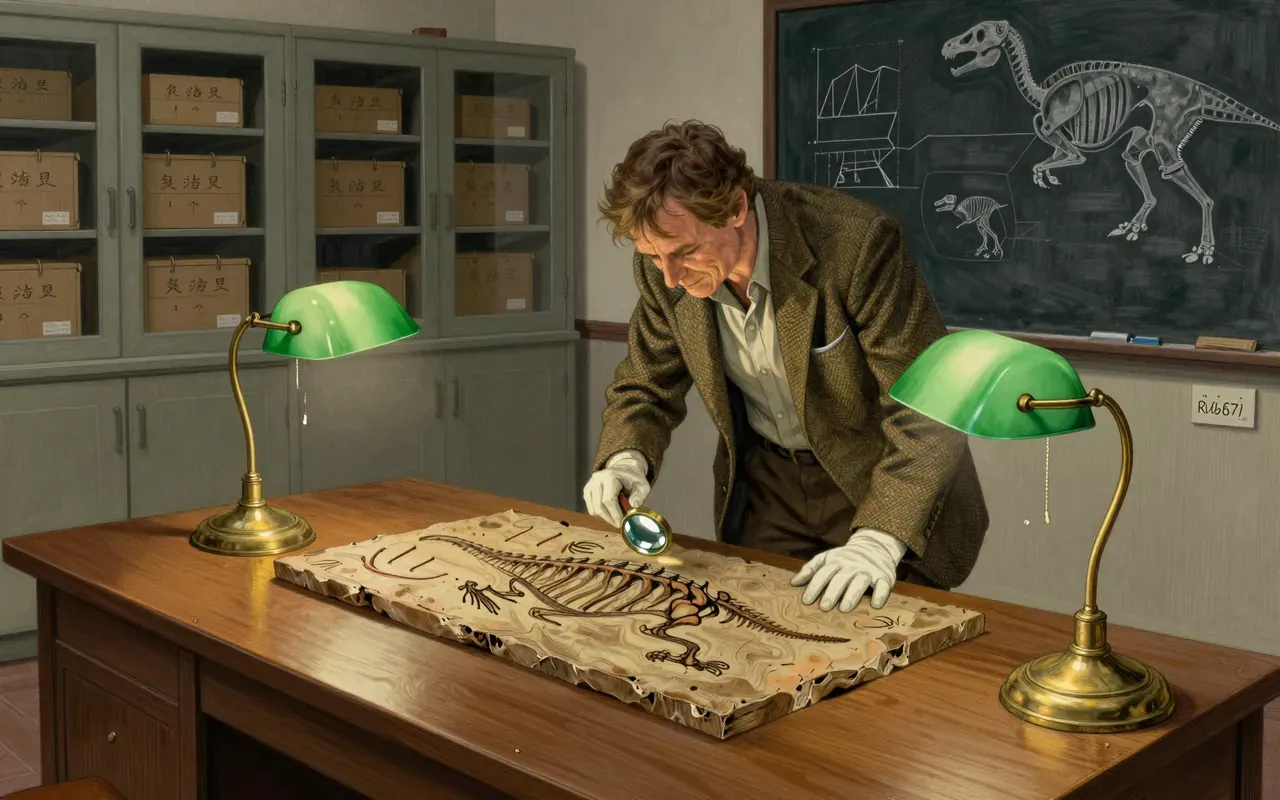
Stegosaurus and Triceratops were among dozens of new dinosaurs Marsh named — and he tied some to birds with toothed fossils.
6:38
The Law of Brain Growth
Marsh proposed a law of brain growth — but the material gives no evidence it was tested beyond his own Tertiary samples.
Worth your time?
Yes. Study the whole thing.
4/ 5
What works
shows morphological progression in horses
documents vertebrate diversity in the American West
places early horse evolution in North America
links dinosaurs and birds via shared traits
What does not
proves evolution
validates brain-growth law across taxa
establishes definitive bird-dinosaur ancestry
Study it if
students of evolutionary history
readers tracking how evidence shaped 19th-century biology
anyone assessing what fossils can and cannot show
Skip it if
those seeking genetic or developmental mechanisms
readers wanting modern phylogenetic analysis
anyone expecting statistical validation or error margins
The written brief1 min read
What the work claims
Marsh claimed dinosaurs and birds shared ancestry, that brain size increased gradually across many groups during the Tertiary, and that North America — not Europe — was the cradle of horse evolution.
How it was done
Marsh led field expeditions in the American West, notably in 1870, collecting vertebrate fossils. He curated and organised specimens at Yale’s Peabody Museum. He compared morphological features across fossil sequences — especially in horses and birds — to infer evolutionary patterns.
What holds up
The 1870 expedition uncovered more than a hundred new vertebrate species. The Tertiary horse series shows morphological progression from dog-like, three-toed ancestors to modern horses. That sequence convinced contemporaries — including Huxley — that early horse evolution occurred in North America, not Europe.
What does not
The material does not establish that Marsh proved Darwinian evolution, demonstrated bird origins definitively, or validated the law of brain growth beyond Tertiary mammals. It reports he formulated the law — not that it holds across taxonomic groups or survives modern scrutiny.
Why it matters beyond the lab
It shifted palaeontology from taxonomy to evolutionary narrative. It redirected attention to North America as a key site for mammalian evolution. It gave Darwinism tangible, museum-based fossil evidence — not just theory.
Is it worth your time
Yes. Marsh’s work laid empirical foundations for vertebrate evolution in North America and provided early fossil evidence for Darwinian gradualism — but only where the fossil record was dense enough to support sequence-based inference.