sciencebriefs
10:16in productionCh. 1 · The Filter That Broke Bacteriology/ 10:16 · ceiling 15 min
Life sciences · Medicine

Tobacco mosaic virus

A virus isn’t alive — but Beijerinck called it a 'living fluid', and that mistake defined virology for decades.

The discovery of the tobacco mosaic virus established the existence of infectious agents smaller than bacteria and dependent on living hosts for replication. Ivanovsky (1892) demonstrated filterability; Beijerinck (1898) added host-dependent multiplication and coined 'virus'. Neither observed the virus itself. Their work founded virology — but also embedded a flawed 'fluid' model that delayed recognition of viruses as particulate, genetic entities.

Chapters & takeaways4
  1. 0:50
    The Filter That Broke Bacteriology

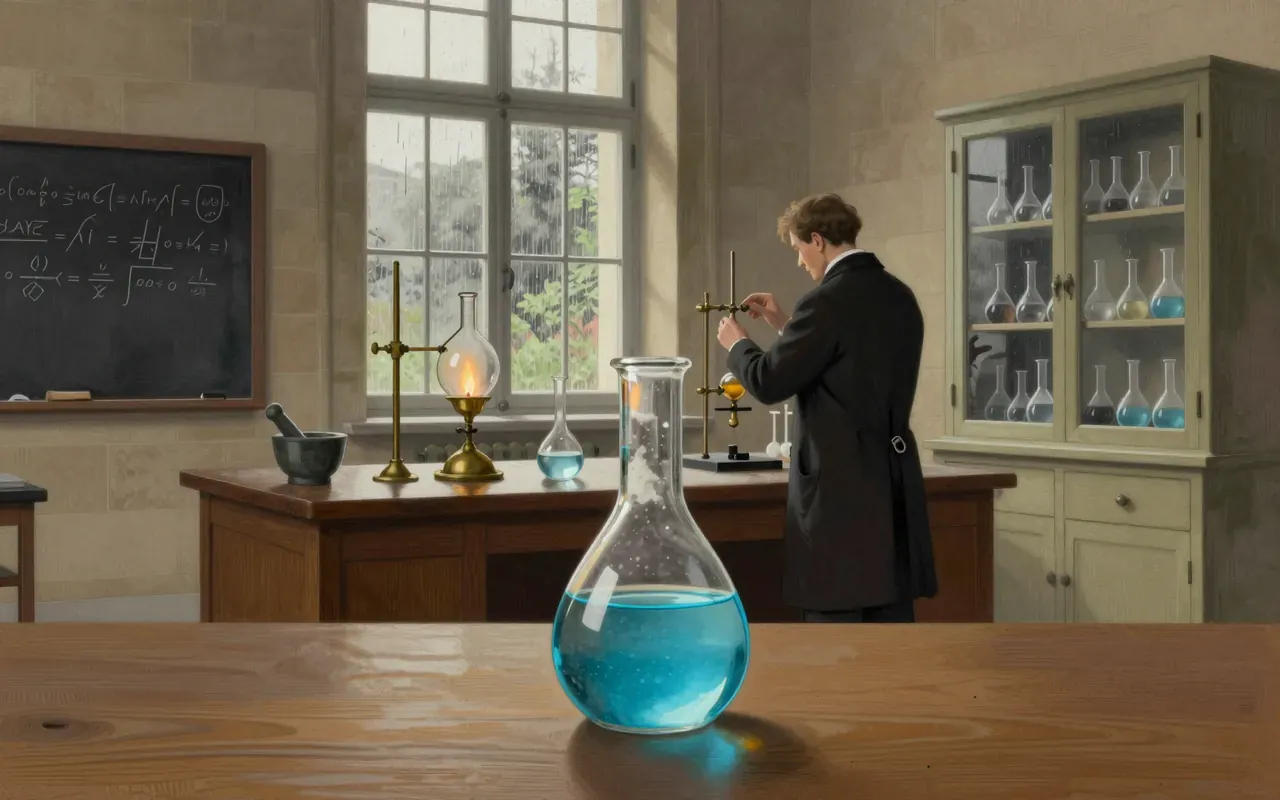
    Ivanovsky’s 1892 experiment proved something infectious survived bacterial filtration — the first crack in the germ theory’s bacterial monopoly.

  2. 2:42
    Replication Without Culture

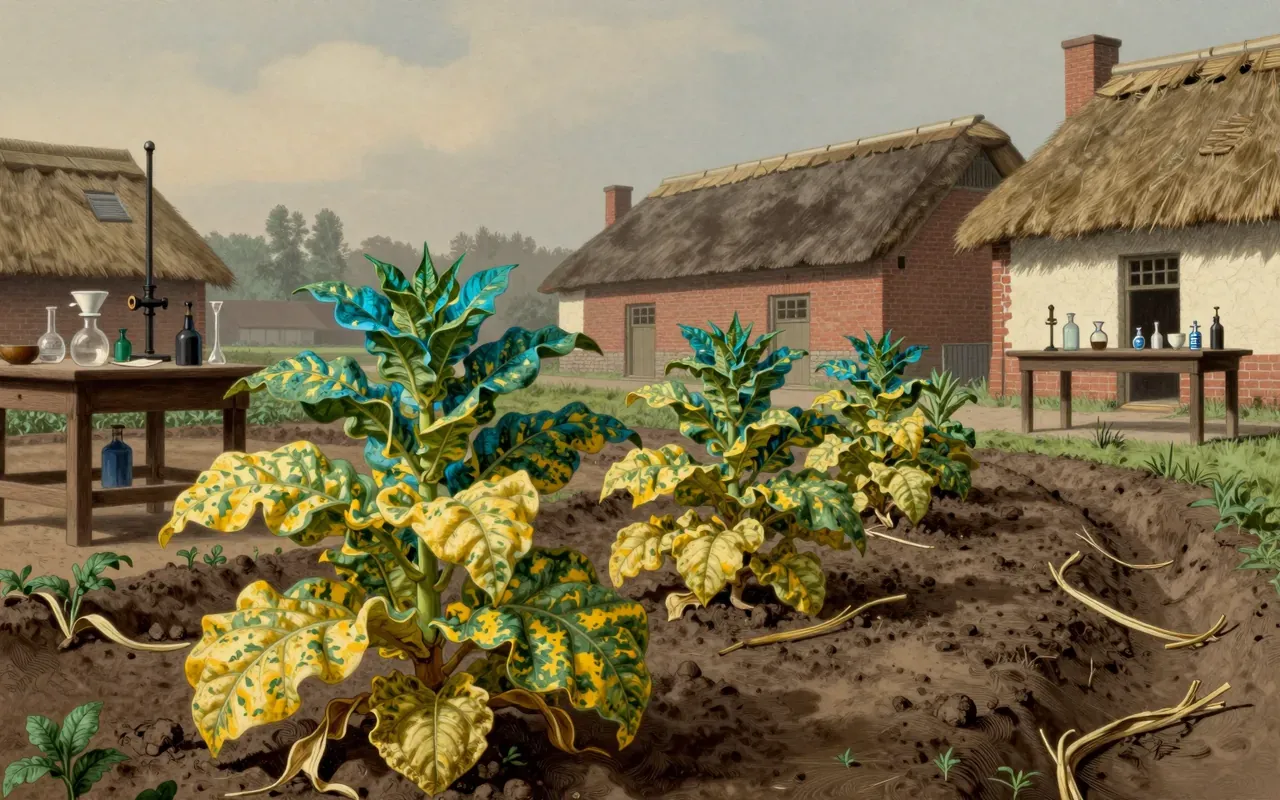
    Beijerinck confirmed filtration worked — then showed the agent multiplied only inside living plants, not in broth or agar.

  3. 4:12
    A Name Before a Nature

    Beijerinck named it 'virus' not because he saw particles, but to mark its categorical difference from bacteria.

  4. 6:19
    The Liquid Fallacy

    His 'contagious living fluid' idea explained replication but wrongly implied continuity — not discrete, inheritable agents.

Worth your time?

Yes. Study the whole thing.

4/ 5
What works
  • Ivanovsky (1892)
  • Beijerinck (1898)
What does not
  • showed viral structure
  • identified nucleic acid
  • proved particle nature
  • demonstrated transmission routes
Study it if
  • historians of science
  • microbiologists
  • students of experimental design
Skip it if
  • clinicians seeking diagnostics
  • epidemiologists modelling spread
  • vaccinologists
The written brief1 min read

What the work claims

Ivanovsky claimed evidence for a non-bacterial infectious agent. Beijerinck claimed the agent was smaller than bacteria, could not be cultured, replicated only in living cells, and warranted a new category — ‘virus’ — which he described as a ‘contagious living fluid’.

How it was done

Ivanovsky (1892) filtered infected tobacco sap through Chamberland filters and found the filtrate remained infectious. Beijerinck (1898) independently repeated those filtration experiments and tested whether the agent could multiply in living tobacco plants.

What holds up

The demonstration that an infectious agent passes through bacteria-retaining filters and replicates only in living host tissue holds up. The conclusion that it is non-bacterial and biologically active in planta remains valid.

What does not

Neither Ivanovsky nor Beijerinck observed or identified the virus particle. Neither showed it was particulate, nucleic-acid-based, or visible under any microscope available at the time. Beijerinck’s ‘contagious living fluid’ model was later falsified.

Why it matters beyond the lab

It created the conceptual space for viruses as a distinct class of pathogens — enabling later work on polio, influenza, HIV, and SARS-CoV-2. But it did not predict viral structure, genetics, or transmission mechanisms.

Is it worth your time

Yes — it defines the conceptual origin of virology as a discipline distinct from bacteriology, and establishes the first operational definition of a virus: filterable, non-culturable, host-dependent replication.
Same field · Life sciences4 of 78
Up next in Science

Vitamin A

· 13:00

A 1913 feeding experiment on rats at a Wisconsin farm station established that fat could carry an essential nutrient — the discovery that gave nutrition science the category of vitamin, and fixed the name, vitamin A, after a decade of dispute over what to call it.

13:00