What the work claims
That four celestial bodies orbit Jupiter. That they are not fixed stars. That the telescope can disclose unseen celestial objects. That Earth is not the sole centre of celestial motion.
How it was done
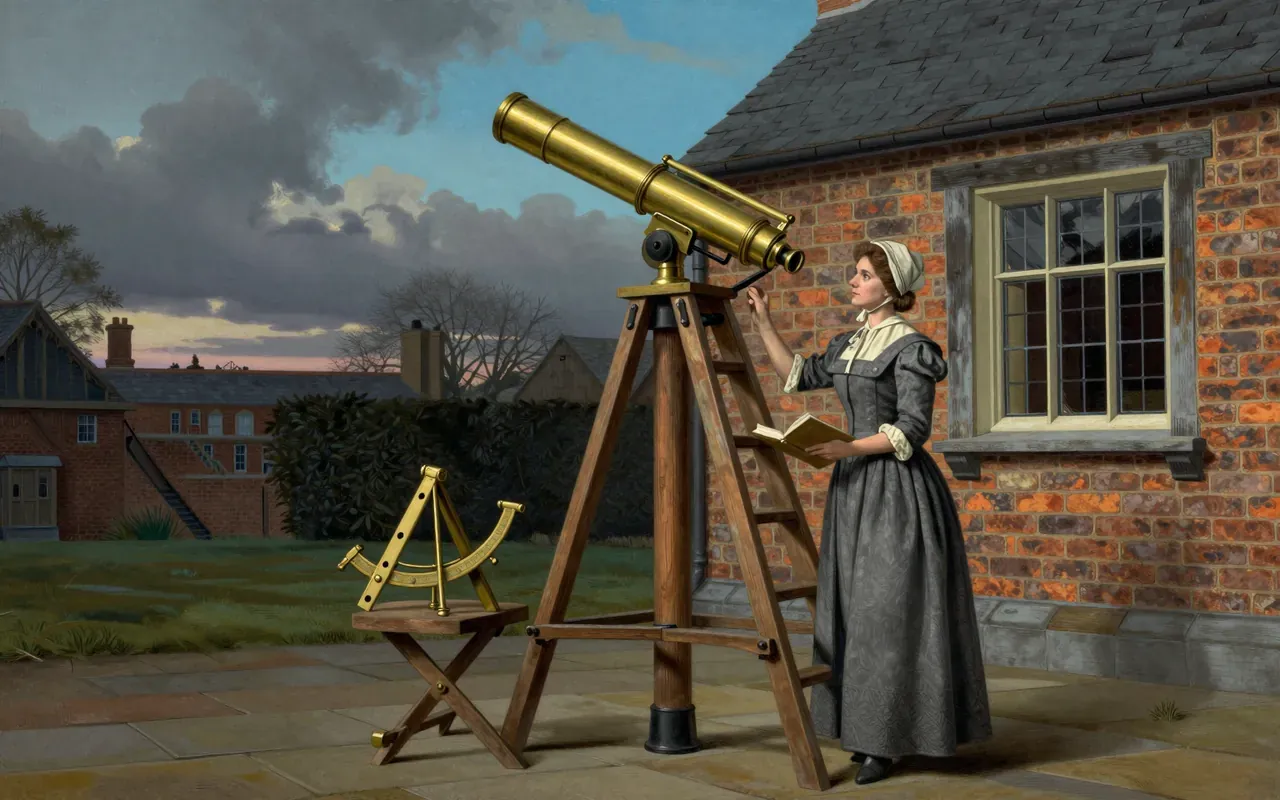
Galileo used a 20× telescope. He observed Jupiter on 7 January 1610. He saw three points of light, mistaking them for fixed stars. He observed again the next night and noticed movement. He saw all four together on 13 January 1610. By 15 January 1610, he concluded they orbited Jupiter.
What holds up
The telescope revealed previously unseen objects. Their movement relative to Jupiter was tracked over eight days. Galileo inferred orbital motion from positional change. The inference directly contradicted the Ptolemaic requirement that all celestial bodies orbit Earth.
What does not
It does not prove heliocentrism. It does not disprove geocentrism outright. It does not measure orbital periods, sizes, distances or masses. It does not name the moons or describe their surfaces.
Why it matters beyond the lab
It shifted astronomy from naked-eye tradition to instrument-led discovery. It established observation — not authority — as the arbiter of cosmic structure. It made the scientific method visible to contemporaries.
Is it worth your time
Yes. It is the first direct observational evidence that celestial bodies orbit something other than Earth — recorded in real time, with method and reasoning intact.