A naked-eye parallax measurement ended celestial immutability — not with a theory, but with a ruler held against the stars.
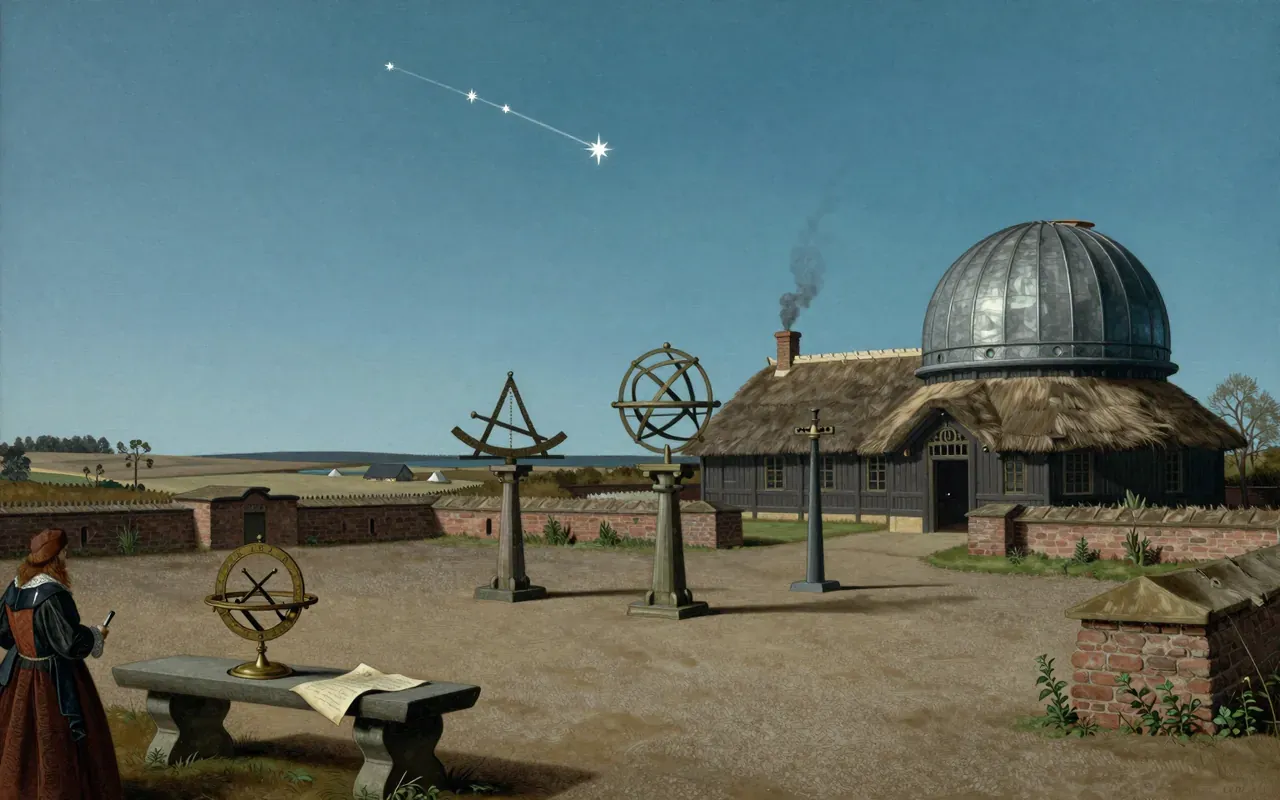
Tycho Brahe’s 1572 supernova observation used naked-eye parallax to prove the object lay beyond the Moon — refuting celestial immutability and establishing observational distance as a tool of cosmological argument.
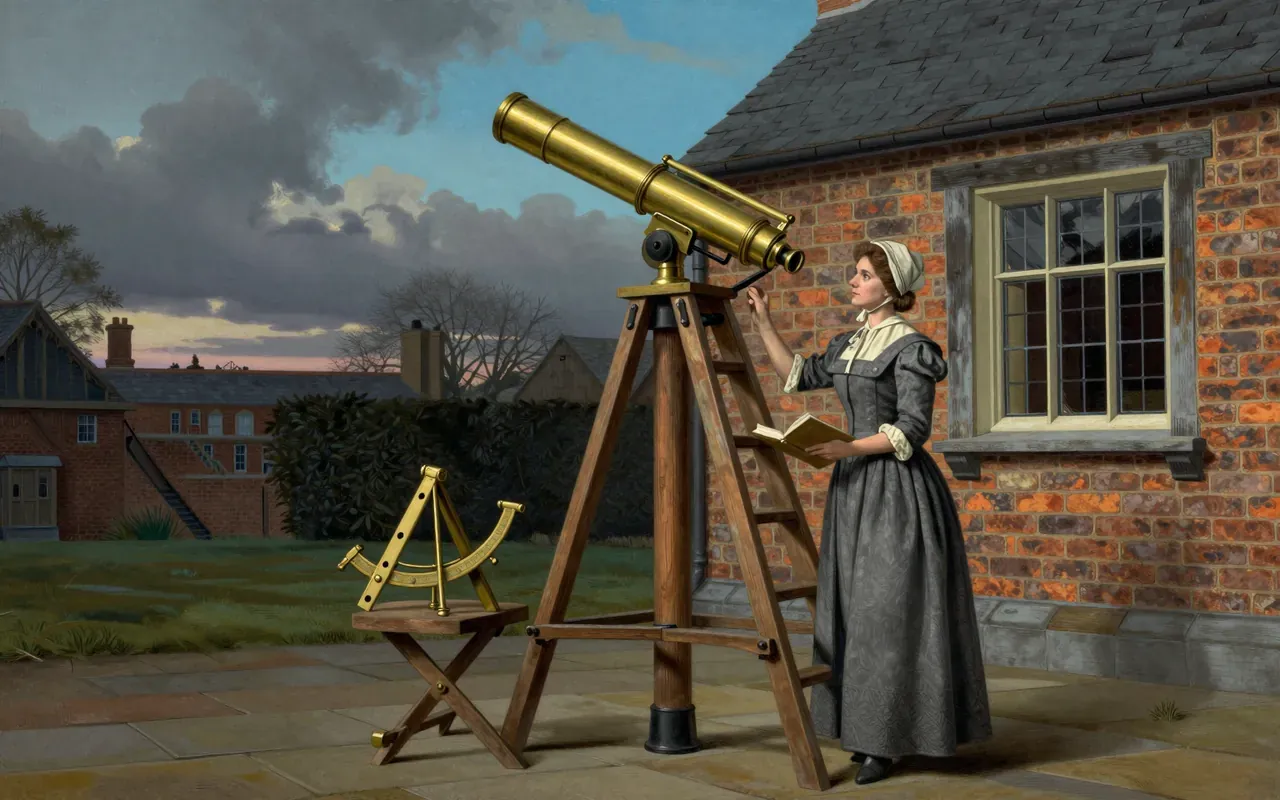
He saw it with his eyes — no telescope, no instrument beyond his own sight.
2:01
Parallax as a distance test
No daily shift against fixed stars meant it had to be farther than the Moon.
3:04
Stillness as evidence
Its fixed position over months ruled out planetary motion and confirmed superlunary distance.
4:23
The end of celestial immutability
It directly contradicted Aristotle’s claim that the heavens never change.
5:58
Foundations, not conclusions
His data enabled Kepler’s laws — but Tycho himself never formulated them.
Worth your time?
Yes. Study the whole thing.
4.5/ 5
What works
It establishes a firm upper bound on location using parallax.
It replaces doctrine with measurement.
It demonstrates how a single, repeatable observation can break consensus.
It grounds future theory — Kepler’s laws — in precise data.
What does not
It does not identify the object as a supernova (that term came later).
It does not quantify distance beyond 'beyond the Moon'.
It does not refute geocentrism.
It does not involve instrumentation beyond naked-eye sighting and angular measurement.
Study it if
Historians of science.
Astronomy educators.
Students learning how empirical constraints work.
Skip it if
Anyone expecting astrophysical modelling.
Those seeking technological innovation.
Readers looking for statistical or computational methods.
The written brief1 min read
What the work claims
That the 1572 object was not atmospheric, not planetary, and not part of the unchanging celestial realm. That it refuted the Aristotelian doctrine of celestial immutability.
How it was done
Tycho Brahe observed the 1572 object visually. He measured its daily parallax against fixed stars. He tracked its position relative to those stars over several months.
What holds up
The absence of detectable daily parallax against fixed stars holds up. The lack of positional change over months holds up. The conclusion that the object lay beyond the Moon — and thus outside the sublunary sphere — holds up.
What does not
The work does not establish the nature of the object as a stellar explosion. It does not measure speed, temperature, composition, or energy output. It does not claim to prove heliocentrism or disprove geocentrism.
Why it matters beyond the lab
It matters because it established that celestial change is observable, measurable, and falsifiable — shifting astronomy from qualitative theology to quantitative empiricism. It made distance, not appearance, the arbiter of cosmic location.
Is it worth your time
Yes. It shows how naked-eye measurement, rigorously applied, can overturn a 2,000-year-old cosmological dogma — and why empirical distance constraints matter more than brightness or novelty.