What the work claims
Normal human fetal cells have an intrinsic, finite replicative capacity — 40–60 divisions — before senescence. This limit is governed by an internal counting mechanism. Only cancer cells are immortal. Cellular mortality reflects aging at the cellular level.
How it was done
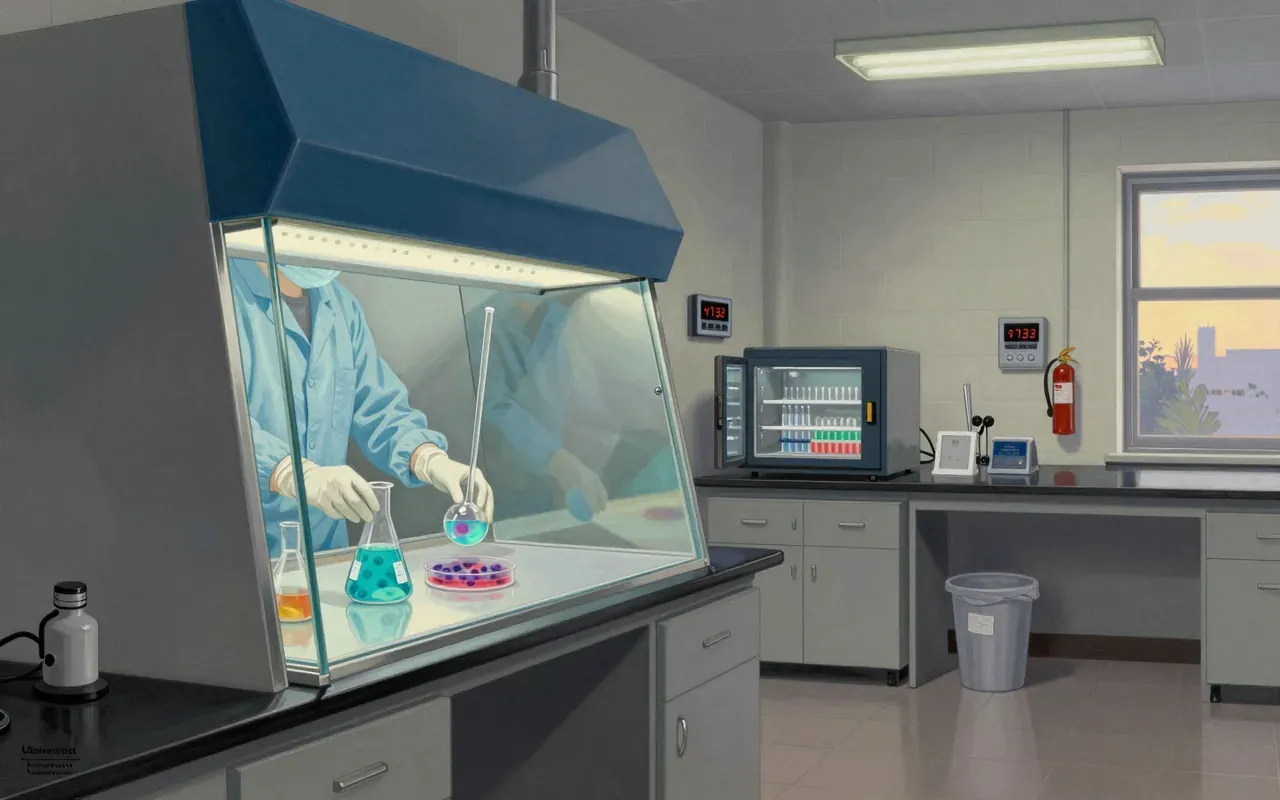
Hayflick used cell culture to track divisions of normal human fetal cells. He collaborated with Paul Moorhead on a co-culture experiment mixing male and female fibroblasts. After 20 doublings, only female cells remained; male control cultures ceased dividing at expected times. This ruled out viral contamination, poor culture conditions, and external artifacts.
What holds up
The 40–60 division limit for normal human fetal cells in culture holds. The refutation of Carrel’s immortality claim holds. The internal counting mechanism inference holds — given the co-culture result excludes sex-agnostic artifacts. The distinction between mortal normal and immortal cancer cells holds as first reported.
What does not
It does not identify the molecular mechanism. It does not prove senescence causes organismal aging. It does not generalise beyond cultured fetal fibroblasts without qualification. It does not claim universality across all normal human cell types or in vivo contexts.
Why it matters beyond the lab
WI-38 became the global standard for human virus vaccine production. The finding created the conceptual foundation for studying cellular aging, cancer immortality, and later telomere biology — but only as a starting point, not a full explanation.
Is it worth your time
Yes. It redefined cellular aging, established the first robust distinction between mortal and immortal mammalian cells, and enabled the WI-38 vaccine production standard — all from direct observation and controlled elimination of alternatives.