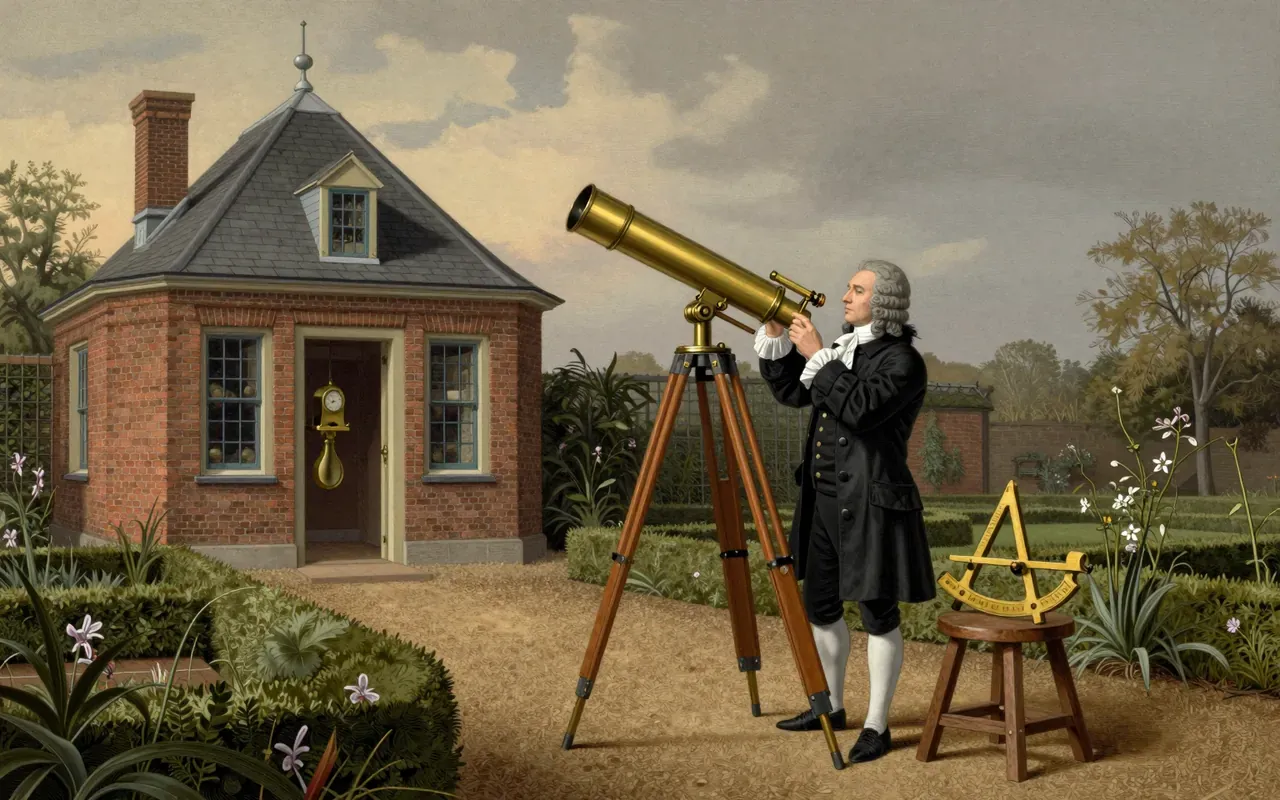
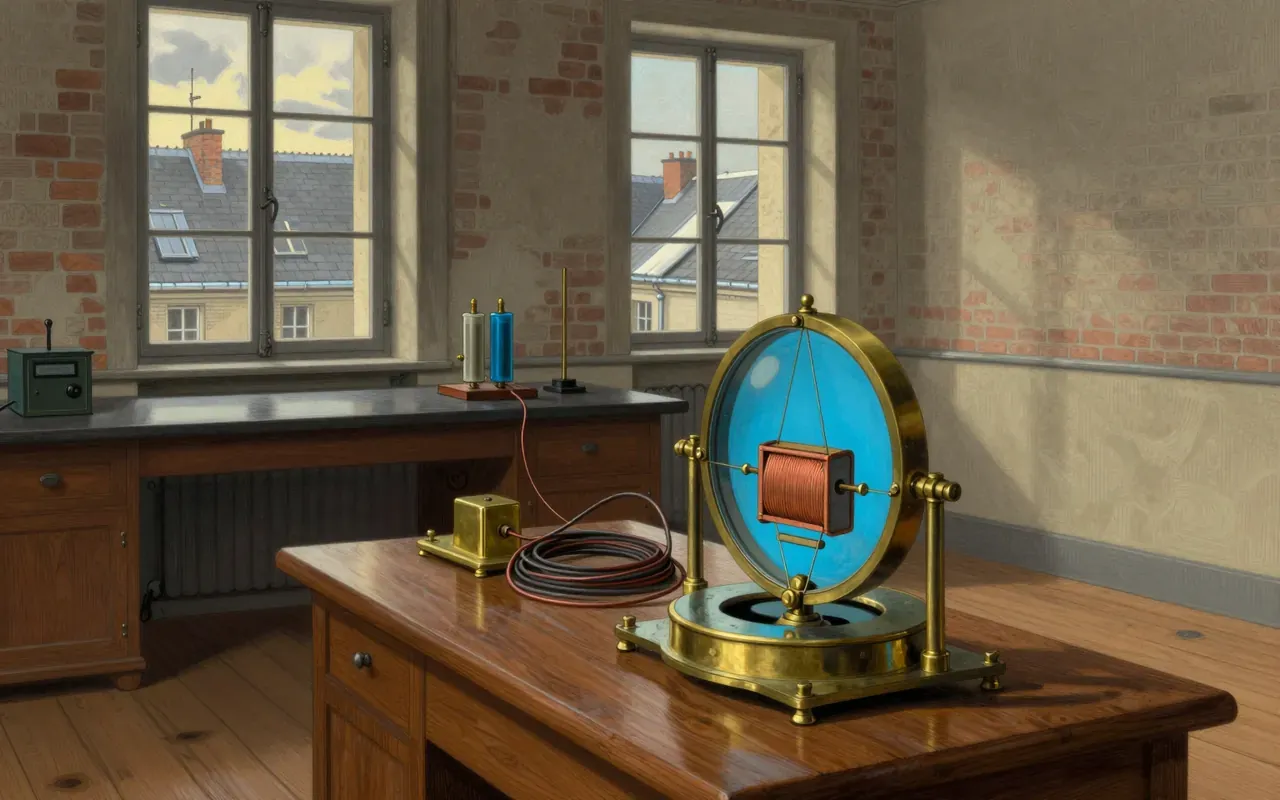
Inductance wasn’t deduced — it was rocked, wound, and wired into existence.
Joseph Henry’s work established inductance as an observable, engineerable property — not a theoretical abstraction. His experiments produced concrete, reproducible results: a stronger magnet, a clear coil rule, and two independent inductance discoveries. Nothing in the material supports claims about theoretical synthesis, universal laws, or technological invention — only the grounded, iterative physics of wires, cores, and batteries.
Self-inductance was first recognised using a rocking electromagnet — not mathematics.
1:56
The Iron Core Breakthrough
Tightly coiled insulated wire on iron made the strongest electromagnet yet — for Yale.
3:09
Two Discoveries, One Phenomenon
Henry discovered mutual inductance independently — but Faraday published first.
4:21
Coil Logic
Parallel coils work best with two electrodes; one long coil works best with multiple batteries.
5:34
Engineering First, Theory Later
Every design choice — winding, insulation, geometry — was tested against real hardware.
6:48
From Lab to Line
These findings became the operating manual for early telegraphs and motors.
Worth your time?
Yes. Study the whole thing.
4.5/ 5
What works
self-inductance as measured via rocking motion
mutual inductance as independently discovered
coil geometry rules for battery configurations
insulated tight-wound core as strength multiplier
What does not
prove electromagnetic unification
establish theoretical priority over Faraday
describe a complete telegraph or motor
Study it if
engineers designing electromagnetic systems
historians of experimental practice
teachers explaining inductance empirically
Skip it if
readers seeking theoretical synthesis
those assuming Henry invented the telegraph
The written brief1 min read
What the work claims
That self-inductance and mutual inductance are measurable electromagnetic properties; that tightly coiled insulated wire on an iron core maximises magnetic strength; and that coil geometry must match battery configuration to optimise performance.
How it was done
Henry discovered self-inductance while building electromagnets. He used an electromagnet perched on a pole rocking back and forth to recognise the property. He coiled insulated wire tightly around an iron core — improving on William Sturgeon’s loosely coiled uninsulated design — to build stronger electromagnets. He tested coil configurations against different battery arrangements.
What holds up
Henry discovered self-inductance experimentally. He discovered mutual inductance independently of Faraday. He built the strongest electromagnet of his time for Yale. He determined optimal coil configurations for two-electrode versus multi-battery setups.
What does not
The document does not establish that Henry’s work proved electromagnetic theory, unified electricity and magnetism, or anticipated Maxwell’s equations. It does not claim he invented the telegraph or electric motor — only that his findings were foundational to their development.
Why it matters beyond the lab
His coil-design rules enabled practical electromagnetic devices. His Yale magnet demonstrated scalability. His independent discovery of mutual inductance confirmed the phenomenon’s physical reality — even though Faraday published first.
Is it worth your time
Yes. It shows how empirical engineering choices — not abstract theory — first revealed inductance, and why those choices mattered for telegraphy and motor design.