
Elizabeth Loftus
Memory isn’t stored — it’s rewritten every time you’re asked a question.
What is kept, what is edited, and what is agreed to be forgotten.

Baddeley and Hitch’s 1974 model reframed working memory as a set of interacting, domain-specific components — not a single bottleneck. Dual-task interference, the word length effect, and amnesic patient profiles provide direct empirical support. Later additions (episodic buffer in 2000, renamed awareness buffer in 2026) extend but do not overturn the core claim of fractionation. It remains indispensable — not because it is complete, but because it is falsifiable, componential, and repeatedly predictive.


Bacteria can pick up genes from other cells by transformation, transduction or conjugation, not only by inheriting them. Lederberg and Zinder showed in 1951 that a virus could carry genes from one strain of Salmonella to another, and Lederberg's earlier work with Edward Tatum showed that E. coli can exchange genes by conjugation. The material treats the process as the main route by which antibiotic resistance spreads among bacteria.

Doudna and Charpentier’s 2012 work established CRISPR-Cas9 as the first programmable, RNA-guided DNA cleavage system. It relies on Cas9 protein and a synthetic guide RNA chimera. It works in vitro. It does not demonstrate editing in living organisms or repair outcomes. It is the origin of all subsequent CRISPR applications — not a refinement, but the first functional design.
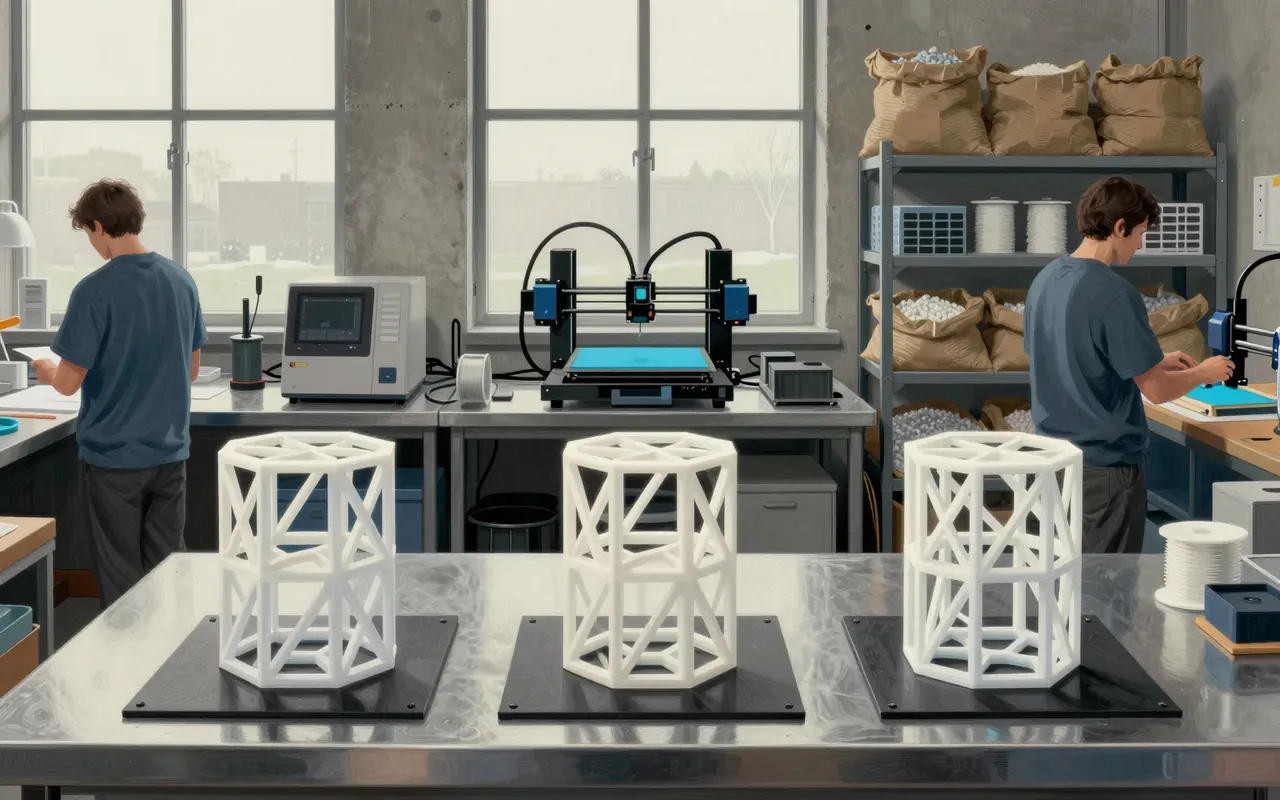
3D printing is a layer-by-layer fabrication method rooted in Chuck Hull’s 1984 stereolithography patent. It evolved from rapid prototyping in the 1980s into an industrial production option by 2019. Its real advantage is enabling previously impossible geometries—like hollow or truss-structured parts—that cut weight and waste. Fused deposition modeling (FDM) was the most common process as of 2020. It does not replace conventional manufacturing at scale. It does not solve material consistency, certification, or throughput problems. Its impact is precise, not pervasive.