sciencebriefs
Filter

Worth it in part

Worth it for the parts we point at, not all the way through.

17 briefs · 221 min
video still
13:00

Atomic force microscopy

A sharp tip on a bending cantilever, tracked by a laser, let researchers feel the shape of a surface at nanometre scale, including surfaces that do not conduct electricity at all.
video still
13:00

Catastrophe theory

René Thom classified every possible way a stable system can suddenly break into seven geometric templates. The mathematics is settled; its 1970s use to explain animal and human behaviour was not, and a public critique said so.
video still
13:00

Focal mechanism

A single earthquake can be read as a diagram that looks like a beach ball. Which quadrants come out shaded tells you whether a fault pulled apart, pushed together or slid sideways — and that reading once settled a live argument about seafloor spreading.
video still
13:00

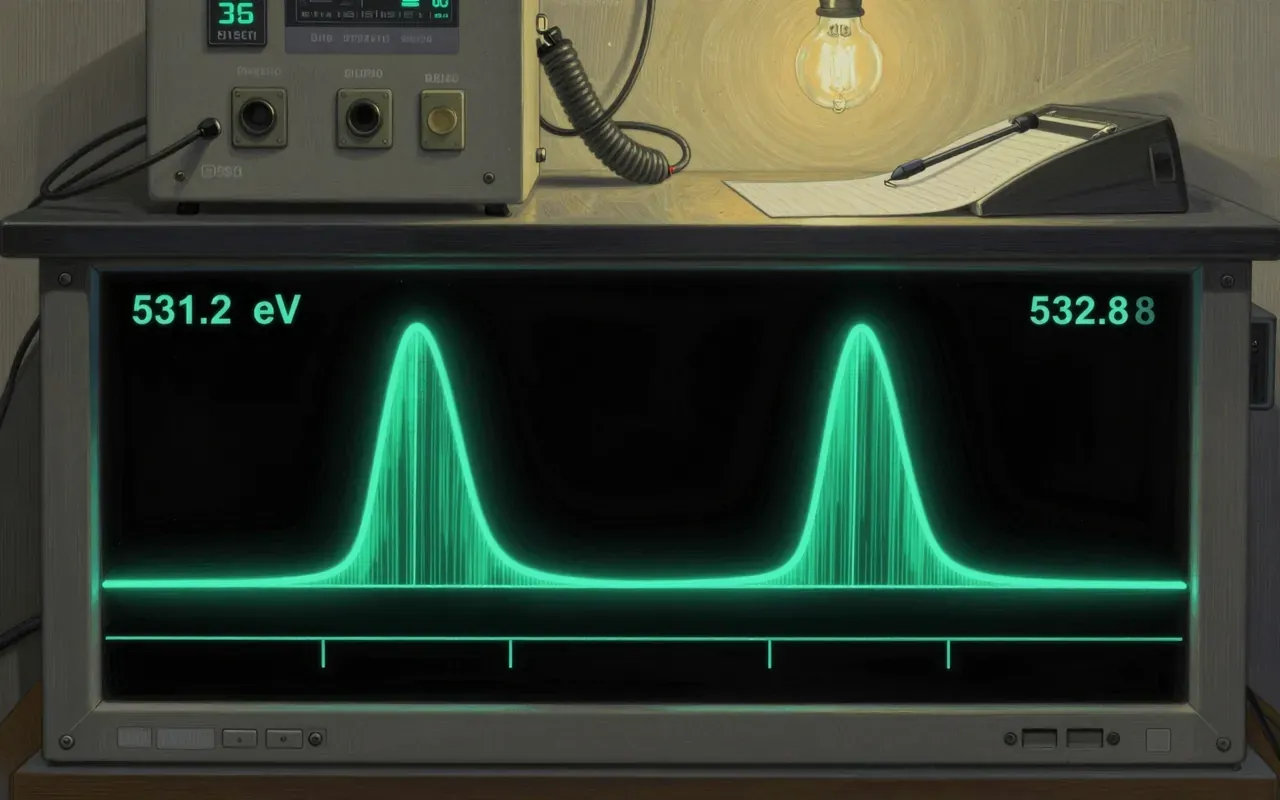
Photoemission spectroscopy

Shine light on a surface and the electrons it knocks loose carry a precise record of the energy levels inside — the method Kai Siegbahn spent decades turning into one of chemistry's sharpest tools.
video still
13:00

Planck postulate

To make his 1900 blackbody radiation law work, Max Planck assumed energy could only be emitted in fixed units, a device he called a formal assumption and did not believe was physically real.
video still
13:00

Plant hormone

Plants have no glands and no circulatory system, yet every cell can make its own hormones, and this brief follows how at least nine separate signal classes coordinate growth without either of those animal-style tools.
video still
13:00

Molecular orbital theory

Ordinary oxygen is attracted to a magnet, a fact the older theory of chemical bonds simply could not explain. Molecular orbital theory got it right by giving up on the idea that a bond belongs to two atoms alone.
video still
13:00

Vitamin

Frederick Hopkins didn't discover a vitamin; he proved by feeding trial that food contains something beyond protein, fat and carbohydrate that animals cannot grow without.
video still
13:00

Gel electrophoresis

A phenomenon first noticed in 1801, that an electric field drags charged particles through a fluid, took more than a century of small, separate refinements before it became the gel-based technique that now sorts DNA and proteins by size in nearly every biology lab.
video still
13:00

Enkephalin

In 1975 researchers identified enkephalin, a chain of just five amino acids made in the brain, as a substance the body produces on its own that binds the very receptors morphine does — the first sign of a whole family of the body's own pain and reward chemistry.
video still
13:00

Inert-pair effect

Thallium would rather give up one electron than the three its position on the periodic table suggests it should. Sidgwick named the pattern in 1927; nobody has ever reduced it to a single cause.
video still
13:00

Human microbiome

Trillions of microbes live on and in every human body, and genetic sequencing has replaced old guesses about their numbers and roles — but most links between the microbiome and disease remain correlations, not proven causes.
video still
13:00

International System of Units

The metre, the kilogram and five other units used to rest on physical objects kept in a French vault. Now every one of them is fixed to a constant of nature, and the change is quieter than it sounds.
video still
13:00

Xerophile

Honey and jam are supposed to be too dry inside for anything to grow, yet certain fungi manage it anyway, and this brief follows the specific chemistry that lets xerophiles colonise exactly the low-water conditions food preservation depends on.