
Dutch famine of 1944–1945
The precisely dated 1944-45 Dutch famine let researchers trace, decades later, how prenatal starvation shaped adult diabetes, heart disease and possibly even grandchildren's health through epigenetic change.









































































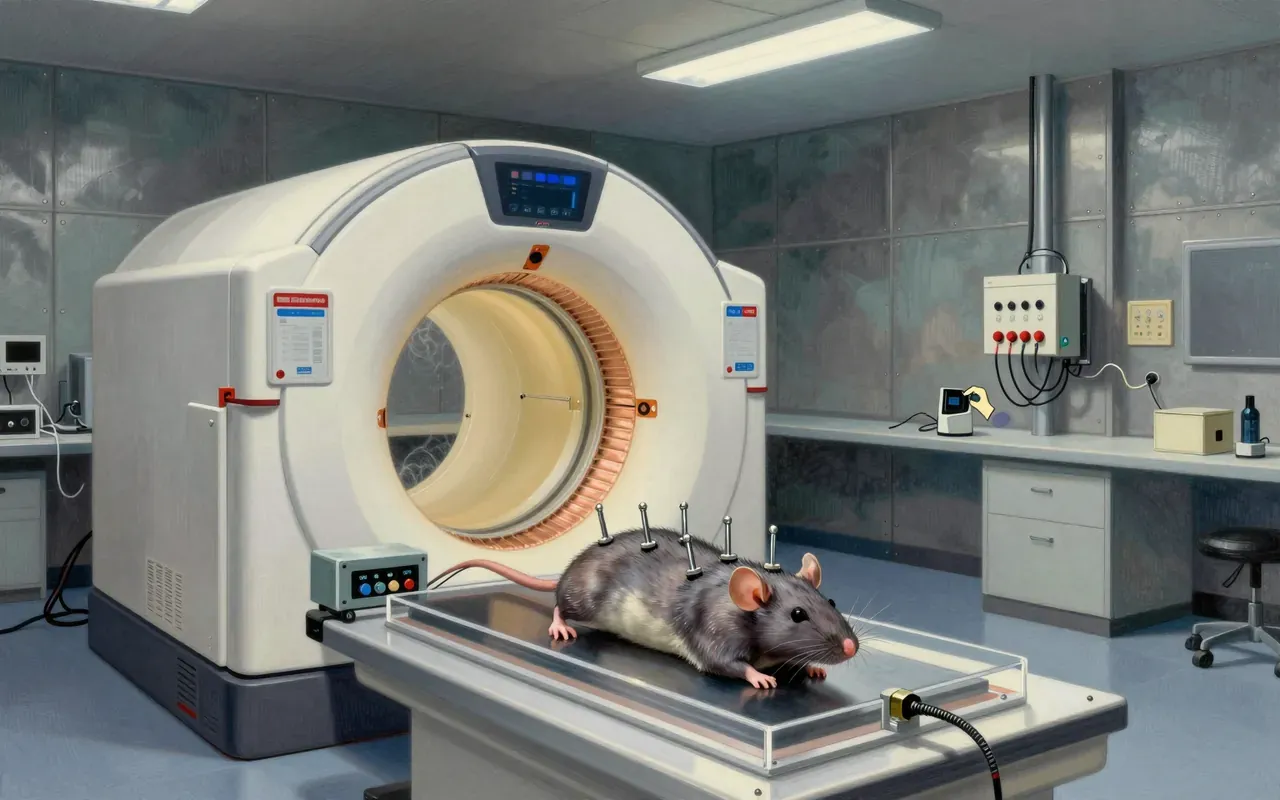
Ogawa’s 1990 work established the BOLD effect — a measurable, oxygenation-dependent MRI signal shift in rodent brain tissue — verified with blood samples and EEG correlation. It is the physical foundation of human fMRI, but maps vascular response, not neural activity directly.

The Stanford prison experiment was a 1971 simulation study conducted by Philip Zimbardo at Stanford University, using 24 male college students randomly assigned as prisoners or guards in a mock prison in the psychology building basement. Its goal was to assess the psychological effects of role assignment, focusing on how roles, rules, symbols, group identity, and situational forces shape behavior. Results showed rapid, extreme role adaptation by both groups, leading to dangerous and psychologically damaging conditions; Zimbardo himself became immersed in his role as superintendent until intervened by Christina Maslach. The core conclusion was that situational forces can exert far greater influence on behavior than commonly recognized.


Gödel’s 1931 incompleteness theorems show that no consistent, effectively axiomatized formal system capable of arithmetic can be both complete and self-consistent. They ended Hilbert’s program. Their method — Gödel numbering and diagonalisation — became foundational for computability theory. They do not apply outside formal systems satisfying strict technical conditions.

The Neanderthal genome project did not discover interbreeding as a hypothesis — it confirmed it with genomic data. It replaced speculation with measurement: four billion base pairs, three Croatian specimens, one decisive conclusion. Its legacy is methodological rigour and a rewritten human family tree.