sciencebriefs
Newest

All briefs

561 briefs · 6515 min · 97–192 on page 2 of 6
13:00

Cognitive bias

Amos Tversky and Daniel Kahneman's 1970s experiments found people rate a detailed, statistically impossible scenario as more probable than a plain one — evidence that judgment runs on shortcuts, not pure logic, a claim that reshaped economics and drew its own rationality war.
13:00

Cauchy–Riemann equations

A pair of equations written down in 1752 to study fluid resistance turned out, a century later, to be the exact test for whether a complex function is differentiable — functions that pass it are so much more rigid than ordinary ones that complex analysis follows from it.
13:00

Compton scattering

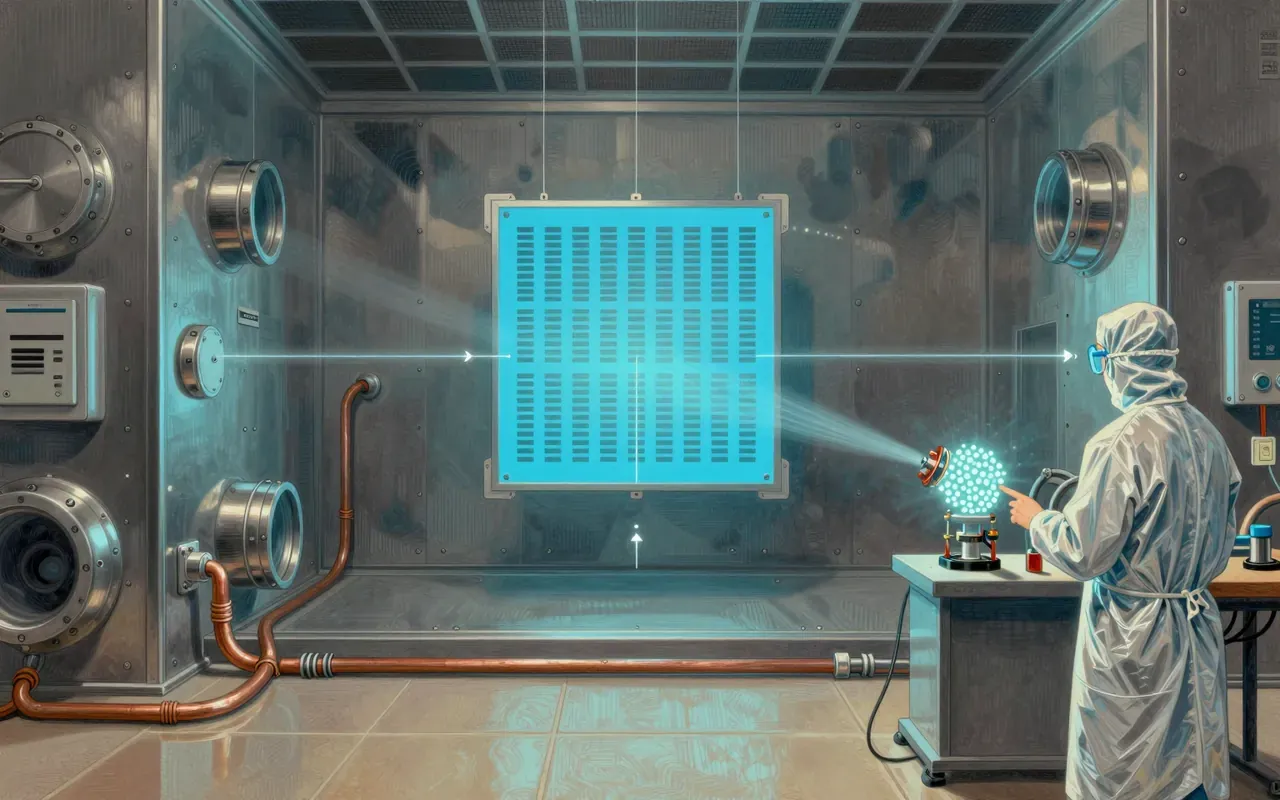
In 1922 Arthur Compton found that scattered X-rays came back with a longer wavelength than the ones he sent in, a shift that depended only on angle, and the only explanation that fit was that light was hitting electrons as discrete particles.
13:00

Coral bleaching

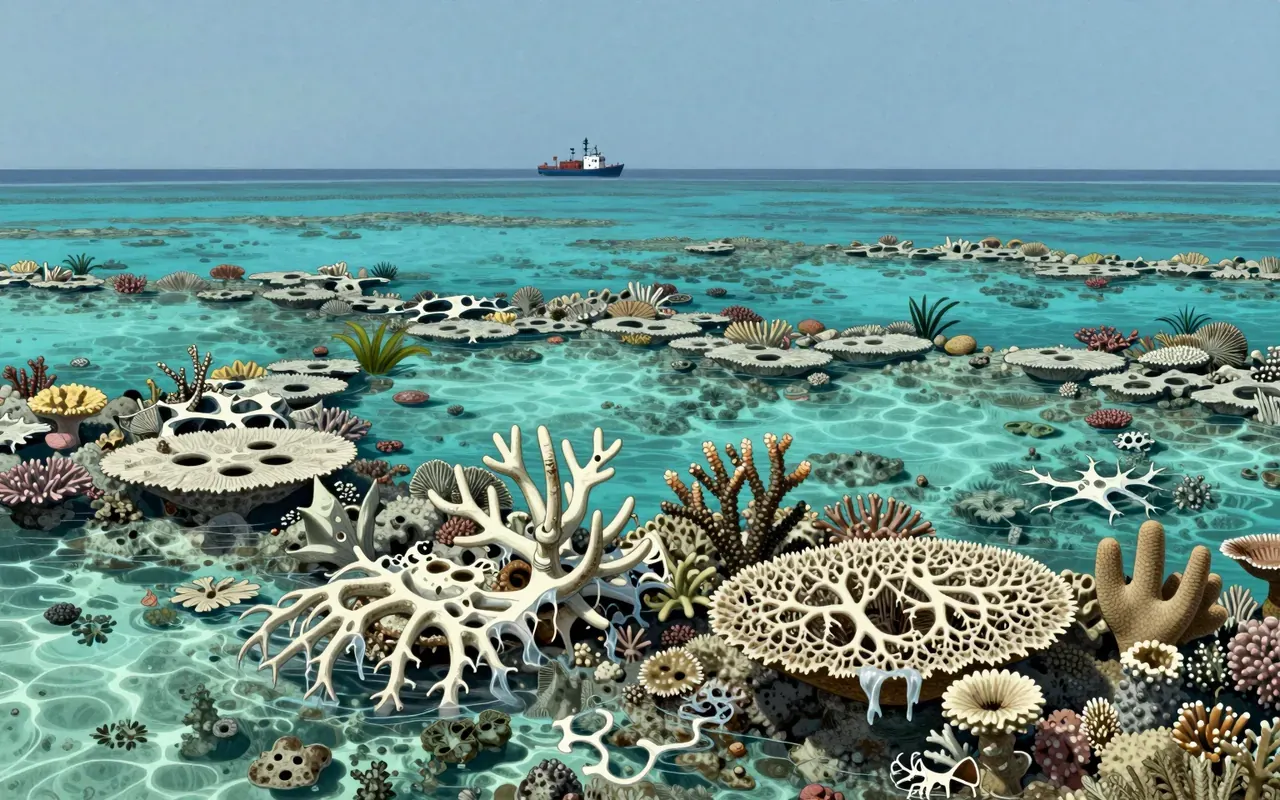
Ove Hoegh-Guldberg predicted in 1999 that most corals would not survive this century, a forecast many dismissed at the time and that recent Great Barrier Reef surveys now appear to be confirming.
13:00

Cortisone

In 1948 Philip Hench found that a hormone Edward Kendall had isolated years earlier could dramatically relieve rheumatoid arthritis, and cortisone's stunning early results gave way to a more complicated picture once its long-term risks became clear.
13:00

Cosmic inflation

Alan Guth's 1980 fix for three specific puzzles about the early universe made a precise prediction that satellites later confirmed, and it also implies an eternally inflating multiverse that one of the theory's own inventors now argues against.
13:00

CRISPR gene editing

CRISPR-Cas9, built from a bacterial virus-defence system decades in the discovering, turned gene editing into a routine laboratory tool now behind approved sickle-cell therapy and an unresolved fight over editing embryos.
13:00

Cytokine

Cytokines carry immune instructions at concentrations far lower than hormones, and the same signalling logic that lets a handful of molecules coordinate an infection response can also spiral into a cytokine storm, which this brief traces from 1957 discoveries to COVID-19.
13:00

Cytotoxic T cell

Cytotoxic T cells do not simply destroy infected cells, they trigger the same programmed death machinery a cell would use to remove itself in normal development, and this brief traces that shared pathway from a 1972 paper to today's cancer therapies.
13:00

History of atomic theory

Dalton built his atomic theory on the neat observation that elements combine in small whole-number ratios. His method for weighing the atoms themselves was flawed from the start, and every one of his five postulates about what atoms actually are has since been revised.
13:00

Publication of Darwin's theory

The 1858 Linnean Society reading credited natural selection jointly to Darwin and Wallace, who had reached the same idea independently, in a negotiated arrangement neither man attended and that made barely any impression at the time.
13:00

Atoll

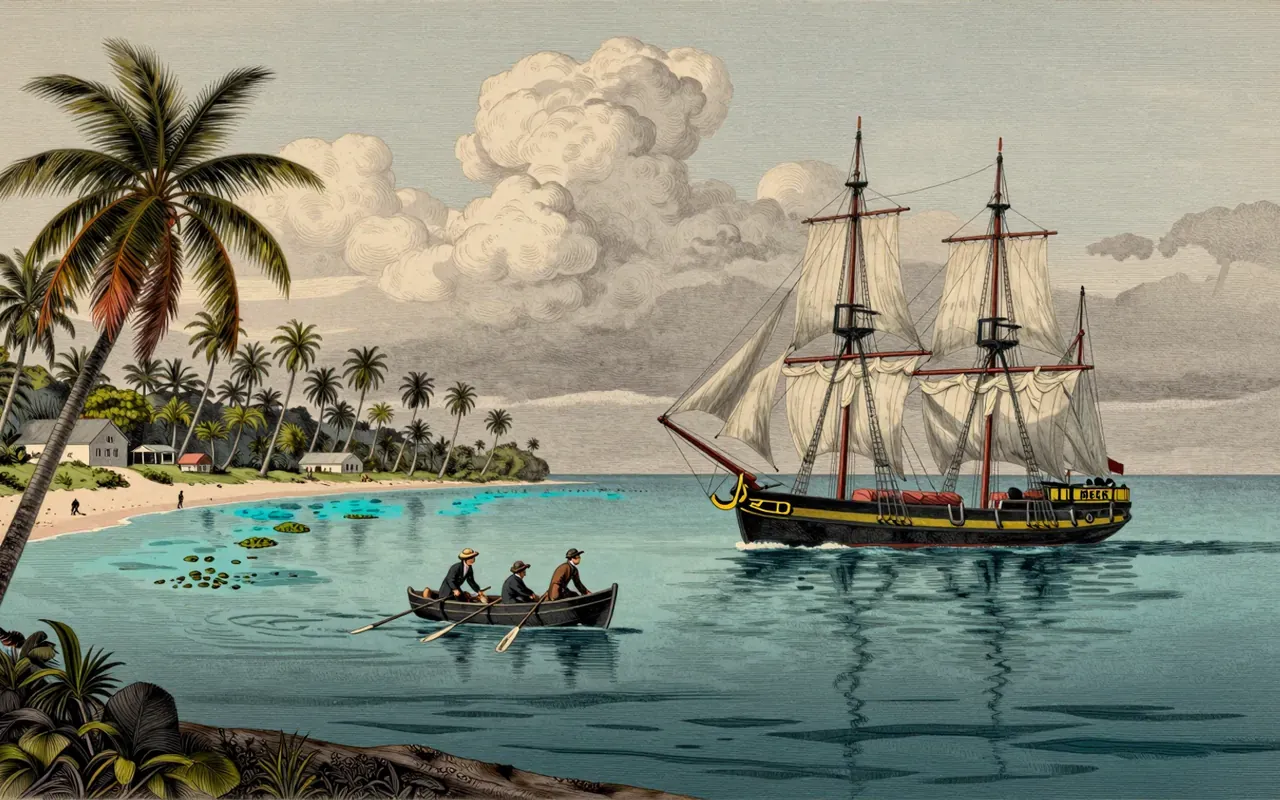
Darwin's 1842 theory that atolls form as volcanic islands slowly sink beneath growing coral reefs was tested by drilling into Funafuti in the 1890s, but recent research suggests it explains only part of how atolls form.
10:34

David Gross

Asymptotic freedom isn’t just clever math — it’s why we can ever see quarks at all.
10:06

David Hilbert

Hilbert didn’t build tools—he built the rules for building tools, and then proved some tools can’t be built at all.
9:01

David M. Raup

Extinction isn’t random — but the 26-million-year pulse Raup found is not a law of nature.
13:00

Matter wave

Louis de Broglie's 1924 claim that matter behaves like a wave, tested first on electrons and later on molecules weighing tens of thousands of daltons, has held at every scale physicists have managed to test it.
10:18

Neural network (machine learning)

Geoffrey Hinton and others

Geoffrey Hinton and colleagues established core methods—backpropagation for representation learning, and Boltzmann machines for unsupervised deep generative modelling—between 1985 and 1995. Their work was grounded in statistical mechanics, experimentally verified on small-scale networks, and explicitly recognised as foundational for machine learning with artificial neural networks. It did not deliver production AI, nor claim to.

13:00

Hydrothermal vent

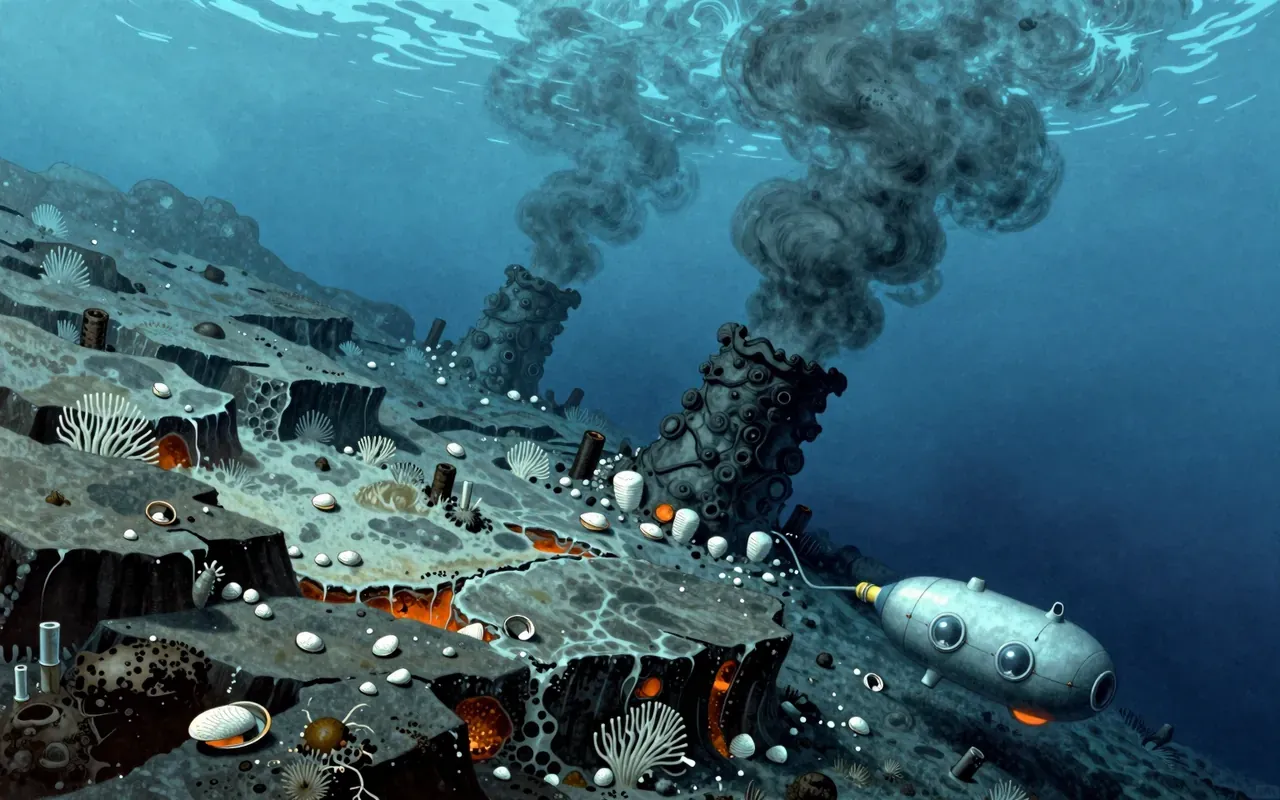
A 1977 dive to the Galapagos Rift found an ecosystem running entirely without sunlight, and a graduate student's follow-up work explained why, which this brief traces from that dive through the chemistry that still feeds tube worms without mouths.
13:00

Dendritic cell

Ralph Steinman named dendritic cells in 1973 and spent decades arguing they were the bridge between innate and adaptive immunity, a case the field only fully accepted after his death, and this brief follows that argument and the cell's actual job.
13:00

Dendrochronology

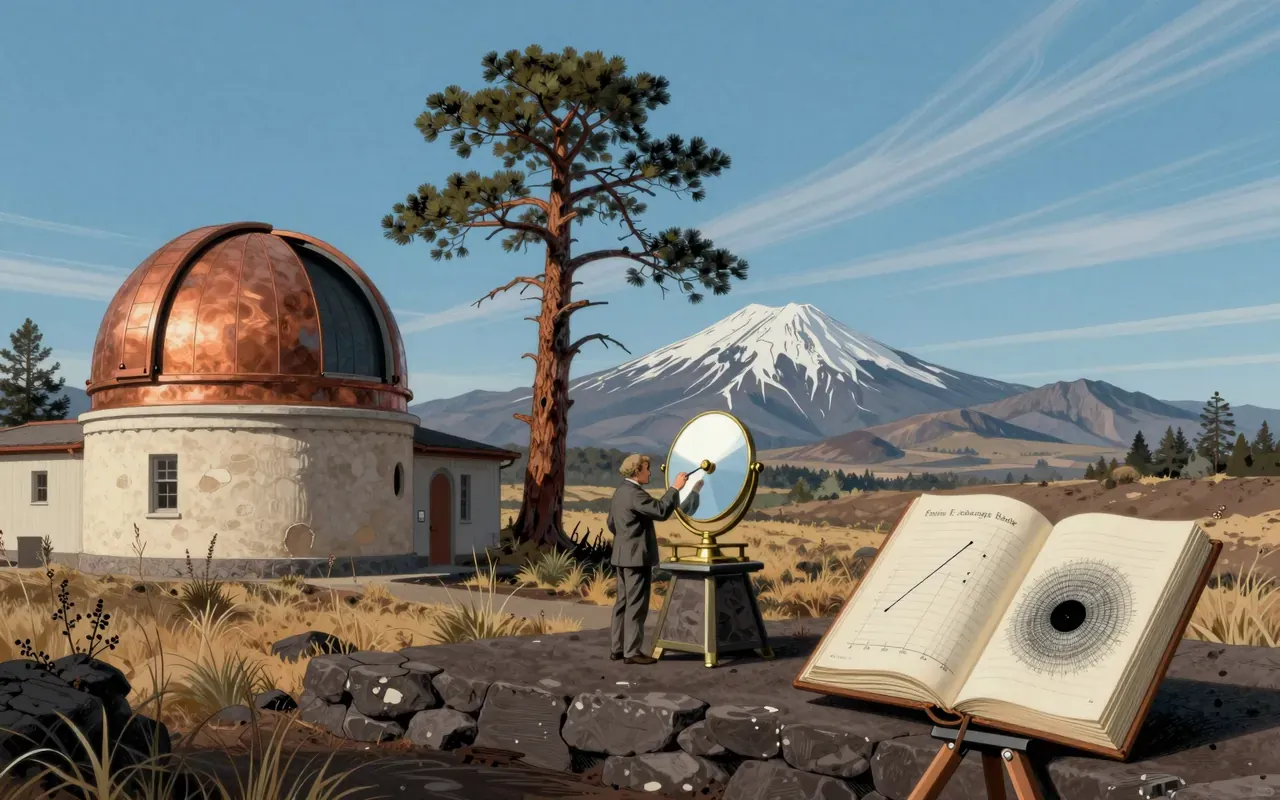
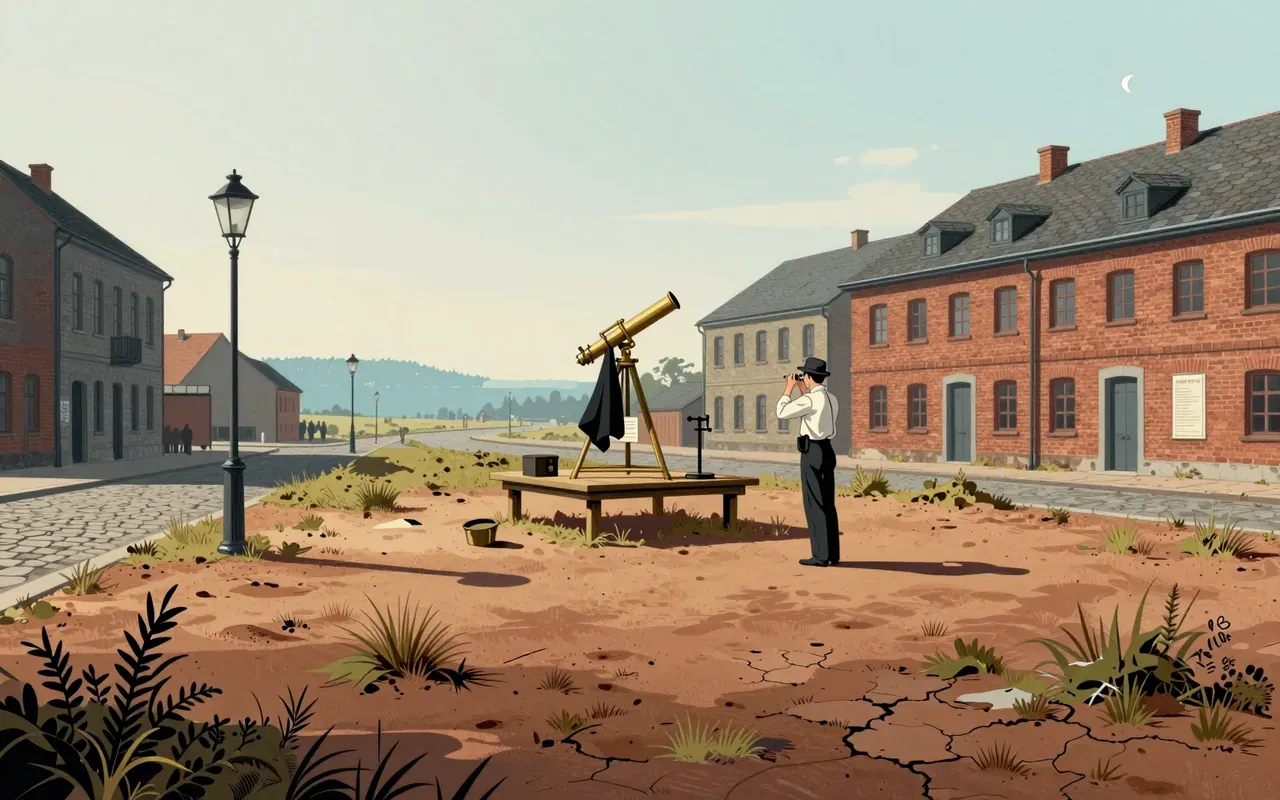
A single wooden beam found in Arizona in 1929 closed a gap between two separate tree-ring records and gave archaeologists a continuous calendar reaching back to the year 700, which this brief follows from an astronomer's sunspot obsession to modern art forgery detection.
13:00

Denisovan

A single finger bone found in a Siberian cave in 2008 was enough to identify an entirely new group of ancient humans through DNA alone, years before any skull could be confidently linked to them.
8:59

Dian Fossey

She didn’t just watch gorillas—she fought for them, and changed conservation forever.
13:00

Dihydrogen monoxide parody

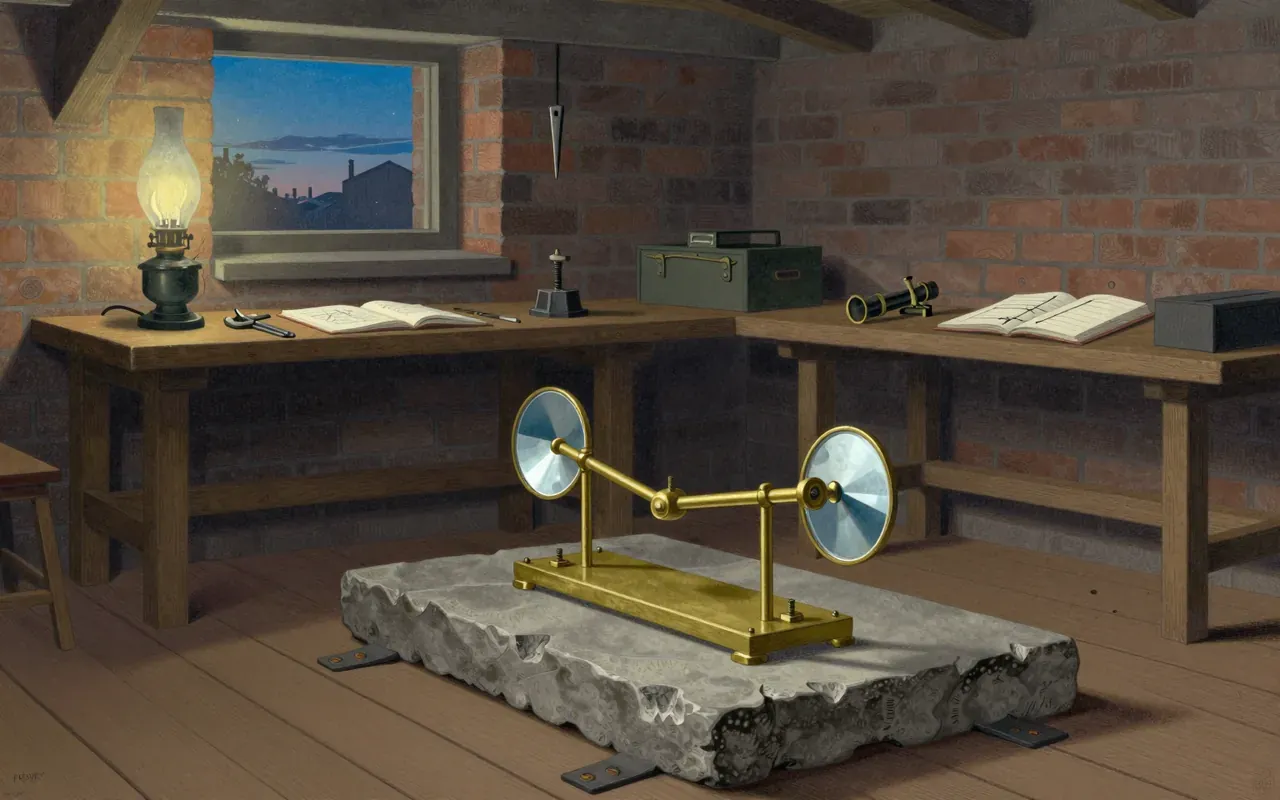
Describing plain water by its formal chemical name and a list of true but alarming facts got a New Zealand MP asking for a ban, proving how easily technically accurate language can mislead.
9:28

Dirac equation

Paul Dirac

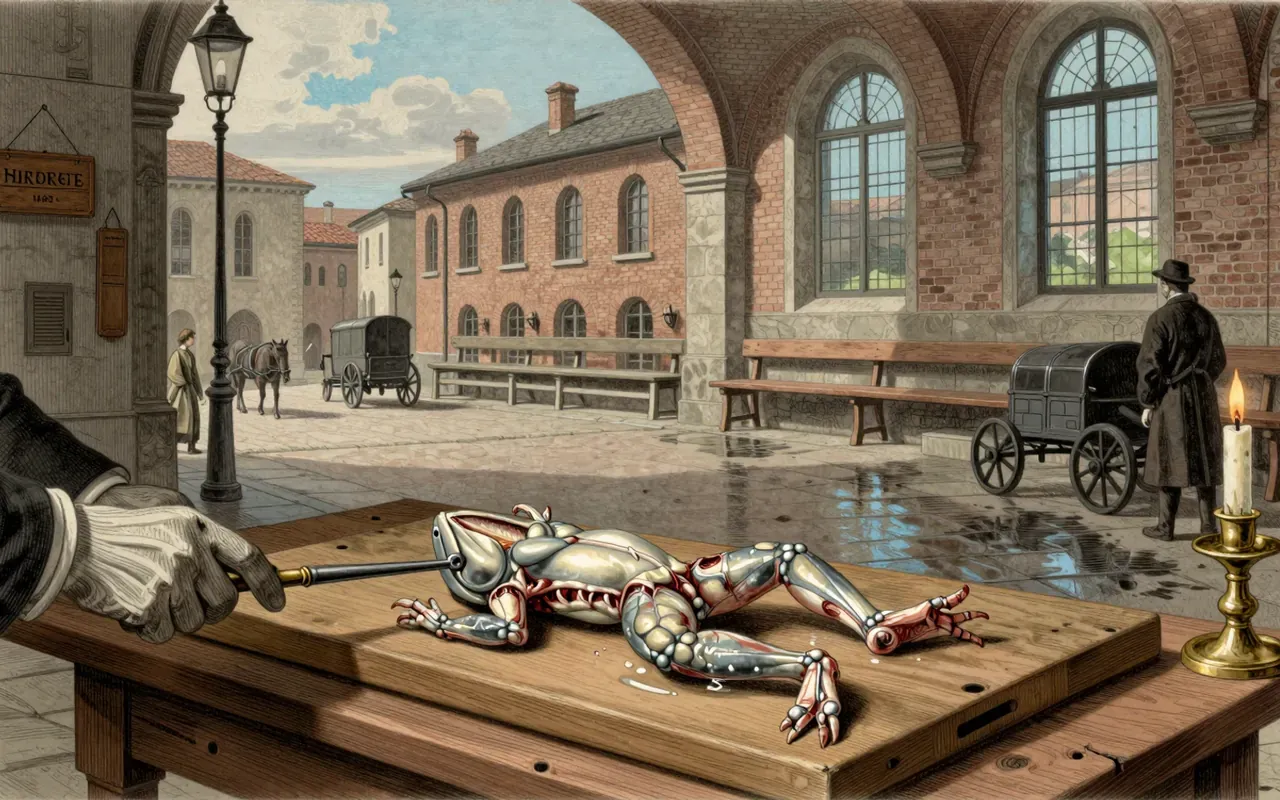
The Dirac equation is the first consistent relativistic quantum wave equation. It predicts antimatter and derives spin — verified by hydrogen fine structure and Anderson’s 1932 positron detection. It does not prove antimatter; it implies it. It does not go beyond first-order fine structure. It remains indispensable in particle physics.

10:44

Dmitri Mendeleev

Mendeleev didn’t discover elements — he discovered how to think like nature thinks.
13:00

Periodic table

Mendeleev left blank spaces in his 1869 table and named what should fill them before anyone had found the elements. Gallium and germanium turned up within his lifetime and matched almost exactly — the part of the story that made the table more than a filing system.
13:00

Sanger sequencing

A molecule engineered to stop DNA copying dead read out the first complete genome, a virus of 5,386 letters, then the whole human mitochondrial genome. Its successors are faster, but it is still the one labs trust to get a short stretch exactly right.
9:17

Donald Johanson

One glance at a bone changed human evolution—by forcing palaeontology to redraw the family tree around a single, incomplete skeleton.
13:00

Focal mechanism

A single earthquake can be read as a diagram that looks like a beach ball. Which quadrants come out shaded tells you whether a fault pulled apart, pushed together or slid sideways — and that reading once settled a live argument about seafloor spreading.
13:00

Eddington experiment

In 1919 two eclipse expeditions checked whether starlight bends around the Sun by Newton's amount or Einstein's larger one, and the tidy textbook story leaves out how much judgment went into choosing which data to trust.
10:41

Edward Drinker Cope

Cope didn’t found American palaeontology—he flooded it with names, many of which still stand only because no one has cleared the backlog.
8:44

Edward Jenner

Jenner didn’t invent vaccination — he invented the human challenge trial.
11:02

Edward B. Lewis

Lewis didn’t just find new genes — he broke the gene open, then used the pieces to rebuild how we think about risk, development, and inheritance.
11:03

Edwin Hubble

Hubble didn’t prove the universe is expanding — he proved galaxies are islands, and that they flee each other in proportion to distance.
13:00

General relativity

Einstein's 1915 field equations replaced Newton's gravitational force with curved spacetime, a claim confirmed by Mercury's orbit and the 1919 eclipse, but still not reconciled with quantum physics.
13:00

Photoelectric effect

Three stubborn facts about light knocking electrons off a metal surface made no sense as waves, and Einstein's 1905 fix, that light travels in discrete packets, was still too radical for the Nobel committee to fully endorse sixteen years later.
13:00

Special relativity

Einstein's 1905 paper resolved a conflict between mechanics and electromagnetism by making the speed of light constant for every observer, at the cost of absolute time, absolute length, and separate mass and energy.
13:00

Galvanic cell

Galvani thought a frog's twitching leg proved animals generate their own electricity. Volta thought the frog was just a wet detector wired between two different metals, and he built a stack of zinc and copper discs to prove it — the first battery, and the end of the argument.
13:00

Photoemission spectroscopy

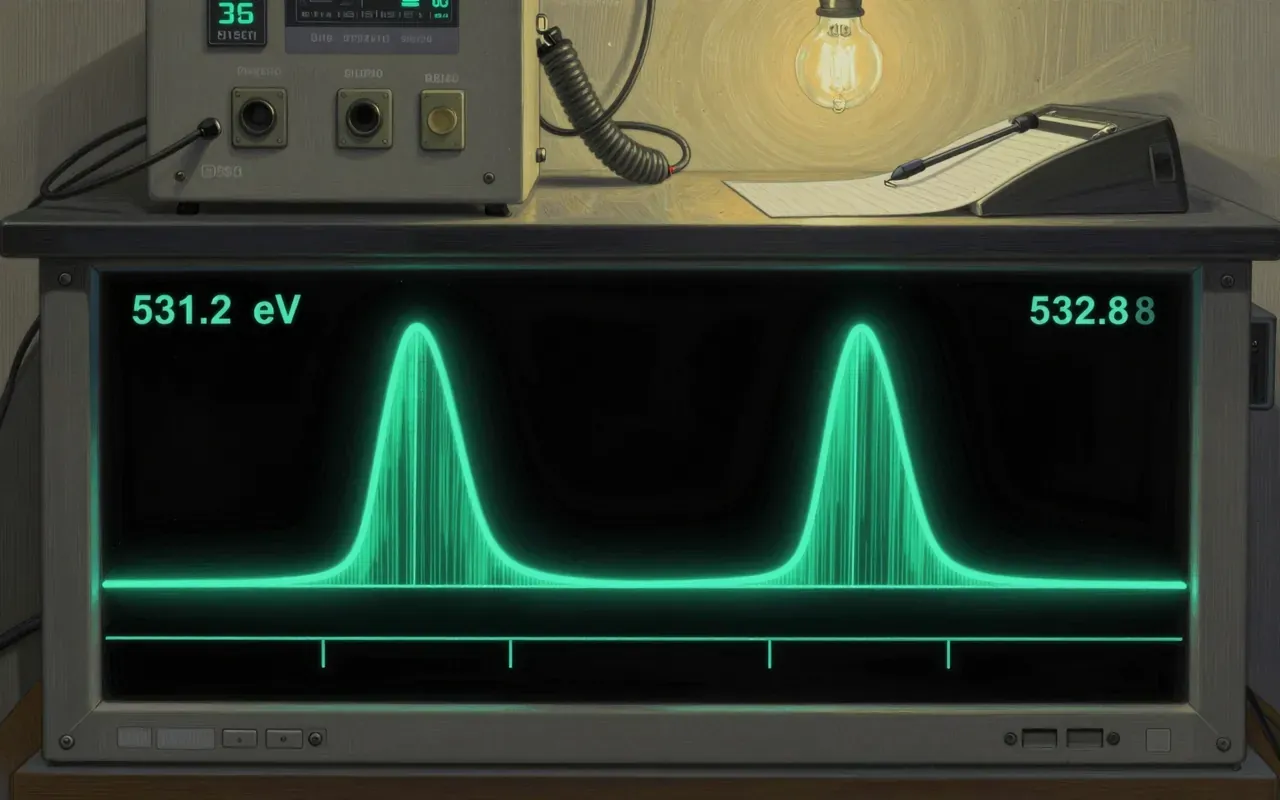
Shine light on a surface and the electrons it knocks loose carry a precise record of the energy levels inside — the method Kai Siegbahn spent decades turning into one of chemistry's sharpest tools.
10:47

Emmy Noether

Noether didn’t just find links between symmetry and conservation—she rebuilt mathematics so those links were inevitable.
13:00

Symbiogenesis

Lynn Margulis's paper arguing that mitochondria and chloroplasts were once free-living bacteria was rejected by around fifteen journals before publication in 1967, and it took another decade of genetic evidence before biologists widely accepted it.
10:25

Enrico Fermi

Fermi didn’t discover new elements — he discovered how to split atoms, then misread the evidence.
13:00

Earth's circumference

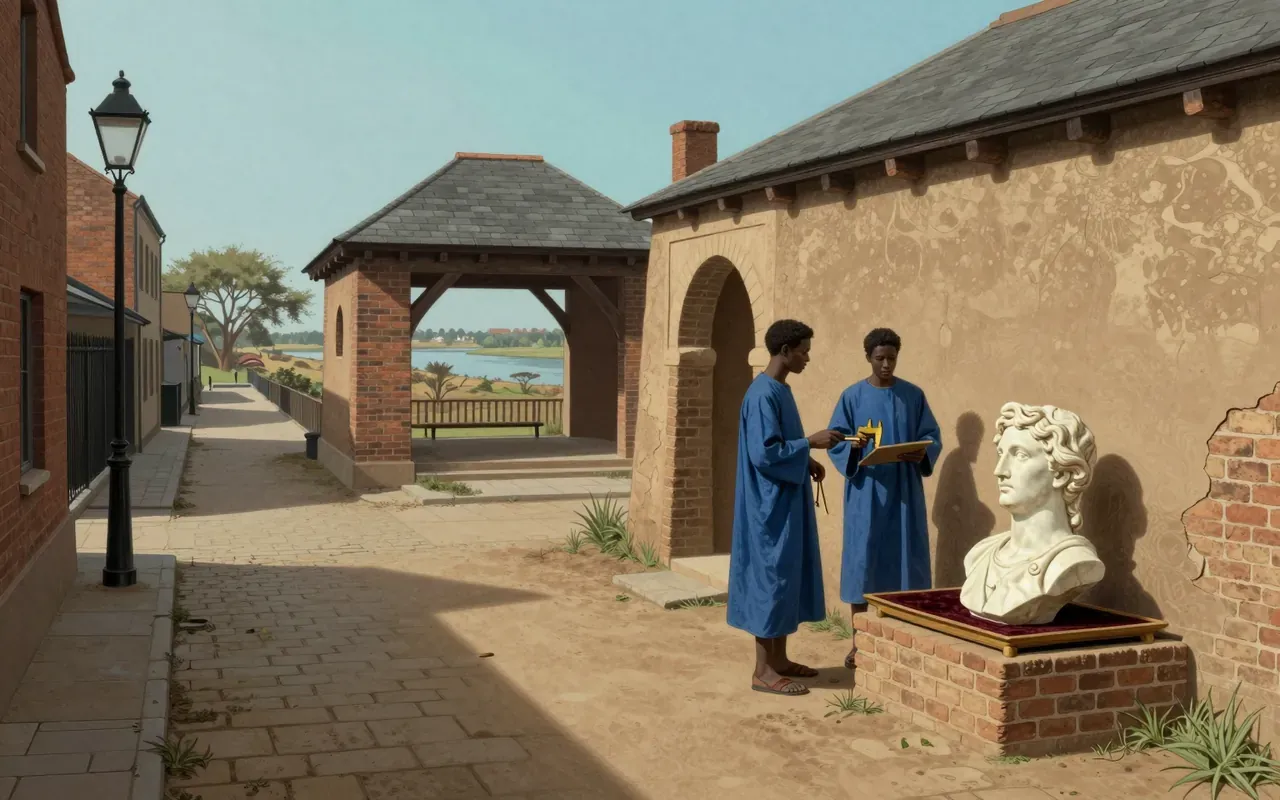
Around 240 BC a librarian in Alexandria compared a shadowless well in one city to a measurable shadow in another and worked out the size of the whole planet, though nobody today can say exactly how close he got, because his unit of measurement no longer has one agreed length.
10:01

Ernst Mach

Mach didn’t discover relativity — he photographed shock waves and mapped how your inner ear keeps you upright.
13:00

Hamming code

Richard Hamming got tired of his weekend calculations being thrown out over an error the machine could detect but not fix, so in 1950 he built a code that could do both.
9:11

Erwin Schrödinger

Schrödinger didn’t just write an equation — he gave quantum theory its working language and named its deepest mystery.
10:14

Eunice Newton Foote

The first person to experimentally prove CO2 heats more than air under sunlight was a woman in 1856 — and her apparatus was simpler than your kitchen thermometer.
10:54

Évariste Galois

Galois didn’t just solve an old problem — he invented the language to say why some problems can’t be solved at all.
13:00

Extraterrestrial atmosphere

David Charbonneau used starlight filtered through a planet's air during a transit to detect sodium around a distant world in 2002, opening a method that has since found water, carbon dioxide, and a puzzling absence of methane.
13:00

Design of experiments

A well-designed experiment and an underpowered one can ask the identical question and still deserve opposite trust. The gap between them is arithmetic, and across whole fields the arithmetic has not been going well.
13:00

Hyperthermophile

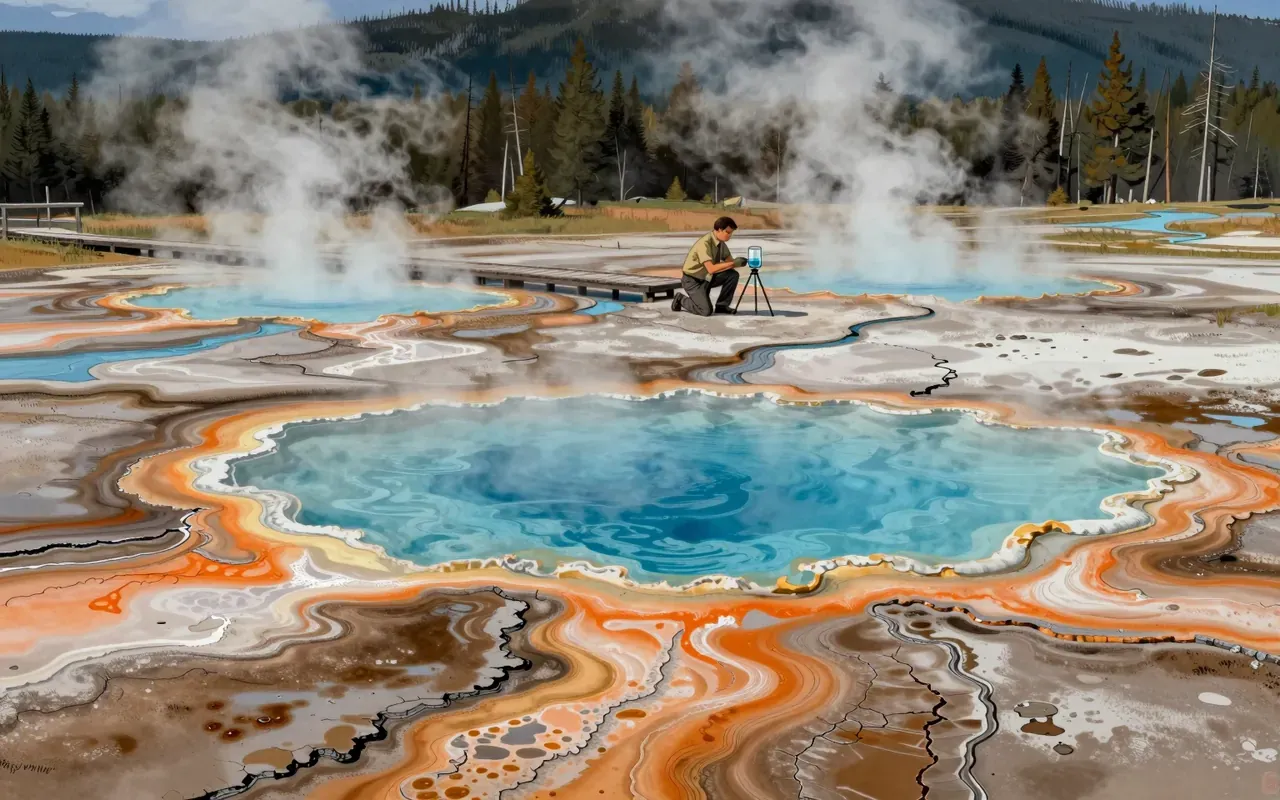
An organism identified in Yellowstone hot springs in 1965 pushed back what biologists thought life could survive, and a heat-tolerant enzyme from that same discovery went on to make modern DNA testing possible, which this brief follows from bacterium to lab bench.
13:00

Extremophile

Some organisms hold their internal chemistry near neutral by constantly pumping protons out against a hostile acidic environment, and this brief follows that strategy alongside the wider extremophile catalogue it belongs to, from mine drainage to the edge of space.
13:00

Sinosauropteryx

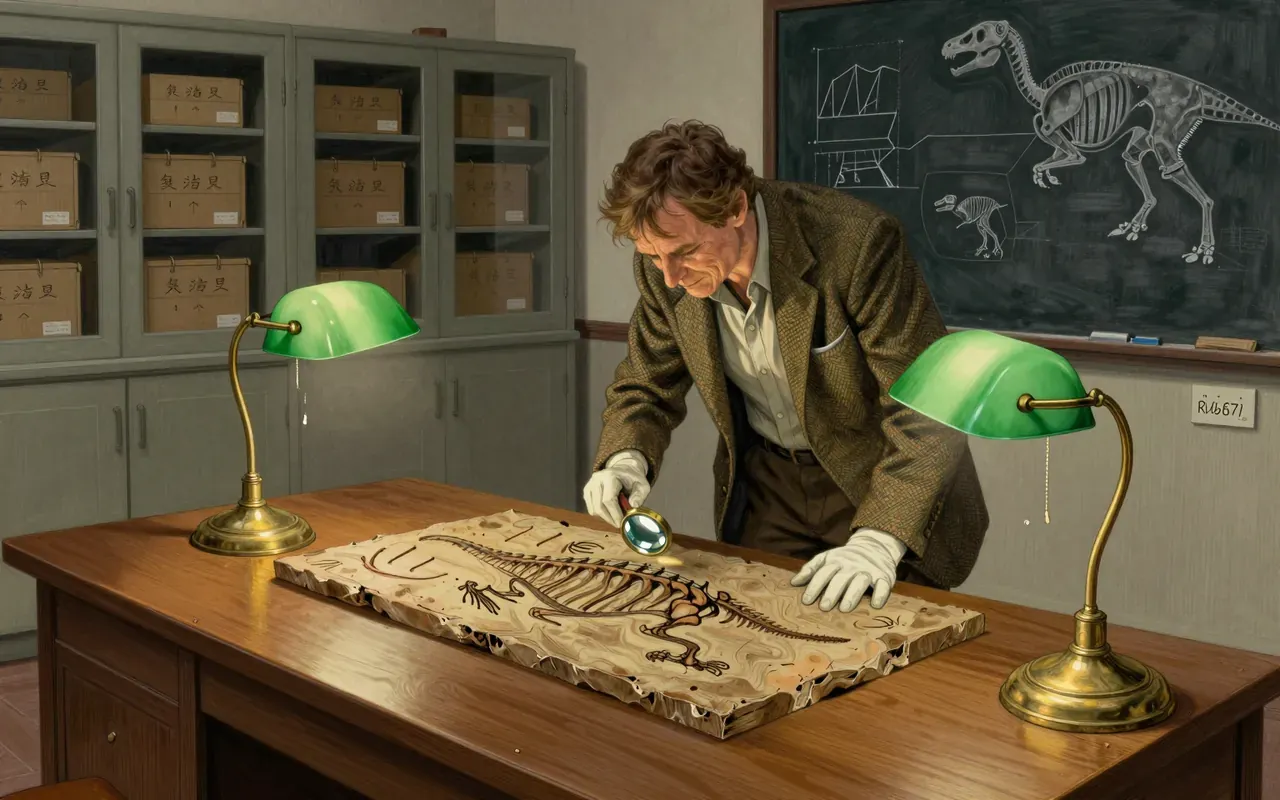
A 1996 fossil found by a farmer in Liaoning gave the first non-bird dinosaur with feather-like structures, and later melanosome studies even reconstructed its probable colouring, though the collagen-versus-feather argument took two decades to close.
10:57

Felix Klein

Klein didn’t discover space—he discovered how to stop arguing about it.
10:14

Fermat's Last Theorem

Andrew Wiles · 1638

Wiles proved Fermat’s Last Theorem by establishing the modularity theorem for semistable elliptic curves — a result that, combined with Ribet’s theorem, ruled out integer solutions to a^n + b^n = c^n for n > 2. His initial 1993 proof contained a flaw in the Selmer group argument; he and Taylor repaired it in 1994 using Galois representations and Iwasawa theory. The complete proof appeared in the Annals of Mathematics in 1995.

13:00

Ferromagnetism

Pierre-Ernest Weiss proposed in 1906 that magnets divide into microscopic regions pointing different ways to save energy, an idea confirmed decades later when Francis Bitter found a way to actually see the boundaries between them.
9:52

Fick's laws of diffusion

Adolf Fick

Fick’s laws quantify diffusion in fluids using direct measurements of salt flux and concentration. They hold for liquids, not solids. Their derivation is experimental, their form exact, and their reach vast — but they are not universal, not theoretical first principles, and not extended beyond their empirical domain.

13:00

Fourier analysis

Joseph Fourier claimed in 1807, studying how heat spreads through a solid, that almost any function could be rebuilt from sine and cosine waves alone — a claim reviewers thought too bold to be rigorous, and one still central to JPEG images and digital audio.
13:00

FOXP2

FOXP2 was dubbed the language gene after a mutation was linked to a family's speech disorder, but the same gene shapes birdsong and bat echolocation, and a 2018 study found no evidence it was recently and specially selected in humans.
10:40

Frank Wilczek

Asymptotic freedom didn’t explain quarks — it saved quantum chromodynamics from mathematical collapse.
13:00

Kite experiment

Franklin's 1752 kite experiment showed lightning was electricity and led directly to the lightning rod, but the famous scene itself rests on a secondhand account published fifteen years after the fact.
13:11

Functional magnetic resonance imaging

Seiji Ogawa

Ogawa’s 1990 work established the BOLD effect — a measurable, oxygenation-dependent MRI signal shift in rodent brain tissue — verified with blood samples and EEG correlation. It is the physical foundation of human fMRI, but maps vascular response, not neural activity directly.

8:48

Galileo Galilei

Galileo didn’t prove Copernicus right — he proved Ptolemy wrong, using light, shadow, and timing.
9:47

Evolutionary game theory

John Maynard Smith

Evolutionary game theory is a precise, minimal framework that explains how genetically fixed behaviours persist without cognition. Its strength lies in its constraints — no rationality, no learning, no flexibility — and its explanatory reach is limited to frequency-dependent contests where inheritance and replication are well defined.

9:44

Georg Cantor

Cantor didn’t discover infinity — he broke it into pieces you can count, compare, and order.
10:41

Georg Ohm

Ohm didn’t discover a universal law — he built a working model for a narrow class of circuits, and it stuck.
10:00

George Boole

Boole didn’t invent computing — he invented the grammar that lets silicon speak.
9:50

Georges Lemaître

Lemaître didn’t discover the Big Bang — he built its first mathematical scaffold, and it still holds.
9:23

George Westinghouse

Fail-safe engineering began not in labs, but on broken railway lines — where a ruptured pipe had to stop a train, not kill its passengers.
9:58

Georges Cuvier

Cuvier didn’t just name extinct beasts — he proved life could vanish, and made Earth’s history a story of catastrophe, not continuity.
13:00

Germ theory of disease

Working separately from the 1860s to the 1880s, Louis Pasteur and Robert Koch replaced the idea that disease arises from bad air with evidence that specific microorganisms cause specific infections, and Koch's postulates gave the field a standard for proving it.
11:14

Gerty Cori

Enzyme defects cause genetic disease — and this was proven, not hypothesised.
13:00

Milankovitch cycles

Milutin Milanković worked out how slow wobbles and stretches in Earth's orbit change sunlight at high latitudes, and ice cores confirm the pattern, but the dominant cycle length still does not match his prediction.
13:34

Gödel's incompleteness theorems

Kurt Gödel

Gödel’s 1931 incompleteness theorems show that no consistent, effectively axiomatized formal system capable of arithmetic can be both complete and self-consistent. They ended Hilbert’s program. Their method — Gödel numbering and diagonalisation — became foundational for computability theory. They do not apply outside formal systems satisfying strict technical conditions.

13:00

Lithium cobalt oxide

In 1980 John Goodenough found a layered cobalt compound that could double a battery's capacity, Oxford chose not to patent it, and nearly forty years later he collected the Nobel Prize for it at ninety-seven, the oldest laureate in the prize's history.
9:34

Grace Hopper

She didn’t invent the compiler—but she proved code didn’t need to speak machine to get work done.
13:00

Seven Bridges of Königsberg

In 1735 Leonhard Euler proved that no walk through Königsberg could cross all seven of its bridges exactly once, by throwing away the map entirely and reducing the city to dots and lines — the first proof in what became graph theory, and arguably the birth of topology.
13:00

Graphene

Theory said a sheet one atom thick should tear itself apart. Geim and Novoselov peeled it off graphite with sticky tape in 2004, and it just sat there, strong enough that a square metre could hold up a cat while weighing about as much as one of its whiskers.
9:17

Gregor Mendel

Mendel didn’t discover genes — he discovered that inheritance isn’t blended, but counted.
13:00

Experiments on Plant Hybridization

A monk in Moravia counted traits across 28,000 pea plants and found a hereditary pattern so tidy that a statistician later suspected the numbers were too good to be true, a suspicion still argued over more than a century on.
13:00

Group theory

At eighteen, Évariste Galois worked out exactly which polynomial equations can be solved with a formula and which cannot, by studying the symmetries of their roots — then died in a duel at twenty before anyone understood what he had actually found.
9:57

Guglielmo Marconi

Marconi didn’t discover radio—he engineered its first working system, one patent and one grounded wire at a time.
13:00

Halophile

Halophiles handle salt so completely one way that pure water can kill them by rupturing their cells outright, and this brief follows the two very different strategies these organisms use to survive salt levels many times higher than the ocean.
9:33

Hans Christian Ørsted

Ørsted didn’t stumble on electromagnetism — he hunted it for two years with a compass, and got the physics half-right.
13:00

Hawking radiation

Stephen Hawking's 1974 calculation showed black holes should slowly radiate and eventually evaporate, a result with no direct astronomical confirmation yet, that also produced a genuine, still unresolved puzzle about where the information inside them goes.
10:26

Hedy Lamarr

A Hollywood actress co-patented a jam-proof torpedo system — but never saw it built, tested, or used.
13:00

Uncertainty principle

Werner Heisenberg's 1927 principle is often mistaken for a statement about clumsy measuring instruments, but it describes a limit built into quantum mechanics itself, one later physicists made more precise rather than ever overturned.
13:00

T helper cell

Helper T cells direct the rest of the immune response without killing anything themselves, and their CD4 surface marker is the same molecule HIV uses to get in, which is why this brief treats the two as one story.