All briefs
561 briefs · 6515 min · 97–192 on page 2 of 6

Dendrochronology

Denisovan

Dian Fossey

Dihydrogen monoxide parody

Dirac equation
The Dirac equation is the first consistent relativistic quantum wave equation. It predicts antimatter and derives spin — verified by hydrogen fine structure and Anderson’s 1932 positron detection. It does not prove antimatter; it implies it. It does not go beyond first-order fine structure. It remains indispensable in particle physics.

Dmitri Mendeleev

Periodic table

Sanger sequencing

Dolly (sheep)

Donald Johanson

Focal mechanism

Eddington experiment

Edward Drinker Cope

Edward Jenner

Edward B. Lewis

Edward Thorndike

Edwin Hubble

General relativity

Photoelectric effect

Special relativity

Galvanic cell

Photoemission spectroscopy

Eliza Marian Butler

Elizabeth Loftus

Emmy Noether

Symbiogenesis

Enrico Fermi

Earth's circumference

Ernst Haeckel

Ernst Mach

Hamming code

Erwin Schrödinger

Eunice Newton Foote

Évariste Galois

Extraterrestrial atmosphere

Design of experiments

Hyperthermophile

Extremophile

Sinosauropteryx

Felix Klein

Fermat's Last Theorem
Wiles proved Fermat’s Last Theorem by establishing the modularity theorem for semistable elliptic curves — a result that, combined with Ribet’s theorem, ruled out integer solutions to a^n + b^n = c^n for n > 2. His initial 1993 proof contained a flaw in the Selmer group argument; he and Taylor repaired it in 1994 using Galois representations and Iwasawa theory. The complete proof appeared in the Annals of Mathematics in 1995.

Ferromagnetism

Fick's laws of diffusion
Fick’s laws quantify diffusion in fluids using direct measurements of salt flux and concentration. They hold for liquids, not solids. Their derivation is experimental, their form exact, and their reach vast — but they are not universal, not theoretical first principles, and not extended beyond their empirical domain.

Florence Nightingale

Fourier analysis

FOXP2

Frank Wilczek

Kite experiment

Functional magnetic resonance imaging
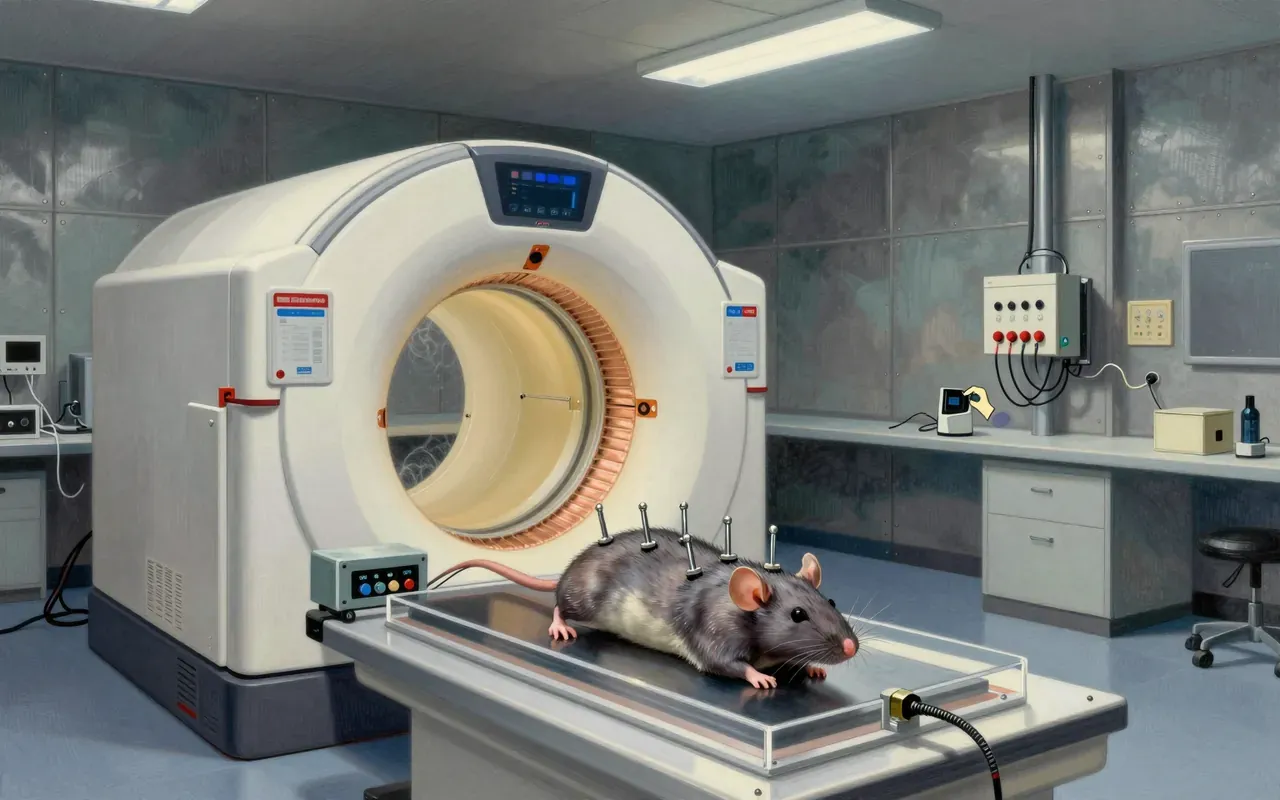
Ogawa’s 1990 work established the BOLD effect — a measurable, oxygenation-dependent MRI signal shift in rodent brain tissue — verified with blood samples and EEG correlation. It is the physical foundation of human fMRI, but maps vascular response, not neural activity directly.

Galileo Galilei

Evolutionary game theory
Evolutionary game theory is a precise, minimal framework that explains how genetically fixed behaviours persist without cognition. Its strength lies in its constraints — no rationality, no learning, no flexibility — and its explanatory reach is limited to frequency-dependent contests where inheritance and replication are well defined.

Georg Cantor

Georg Ohm

George Boole

Georges Lemaître

George Washington Carver

George Westinghouse

Georges Cuvier

Germ theory of disease

Gerty Cori

Milankovitch cycles

Gödel's incompleteness theorems
Gödel’s 1931 incompleteness theorems show that no consistent, effectively axiomatized formal system capable of arithmetic can be both complete and self-consistent. They ended Hilbert’s program. Their method — Gödel numbering and diagonalisation — became foundational for computability theory. They do not apply outside formal systems satisfying strict technical conditions.

Lithium cobalt oxide

Grace Hopper

Seven Bridges of Königsberg

Graphene

Gregor Mendel

Experiments on Plant Hybridization

Group theory

Guglielmo Marconi

Halophile

Hans Christian Ørsted

Hawking radiation

Hedy Lamarr

Heinrich Schliemann

Uncertainty principle

T helper cell

Henri Poincaré

Henrietta Lacks

Henrietta Swan Leavitt

Hilbert's problems
Hilbert’s problems are not a discovery in the empirical sense. They are a curatorial act—23 unsolved questions published in 1900 to define mathematics’ trajectory for the next century. Their influence stems from uptake, not truth. They succeeded because mathematicians treated them as a syllabus—not because they were complete, precise or even consistent.

HIV

Homo floresiensis

Hookworm

Howard Carter

Hox gene

Hubble's law

Hugh David Politzer

Ice core

IceCube Neutrino Observatory

Ignaz Semmelweis

Ilya Prigogine

Ciclosporin

Entropy (information theory)
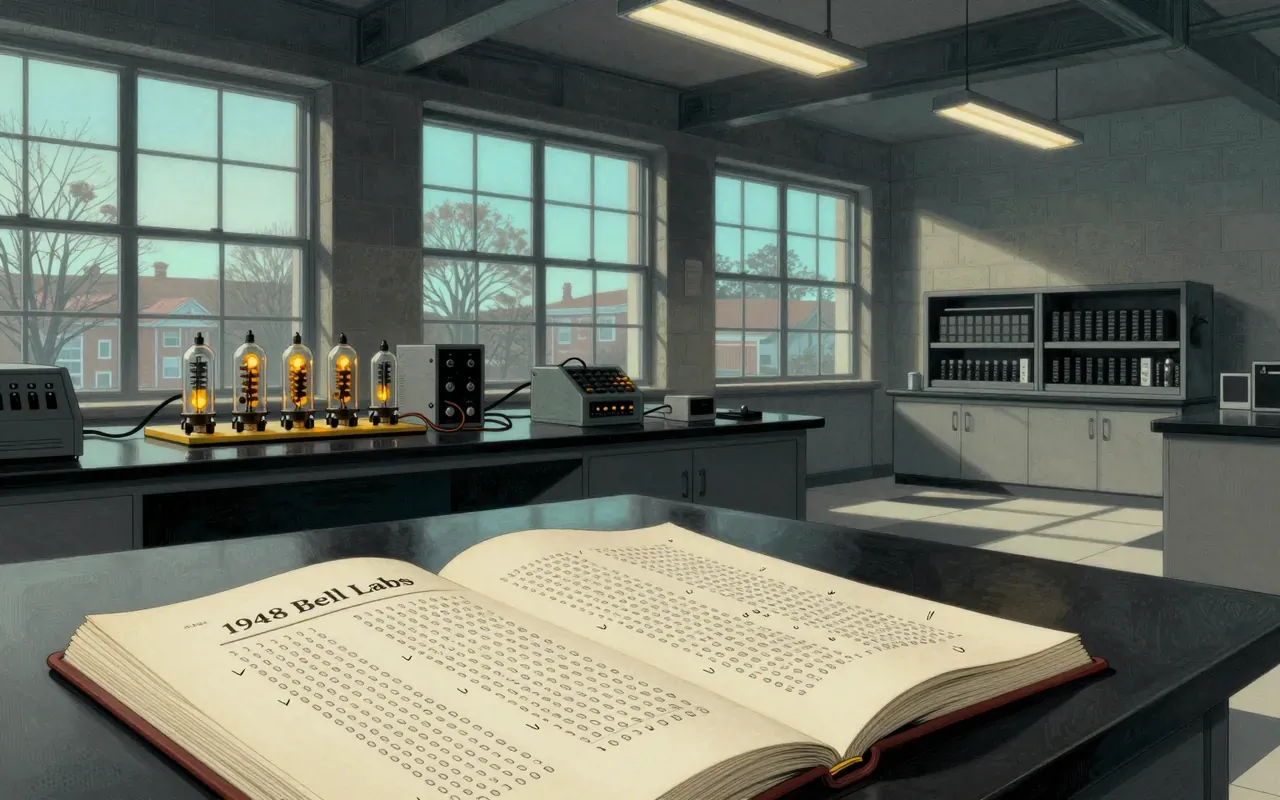
Shannon’s 1948 theory redefined communication as a mathematical problem of uncertainty reduction. He proved entropy is the irreducible cost of lossless encoding — not a metaphor, not a heuristic, but a bound. It applies only where messages are statistically structured, and only to syntactic information — never semantics. Its power lies in its narrowness.